

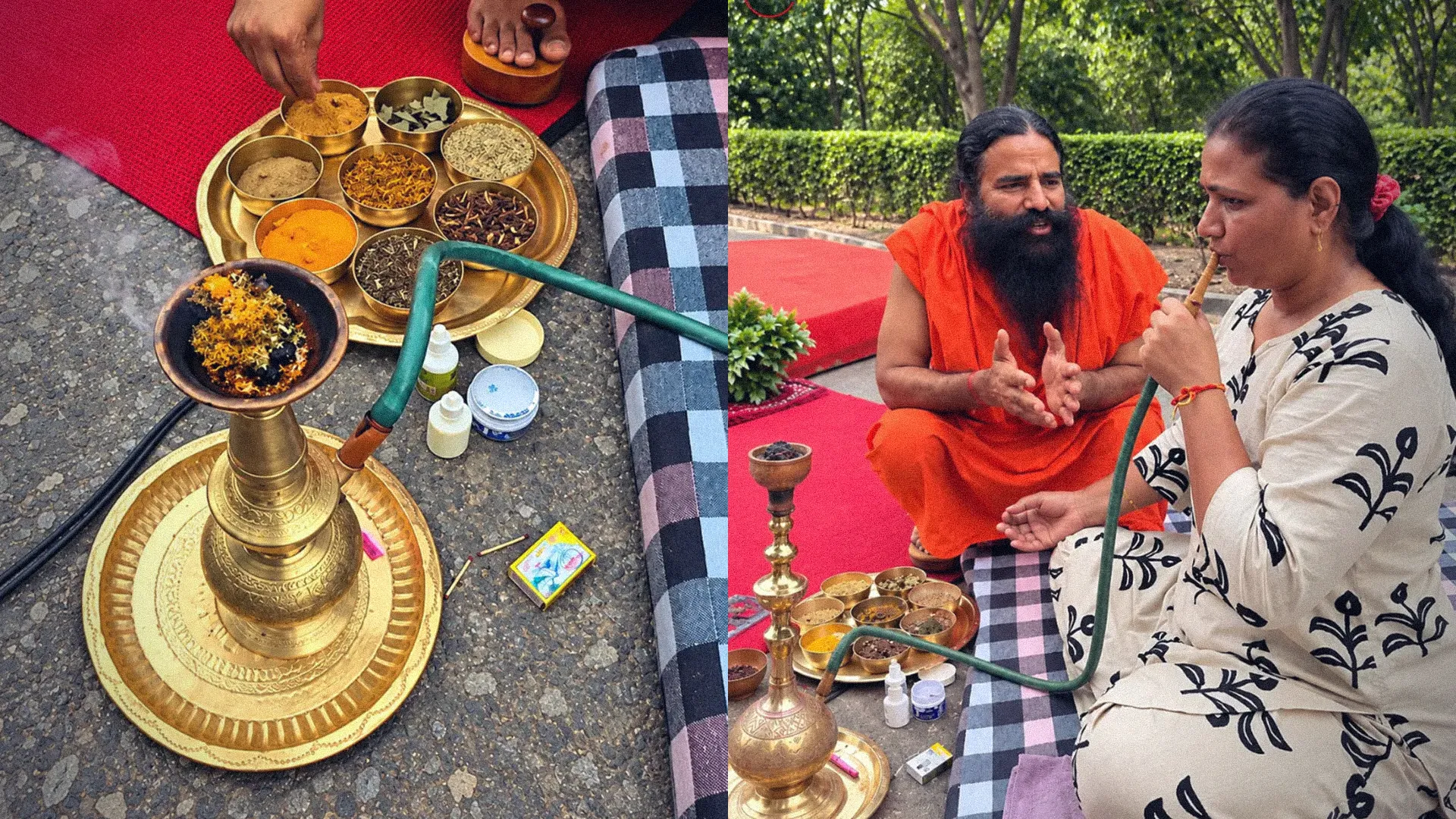
A video featuring Indian yoga guru Baba Ramdev demonstrating what is described as an "Ayurvedic hookah" has generated widespread interest and discussion across social media platforms. In the clip, Ramdev and an accompanying woman prepare a traditional hookah using a blend of household herbs and kitchen spices rather than conventional tobacco or flavored mixtures. The unusual demonstration has prompted memes, humor, and serious queries regarding the safety and potential therapeutic benefits of inhaling herbal smoke.
During the demonstration, Ramdev adds ingredients traditionally used in Indian systems of medicine, including liquorice (mulethi), turmeric, mustard seeds, carom seeds (ajwain), camphor, and kakda singi. Reports indicate that camphor was placed directly on the fire during the preparation. Although the final setup resembles a standard hookah, its contents differ significantly from regular smoking products.

Interested in this ad?
Would you like to continue to the link or provide your information for more details?
Please provide your information
To continue, please fill in your details
Addressing the clip, Ramdev claims that inhaling the resulting smoke helps balance the Ayurvedic doshas of vata, pitta, and kapha while relieving respiratory ailments like coughing and nasal congestion. However, these concepts belong to traditional Ayurvedic frameworks rather than modern clinical medicine. Health experts caution that traditional herbal usage does not imply that inhaling smoke from burned ingredients is safe or medically validated.
Public reactions across social media have ranged from jokes about herbal hookah lounges replacing traditional venues to reflections on traditional Indian smoke remedies. Medical consensus emphasizes that inhaling any form of smoke, whether tobacco or herbal, acts as a respiratory irritant capable of triggering airway inflammation and aggravating chronic conditions such as asthma. The growing interest in non-nicotine alternatives highlights the ongoing need to distinguish traditional wellness claims from verified medical evidence.