


China’s annual graduation season has become a source of mounting anxiety for millions of young people entering the workforce.
University campuses send record numbers of graduates into the job market, but the promise that higher education will deliver financial independence is becoming increasingly difficult to fulfil.
For many, a degree now leads not to a stable career but to months of unanswered applications, low-paid offers and continued dependence on their parents.
The pressure was reflected in official figures released in October, which showed that China’s unemployment rate among people aged 16 to 24, excluding students, stood at 18 percent in September.
Although the rate declined from 18.9 percent in August, the improvement followed a sharp summer increase and did little to disguise the difficulties facing young jobseekers.
With an estimated 12.7 million university graduates entering the labour market in 2026, the competition for suitable employment remains intense.
The figures expose a persistent mismatch between the number of graduates China produces and the opportunities available to absorb them.
Weak domestic demand, business uncertainty, fierce competition for entry-level positions and the growing use of artificial intelligence are adding to the pressure on a generation that has invested years in education without any assurance of a secure livelihood.
Unemployment figures reveal persistent pressure
China’s National Bureau of Statistics reported that the youth unemployment rate rose to 17.9 percent in July, up from 14.9 percent in June. It climbed further to 18.9 percent in August before easing to 18 percent in September.
The September rate was the highest recorded for that month since the statistics bureau began publishing the revised age-group series in January 2024.
The unemployment rate among people aged 25 to 29, excluding students, stood at 7.4 percent in September, while the rate for those aged 30 to 59 remained at 3.9 percent. Overall urban unemployment was 5.2 percent.
The monthly decline in youth unemployment reflects, in part, the seasonal nature of the graduate employment cycle.
Many students enter the labour market during the summer, temporarily swelling the number of people seeking work. Some secure jobs over the following weeks, bringing the rate down.
However, a decline between two months does not establish that the underlying problem has been resolved.
The September figure remained higher than the corresponding rates recorded in September 2024 and September 2025, according to Caixin Global. The persistently elevated rate also highlights the difficulties young people face in moving from education into stable employment.
The official measure has limitations. Since 2023, China has excluded enrolled students from its headline youth unemployment calculation, arguing that the revised approach better captures people who have completed their studies and are seeking work.
The change followed intense public scrutiny after the previous series recorded a youth unemployment rate of 21.3 percent in June 2023.
The revised measure provides a more focused picture of unemployment among non-students, but it does not capture every form of economic insecurity.
People who are not actively looking for work are generally outside the unemployed labour force, while those doing some paid work may be classified as employed even if their earnings or hours fall far short of their needs.
Millions compete for limited opportunities
The scale of the graduate influx has intensified the challenge. China expects approximately 12.7 million university graduates in 2026, around 480,000 more than in the previous year, according to the figures cited in reporting on the employment outlook.
The numbers create a formidable annual recruitment task. Employers must absorb a large pool of new entrants while many established industries remain cautious about expanding their workforces.
The problem is not simply the availability of jobs, but whether vacancies match graduates’ qualifications, geographical circumstances, salary expectations and need for long-term security.
Accounts published by The Epoch Times illustrate how this imbalance affects individual jobseekers.
A computer science graduate identified by the pseudonym Dongdong said he had been unable to secure employment and alleged that universities falsified their graduate employment figures.
His claim could not be independently established from the account, but it points to the mistrust that can emerge when institutional employment statistics fail to reflect graduates’ experiences.
Another graduate, Gui Ke, from Yulin in Guangxi province, said many entry-level urban positions offered monthly base salaries of only 2,000 to 3,000 yuan. He also described employers demanding previous experience, making it difficult for fresh graduates to qualify for jobs intended to be entry-level.
Gui said many of his classmates were staying at home and that only one or two had found work. He was relying on his parents for financial support.
A doctoral graduate in Tianjin, identified as Yang Miao, told the publication that she had spent six months searching for a job without success. She attributed the difficulty to her lack of experience, despite holding an advanced qualification.
These accounts reveal a recurring contradiction: employers seek experienced candidates, but graduates need their first jobs to gain that experience.
Advanced qualifications do not automatically overcome the shortage of suitable openings, particularly when employers can choose from a crowded pool of applicants.
Families bear financial burden
The employment squeeze is also reshaping the financial relationship between young adults and their families.
Parents who have spent years paying for education, accommodation and other expenses face the prospect of supporting graduates long after they expected them to become independent.
A parent of a female graduate in Shenzhen told The Epoch Times that her daughter, who studied environmental design at an ordinary undergraduate college, had been unable to find work.

Interested in this ad?
Would you like to continue to the link or provide your information for more details?
Please provide your information
To continue, please fill in your details
The parent described anxiety over the prolonged search and the difficulty of securing even part-time employment.
Her account reflected the uncertainty facing graduates whose qualifications may not carry the same weight as degrees from elite universities or whose institutions offer limited assistance with recruitment.
The problem extends beyond the immediate absence of wages. Delayed employment can postpone independent living, housing decisions and family formation. It can also weaken young consumers’ spending power at a time when China continues to confront concerns over domestic demand.
The term “lying flat”, used to describe a retreat from intense work and consumption pressures, has become part of the broader debate about young people’s prospects.
It refers to a low-cost lifestyle in which individuals deliberately reduce their ambitions around careers, property ownership, marriage and parenthood.
Not every unemployed graduate adopts this approach, but the term reflects a wider anxiety about the relationship between effort, financial security and social expectations.
In 2023, Zhang Dandan, an associate professor at Peking University’s National School of Development, argued in research published by Chinese financial media outlet Caixinthat the situation could look substantially worse if young people who were neither working nor seeking employment were included.
Her estimate suggested that the youth unemployment rate could have reached 46.5 percent under a broader calculation incorporating approximately 16 million young people outside the labour force.
That figure was a research estimate based on a different definition, not an official unemployment rate. Nevertheless, it highlighted how the choice of statistical measure affects perceptions of the scale of youth joblessness.
AI complicates graduate hiring
The weakening graduate job market is unfolding alongside changes in the nature of work. Artificial intelligence and automation are raising concerns about entry-level roles in fields such as software development, design and other professional services.
A September report by the South China Morning Post described the difficulties facing young technology graduates as employers increasingly adopt AI tools and competition intensifies.
One graduate, Zhang Lin, who studied software engineering in Tianjin, said she had sent more than 100 applications and messages to recruiters while searching for work in Shenzhen, with few responses.
The spread of AI does not mean that technology alone explains graduate unemployment. The wider economy, business confidence and the number of available vacancies remain central factors.
However, automation could reduce demand for some routine tasks traditionally assigned to junior employees, making it harder for graduates to gain the experience required for more advanced positions.
The resulting pressure is especially significant for graduates whose education was designed around occupations undergoing rapid technological change.
Employers may continue to recruit for specialised roles while reducing or reshaping conventional entry-level work, leaving applicants competing for a narrower range of positions.
Gig work fills employment gap
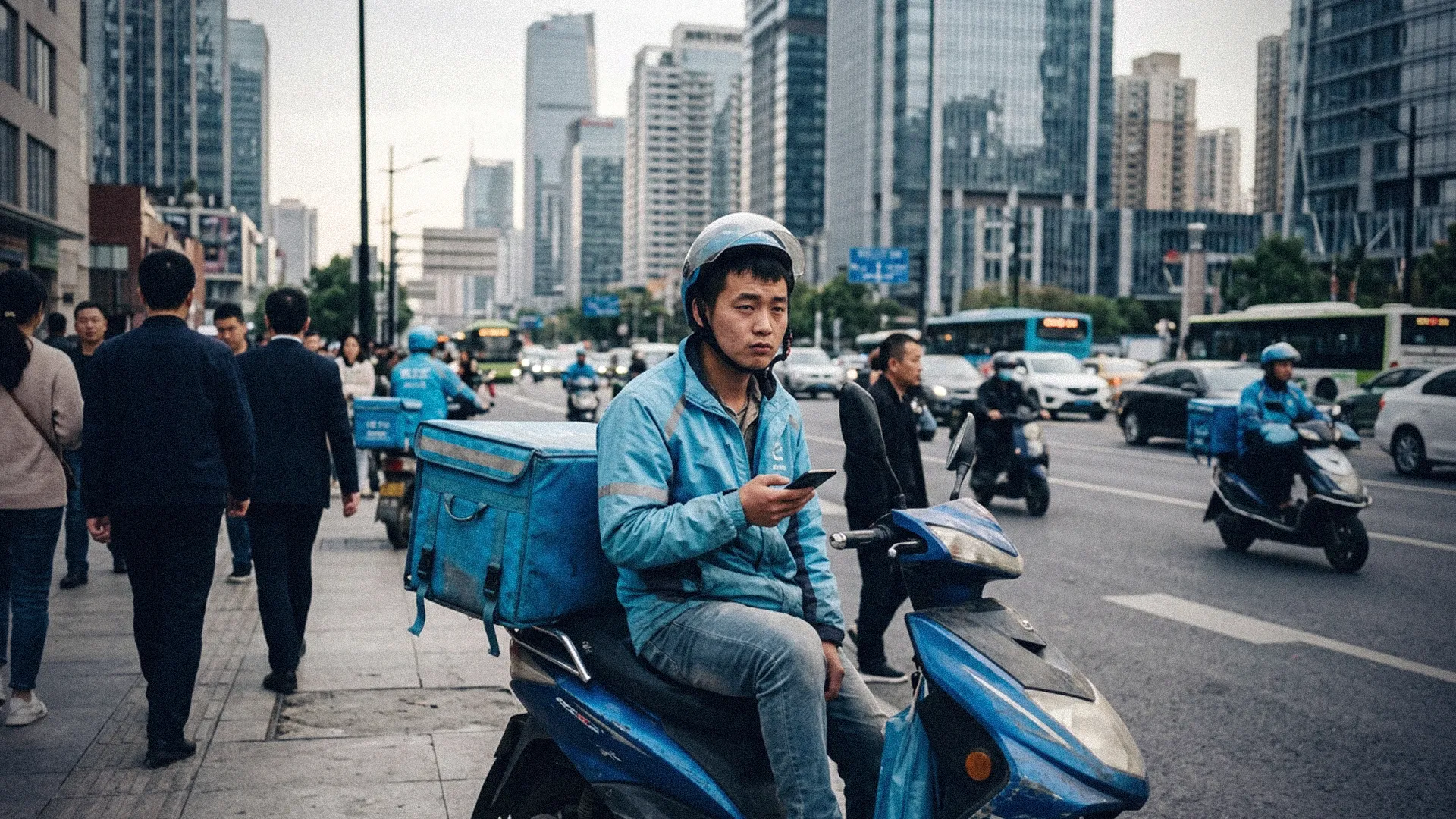
For some workers, flexible employment offers an alternative to prolonged unemployment. Yet the growth of informal and platform-based work also raises questions about the quality and security of the jobs available.
A report released in June by the China New Employment Forms Research Center projected that the number of people engaged in flexible employment could reach 320 million in 2026, accounting for more than 40 percent of employment.
Reuters reported in July that the sector was absorbing workers affected by weak demand, the property downturn, manufacturing automation and the adoption of AI.
The category covers a wide range of arrangements, so it should not be treated as a measure of unemployment or precarious work alone. Nevertheless, the expansion of such employment illustrates how workers are adapting to a changing labour market.
For some, flexible work provides income; for others, it may mean uncertain earnings, limited benefits or the absence of a formal employment contract.
The distinction matters for graduates who may accept temporary or low-paid work while continuing to search for positions related to their qualifications. A person counted as employed may still face substantial financial insecurity or lack a clear route into a stable career.
Govt measures face a difficult test
Chinese authorities have introduced measures aimed at expanding recruitment and improving the transition from university to work. In March, the government announced support for hiring graduates through private companies, advanced manufacturing, modern services, training programmes and internships.
In August, the Ministry of Human Resources and Social Security, the Communist Party’s Central Social Work Department and the Ministry of Civil Affairs issued a circular seeking to expand urban and rural community positions for graduates.
The measures included recruitment for grassroots roles in areas such as services for older people and children, assistance to vulnerable groups and psychological counselling.
Eight government bodies also launched the 2026 “National Recruitment Action”, running from May to December, to encourage employers to recruit graduates and people from other priority groups.
The announcements demonstrate the scale of official attention directed towards the employment problem.
However, expanding recruitment schemes does not by itself establish whether the number of durable, appropriately paid jobs will be sufficient to absorb the growing graduate population.
The challenge is compounded by pressures on local government finances.
Community-level recruitment requires recurring expenditure, while the capacity of private companies to hire depends on business conditions and expectations of future demand.
Administrative targets and recruitment campaigns cannot guarantee that every graduate will find work suited to their qualifications.
China’s graduate employment crisis remains about more than a temporary seasonal spike in unemployment.
The latest official rate fell in September, but millions of young people continue to enter a labour market in which qualifications, experience and available vacancies do not consistently align.