
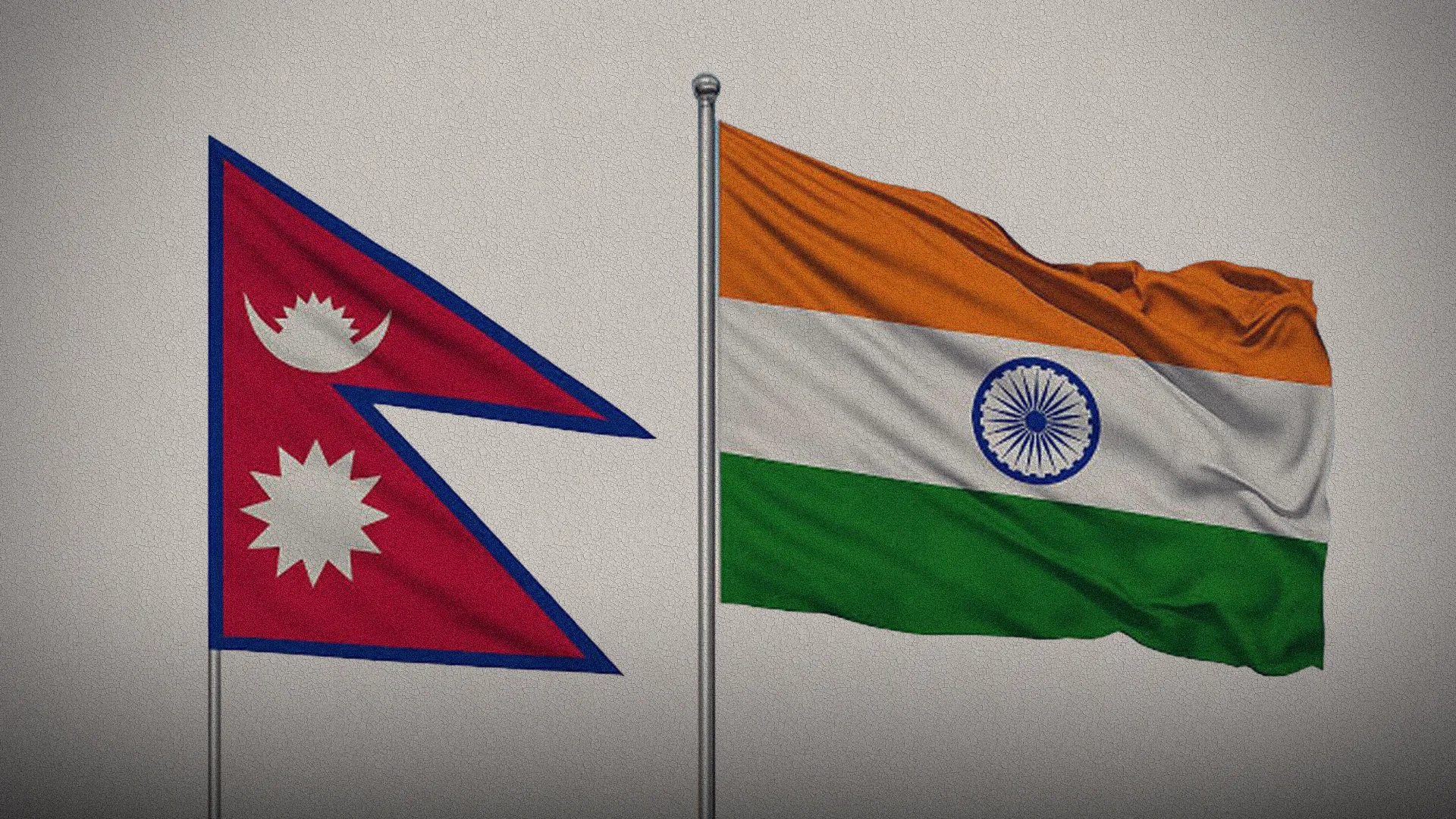
India and Nepal maintain more than 40 bilateral institutional mechanisms covering areas such as border management, security issues, trade, power sector cooperation, water resources, railways, and energy, which continue to meet regularly. Several of these mechanisms have convened over the past year.
The Prime Minister of India and the Prime Minister of Nepal have also exchanged messages on social media and held telephone conversations, including following the Bhotekoshi flood on August 26.
Trade and Commerce
India is Nepal’s largest trade, transit, and investment partner. Trade with India accounts for about 60% of Nepal’s total external goods trade. India is also the largest source of foreign investment in Nepal, accounting for nearly one-third of the total Foreign Direct Investment (FDI).
Development Partnership
More than 600 High Impact Community Development Projects have been undertaken since 2003, spread across 74 districts of Nepal. Large projects include the new National Police Academy of Nepal built with India's assistance in Panauti. Additionally, India has supplied more than 4,400 vehicles to Nepal, including 650 vehicles for the elections held in March 2026.
Relief and Reconstruction
Following the Gorkha earthquake of 2015, India provided support for the reconstruction of 50,000 houses, 71 educational projects, 128 health facilities, and 21 cultural projects.
India supplied about 140 tons of emergency supplies as well as provided rescue experts and forensic support after the Bhotekoshi flash flood in August 2026.
Cooperation in Power Sector
The agreement for long-term power trade envisages the import of up to 10,000 MW of power from Nepal to India over a period of 10 years. Nepal currently exports about 1,200 MW of power annually.
Since November 2024, Nepal has also been exporting power to Bangladesh through the Indian grid. Indian companies are also involved in the development of several hydropower projects, including the 900 MW Arun-3 Hydroelectric Project that is currently under construction, alongside the expansion of transmission lines.
Energy
The first cross-border petroleum pipeline was commissioned in 2019 between Motihari and Amlekhgunj. Both sides are now exploring the development of new pipelines and terminals to further enhance energy connectivity.
Connectivity
Three Integrated Check Posts (ICPs) are operational in Nepalgunj, Birgunj, and Biratnagar. The ICP at Bhairahwa is almost complete, while the ICP at Dodhara Chandni is under progress.
Railway links connecting Jaynagar–Kurtha–Bijalpura and Jogbani–Nepal Customs Yard, Biratnagar have been developed with the Indian side’s support.
Start Up
Under the India-Nepal Startup Partnership Network (IN-SPAN), 49 Nepali startups have been trained at IIT Madras Pravartak in Chennai since 2025.
Scholarships and Trainings
India provides 1,500 annual scholarships from Class VI to PhD levels for Nepali students every year. More than 3,800 professionals, officials, and defence personnel from Nepal have been trained under Indian Technical and Economic Cooperation (ITEC) courses since 2001.
Tourism
India is the largest source of foreign tourists to Nepal.
Cricket
The Government of India and the Board of Control for Cricket in India (BCCI) have partnered with the Cricket Association of Nepal (CAN) to facilitate training at the Centre of Excellence in Bengaluru in 2024, 2025, and 2026, while also arranging practice matches for the Nepali national teams. Trainings and cricket kits have also been provided for U-19 Nepali cricketers.