

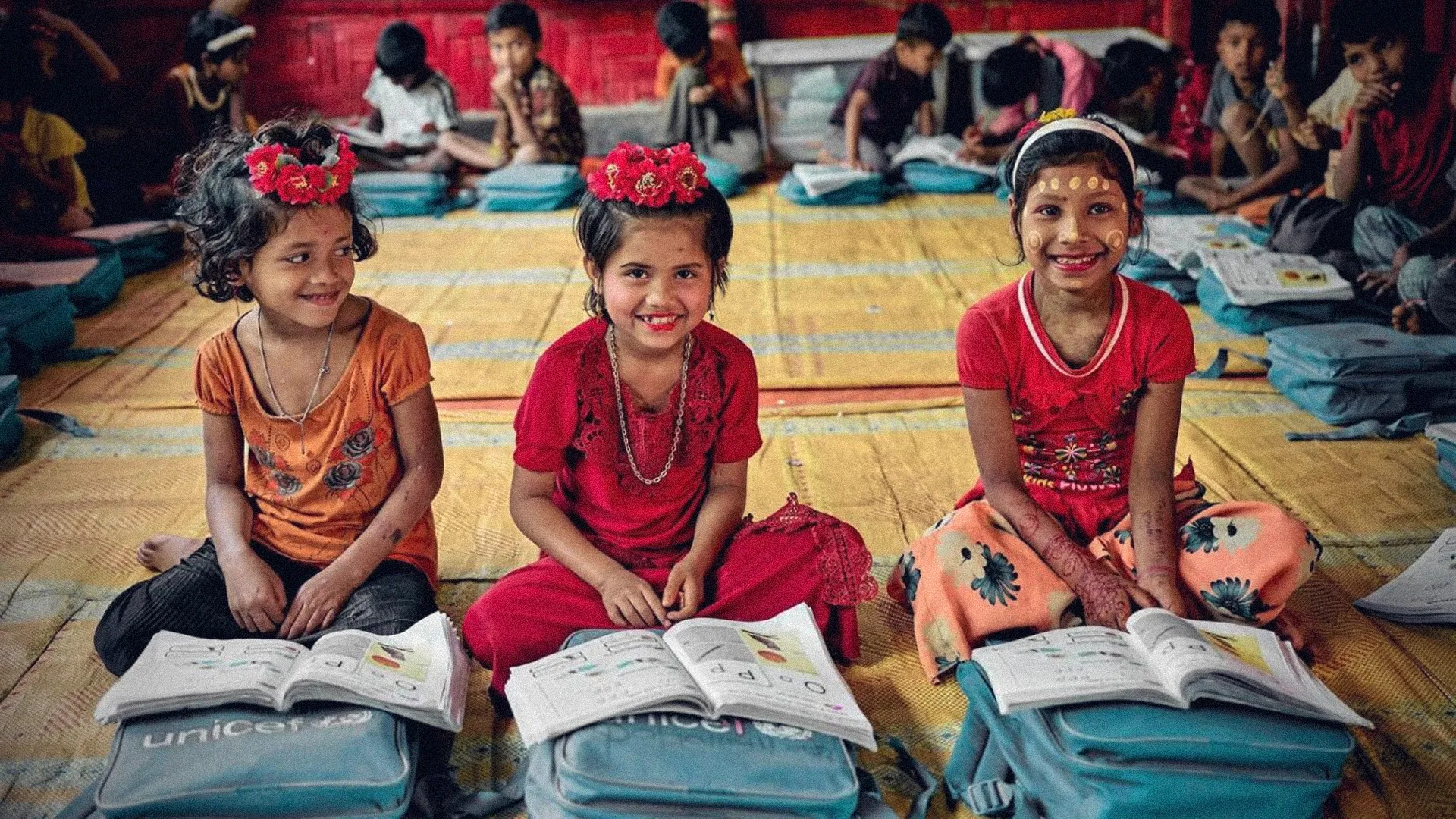
DHAKA — Rohingya children living in refugee camps in Bangladesh are facing a severe education crisis due to international aid cuts and government restrictions. According to Human Rights Watch, a large number of the approximately 500,000 school-age Rohingya children in the camps are deprived of quality education.
According to a report published on November 16, only about 312,000 children are enrolled in educational programs through humanitarian aid initiatives operating in Bangladesh's Rohingya camps. Due to population growth and the arrival of additional refugees from Myanmar, around 90,000 more children require education this year.
A decline in financial support from international donors has increased the risk of temporary learning centers in the camps shutting down. Following funding cuts in 2025, several learning centers remained closed for months. This resulted in teacher layoffs, shortages of textbooks, and disruptions to educational training programs.
For the education program coordinated by the United Nations Children's Fund (UNICEF), only $29 million was received from donors in 2025 against a requirement of $72 million.
Although the aid requirement for 2026 was reduced to $53 million, only $36 million in pledges had been received by mid-October.
Another key aspect of the problem involves the legal recognition of schools operated by the Rohingya community itself. Around 30,000 students study in more than 125 community schools run by Rohingya teachers in the camps. However, these schools are facing financial and administrative difficulties as they lack formal recognition and direct foreign assistance.
In October 2026, the Bangladeshi government for the first time allowed a few dozen Rohingya primary students to sit for internationally recognized primary-level examinations. Similarly, an organization affiliated with the Rohingya community was granted permission to move forward with plans to operate a primary school with a capacity of 240 students.
However, formal curriculum recognition, access to secondary education, and higher education opportunities for Rohingya children have still not been ensured.
Human Rights Watch has urged the Bangladeshi government to lift the remaining restrictions on schools operated by the refugee community and called on the United Nations and international aid agencies to collaborate with those schools.
Hundreds of thousands of Rohingyas were displaced and fled to Bangladesh following the 2016–2017 violence in Myanmar. With their long-term future remaining uncertain, problems related to education, health, and fundamental rights are growing increasingly complex.
The report emphasizes the need to guarantee education for Rohingya children as a fundamental right rather than temporary humanitarian assistance.