
Author: Gyanmitra
After reading Keshav Dahal’s article in Shilapatra on Wednesday, Kartik 11, 2083, I felt compelled to write something.
1. Is This Article Literature or an Instagram Reel of Tears?
The first question that arises after reading Keshav Dahal’s piece is: Is this reporting or a radio drama?
a) Is Shankar Mochi a Symbol or a Human Being?
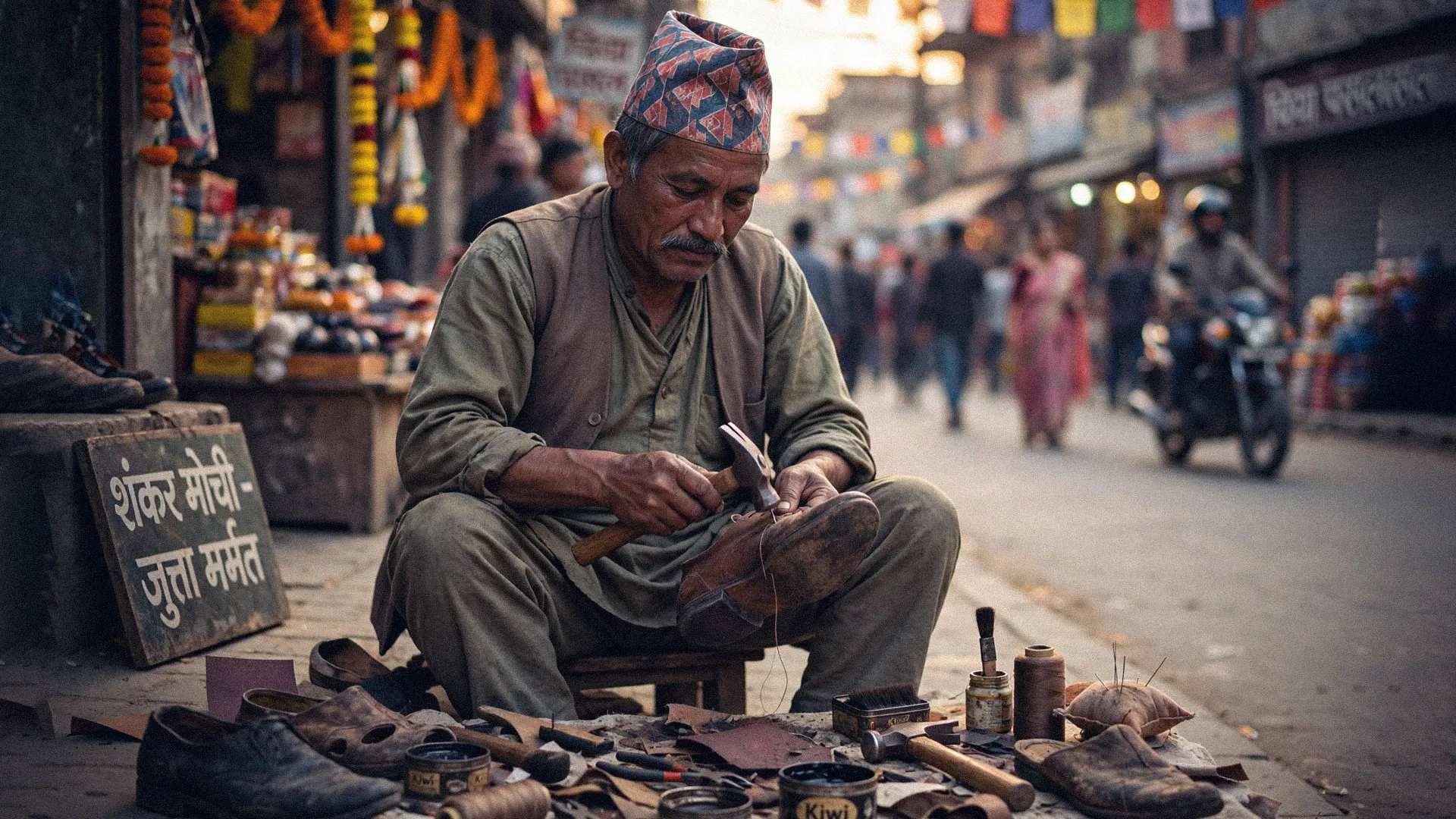
Right at the beginning, the author states, "Here, Shankar Mochi is a symbol." Then follow details of a 17-year account, a bill of 3,000 rupees, samosas from China Market, a red shirt for his son, and bangles worth 150 rupees for his wife—do such specific details belong to a symbol or a real person? If you intend to create a symbol, make him a symbol; if you intend to portray a human being, make him a human being. This is an opportunistic dual character—if criticism comes, "he is a symbol," and if applause comes, "it is reality."
b) The Very Premise of Asking How Dashain Went Is Hypocrisy
"How was your Dashain? Mine was just okay. Inflation struck hard, and desires killed us."
What is this? A blog or a Facebook status? The author claims he does not want to complain to the government because the government is "busy building the nation." This is not satire; it is a cheap sophistry of surrender. Deciding not to complain himself while making Shankar curse the government through his own mouth is the cheapest technique. Protect oneself, and push Shankar to the front. This is the typical style of a progressive writer.
c) Language — The Aestheticization of Poverty
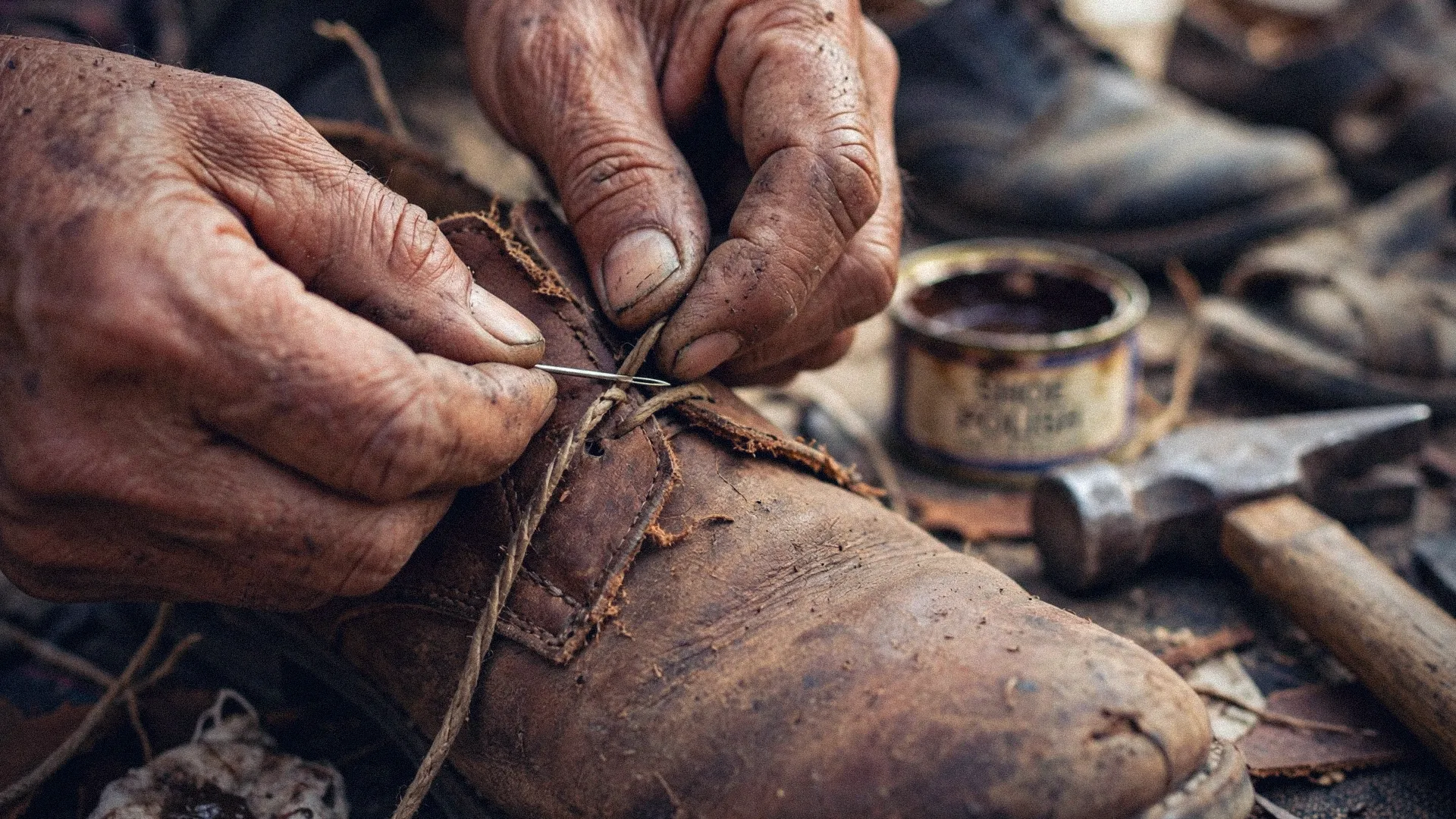
"Worn-out shoes, needle, thread, hammer, and polish"—this phrase is repeated four times in the article. Why? Because the author believes chanting these five words is enough to depict poverty.
"While mending others’ shoes, my own life has come unstitched"—would an uneducated Shankar Mochi sitting by the roadside utter such dialogue? Does a man who earns 500 rupees a day on the street to feed a family of five deliver a speech saying, "Do not snatch away my self-respect"? This is not Shankar’s language; this is the language of a middle-class writer sitting in a Baneshwor tea shop writing poetry about poverty.
A poor person is not this literary. He is exhausted, he calculates his expenses, and he curses. He does not drop metaphors like, "Where can one find that needle that can patch up a person’s torn future?" This is dialogue you have placed inside his mouth.
d) The 3,000-Rupee Calculation and Emotional Blackmail
1,450 for clothes + 150 for bangles + 300 for samosas + 600 for spices, oil, and salt = 2,500. Plus 1 kilogram of broiler chicken. The math adds up. Yet calculations alone are not enough for the author; he needs tears. Therefore, after every paragraph come cues like—"he sounded emotional," "he was delighted," "deep despair appeared on his face." Let the readers feel for themselves; why do you keep directing them—get emotional here, cry here? The esteemed author appears to be a skilled mastermind at committing outright rape upon human poverty and human sensibility, turning it into a porn clip, and trading on it.
And the final ultimate weapon—"I am not a beggar, I am a worker." Because of this line, middle-class readers share the post saying, "Look how self-respecting the poor man is!" The author knows that in Nepal, pretending to respect poverty is the biggest harvest for likes.
Such articles create the illusion that they elevate or win over human sensibility. In reality, they trade in sensibility. Readers feel sad for two minutes, the writer earns the tag of a "sensitive author," while the Shankar Mochis of the country remain on that very same street tomorrow. After all, some other Keshav Dahal will also need "raw material" for an article!
Keshav Dahal is not alone in writing like this. He is the latest generation of a vast, old, and highly successful tradition—the tradition of turning the poor not into heroes, but into props.
In English, this tradition is called poverty porn—polishing one’s own sensitivity by putting poverty on display.
1. World-Famous "Shankar Mochis"
a) Charles Dickens — The Grandfather of Them All
Dickens wrote Oliver Twist in 1838. An orphan boy, an empty stomach, and the cruelty of masters. All of London wept, and Dickens became a great writer. Yet London’s poverty was not eradicated by Dickens; it was eradicated by Parliament passing laws. What did Dickens do? He did not let the poor speak; he spoke himself. Putting "Where can one find that needle that can patch up a torn future?" into Shankar Mochi’s mouth is straight out of Dickens’s playbook.
b) Harriet Beecher Stowe — Uncle Tom’s Cabin (1852)
She portrayed Uncle Tom as so virtuous and miserable that white mistresses wept. Millions of copies of the book sold, and the author became rich.
c) Mulk Raj Anand and Premchand — Masters From Our Own Neighborhood
In India, Mulk Raj Anand turned Bakha, a toilet cleaner in Untouchable, into a one-day epic. In Kafan, Premchand made Ghisu and Madhav so repulsive that readers began to despise the poor rather than love them. These writers are great, yet their limitations teach us a lesson—when a writer stands above the poor and points out, "Look how miserable he is," the reader applauds the writer’s pen, not the poor person. In Keshav’s article too, the applause goes to him, not to Shankar.
d) Katherine Boo — Behind the Beautiful Forevers (2012)
She lived in Mumbai’s Dharavi for three years and won the Pulitzer Prize. The book became a bestseller, while Dharavi remains the same even today. The rule is always identical: the writer’s poverty disappears, the subject’s does not.
Foreigners at least conducted three years of research. Here, we have a formula—the occasion of Dashain, one cobbler, a 3,000-rupee account, and rhetorical questions aimed at the government. No effort is made to confront the municipality to secure a designated workspace right for the cobbler, nor are his children’s school fees arranged. All that is offered is an article that makes the writer look sensitive.
e) Today’s Shankar Mochis on Instagram
In America, there is a term—inspiration porn: filming people with disabilities to showcase "how courageous they are." I do not know what it is called in Nepal—should we call it pseudo-inspirational porn?
A photo of a porter, a photo of a cobbler, a photo of a mother carrying a heavy load, with a caption underneath—"I am not a beggar, I am a worker."
No Shankar is speaking in these lines; these are the lines our middle class wants to hear. Because they absolve us of guilt. They grant us the excuse to say, "Look, he is self-respecting; we do not need to do anything."
This is where Keshav’s article falls short. He has turned Shankar not into a human being, but into a pigeon delivering a moral message. Would it not be fitting to call this a tendency to warm one’s own bread by farming human sensibility?
Will all of this continue like this? Or can the plight of the Shankars be transformed? Could there be a solution aligned with what the second part of this article’s headline states?
Can AI Truly Do Anything About Poverty, Unemployment, and Inflation?
After three years of studying, reflecting on, and extensively using AI, I have reached certain conclusions. These conclusions are not sweet, nor may they sound pleasant to you. AI will prove unfavorable for Keshav Dahal, for me, and for all of you readers who represent the middle class. It is certain that the vast majority representing this class will lose their jobs due to AI. Perhaps within the next 20 years, the middle class will no longer exist in the world. The birth of this class itself happened unnaturally. Naturally, there ought to be only two classes—one affluent class capable of accessing all facilities, and another poor class represented by Shankar Mochi.
A small percentage of the current middle class will advance into the upper class, while the majority will end up joining hands with Shankar Mochi.
However, AI can provide immense assistance to today’s Shankar Mochis in earning a living and securing their livelihoods.
No government possesses a magic wand. No government in the world can eradicate poverty overnight.
What Does Eradicating Poverty Mean?
Shankar Mochi’s problem is not merely "what the government failed to do for me." His problem consists of four structural issues:
-
Low productivity — earning only 500 rupees a day with the same needle and thread.
-
Lack of market access — the municipality chases him away, forcing him to work in hiding.
-
Zero social security — zero income when he falls sick or when it rains.
-
Skill trap — the same shoes and the same hammer for 17 years.
Across all four areas, it is not speeches or articles written with the intent of garnering sympathy that work, but systems. And right here, AI performs not magic, but the work of connecting.
What AI Can Do — Not With Sentimentality, but With Precise Calculation
a) On Unemployment — Connecting Skills to the Market
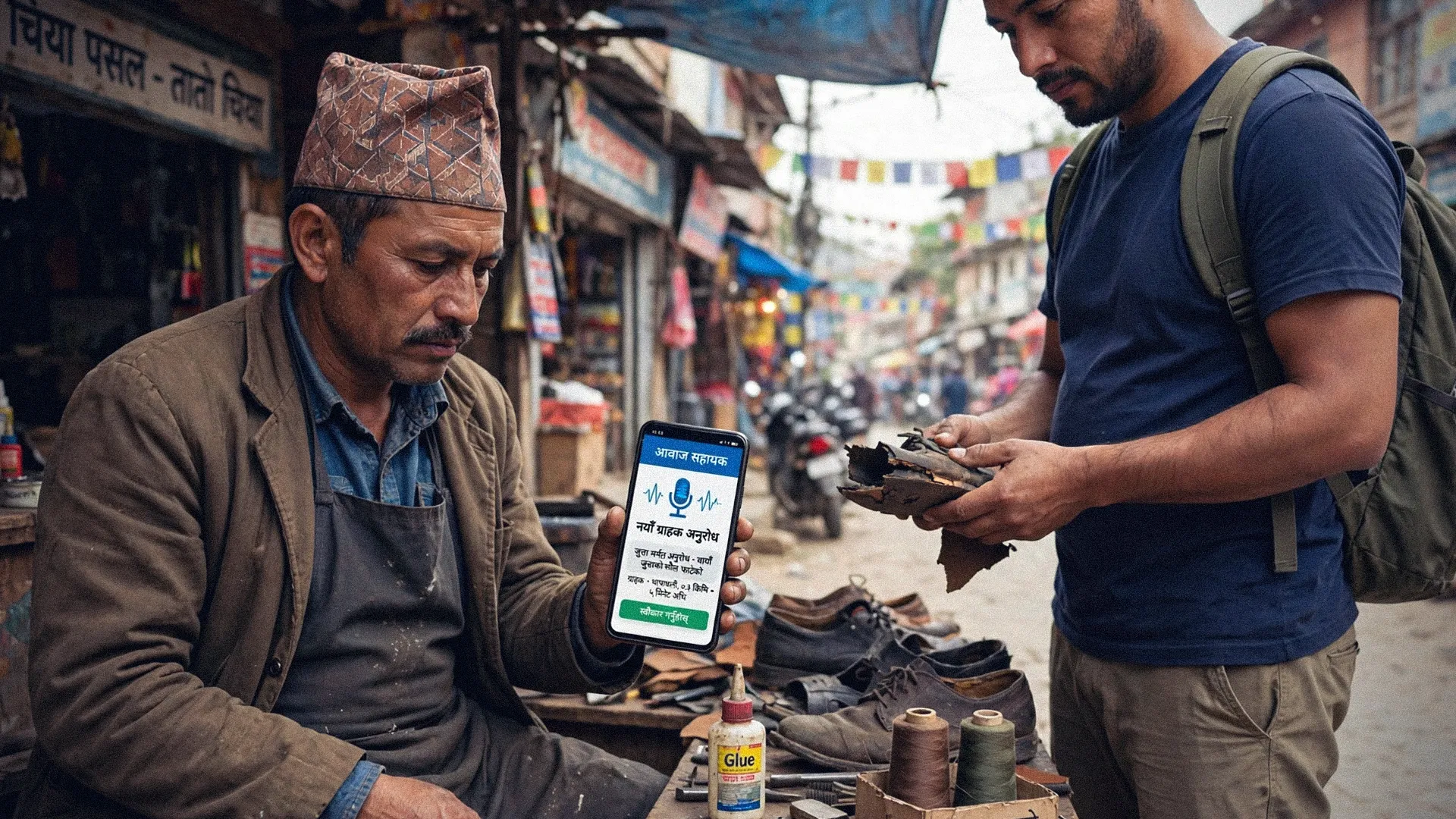
Today, Shankar waits for customers. Tomorrow, what AI can do is provide a simple voice AI app where Shankar says, "I am in Sinamangal," and a notification goes straight to the phone of someone nearby whose shoe is damaged—just like Uber connects taxis. This does not require a massive government; a small open-source model and a local map are enough.
Secondly, Shankar has 17 years of experience stitching shoes. Using videos of his work, AI can teach him skills that earn three times more money—such as leather repair, bag repair, and seat cover stitching—right in the Nepali language and through video. This is training, not a speech.
b) On Inflation — Information Is Power
Shankar paid 1,450 rupees at China Market. He does not know whether that was expensive or cheap. What AI can do is offer a small market-price engine that tells him via voice the wholesale price, retail price, and where goods are cheaper—for vegetables, needles, thread, bangles, everything. Inflation is not controlled by the government; it is curbed by eliminating market opacity.
c) On Poverty — Documentation and Access
Shankar has neither a bank account nor savings in a cooperative. Why? Because paperwork is a hassle. AI can fill out forms using his citizenship card, photo, and voice, keep track of his daily income, and based on that accounting, make him eligible for a small loan of 50,000 rupees. It creates data that banks can trust.
And the biggest issue—being chased away by the municipality. AI combined with low-cost CCTV and maps can determine how many people walk past a spot daily, where allowing a cobbler to sit will not obstruct traffic, and where a small stall can be allocated. This decision is driven by data, not bribes.
Keshav Dahal’s intention in writing the article is not bad, but his method is outdated—turning the poor into a temple bell and ringing it to earn literary merit. Such a writing trend should be discouraged, not defended.
Shankar Mochi does not need our tears. He needs customers, he needs a space where municipal police will not chase him away, and his son needs not a situation where he "does not have to think about his father’s pocket," but a system where his father’s pocket becomes a little heavier. He does not need a writer who depicts his plight; he needs a helpful heart that buys him an umbrella useful when it rains. Why should we not expect to see a photo of Keshav Dahal handing over half the remuneration he received from his article to Shankar Mochi?
AI will not stitch Shankar’s future. He still has to wield the needle himself. What AI can do is illuminate the path along which his needle moves, show him customers, keep his accounts, and present his labor not as a subject of government charity, but as an integral part of the economy.
Making a story of poverty emotional is not a mistake; the problem is stopping right there. True sensitivity is not shedding tears, but building a system that wipes tears away. An emotional article makes people cry for a day; a system sustains lives forever.