

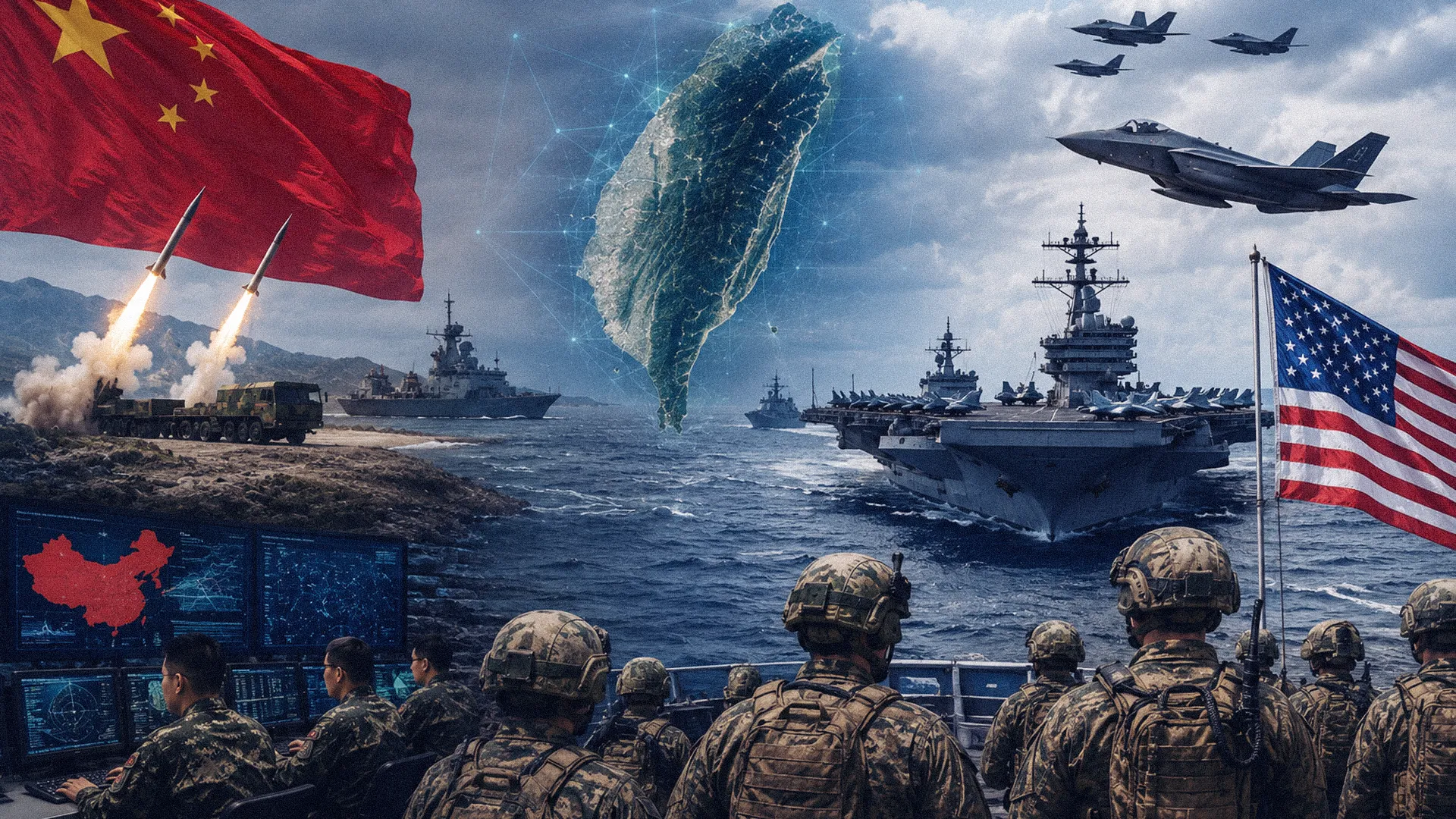
Various international reports indicate that the strategic competition between the United States and China, centered on Taiwan, is intensifying. Concerns over the security situation in the Asia-Pacific region have grown, particularly following warnings that the US is expanding its military presence near Taiwan while China may increase potential geopolitical maneuvering.
According to a report by The Economist, the US is bolstering its military forces, aerial capabilities, and strategic readiness around the Taiwan region. Analysts suggest the objective is to deter China from potential military action.
Similarly, a Reuters report highlights warnings from US officials that China could employ strategic "psychological maneuvering" on the Taiwan issue, potentially leveraging future meetings with Donald Trump or shifts in the political landscape.
Experts note that China is making propaganda warfare, cyber influence, and information control core components of its Taiwan strategy, alongside military might. Analysis suggests that if a crisis arises over Taiwan in the future, China’s propaganda apparatus could be capable of challenging Western democracies.

Interested in this ad?
Would you like to continue to the link or provide your information for more details?
Please provide your information
To continue, please fill in your details
Meanwhile, reports mention increasing security risks to Taiwan's cybersecurity system through foreign-invested mobile apps and digital platforms. Warnings have been issued that digital infrastructure linked to China could pose challenges to Taiwan's information security.
According to analysts, Taiwan is becoming the epicenter of global power competition. The US, Japan, Australia, and Western nations are intensifying collective strategies to contain China's influence in the Indo-Pacific region.
This development is also considered indirectly significant for Nepal. As the US-China rivalry intensifies, analysts suggest that strategic polarization could increase in South Asia, adding pressure on Nepal to maintain its diplomatic balance.