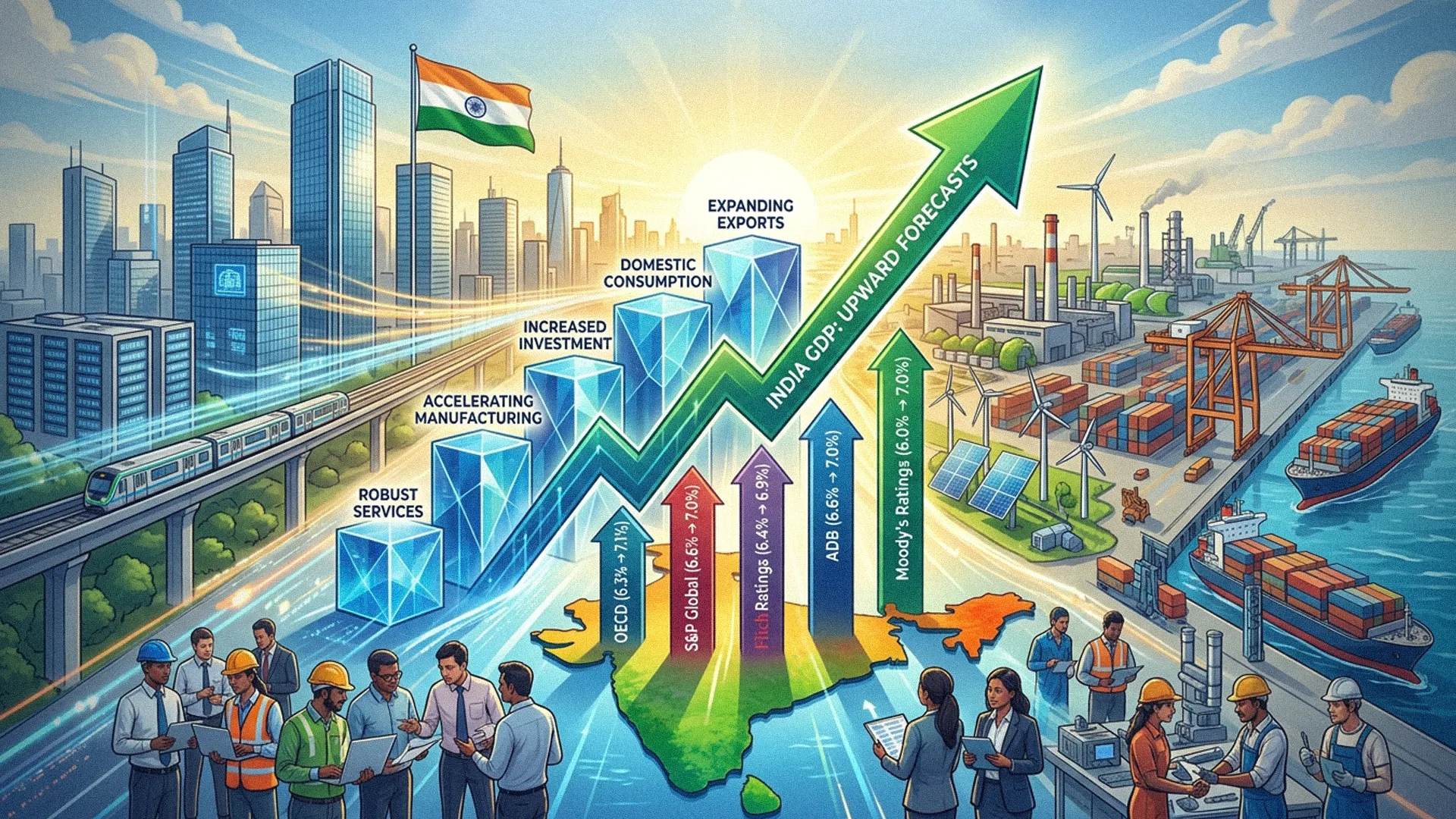


Various international reports show that in recent years, India has been rapidly expanding its strategic, economic, and security partnerships with countries in the Middle East, Southeast Asia, and the Pacific region. According to analysts, India is currently moving forward with a strategy to establish itself as a global power center through "multipolar diplomacy."
The India-UAE relationship has been described as a future-oriented strategic partnership. It is reported that cooperation between the two countries is intensifying in energy, trade, digital economy, infrastructure, and defense collaboration. India's expansion of influence in the Middle East is also being viewed as an alternative economic network to China's Belt and Road Initiative (BRI).
Similarly, India and Vietnam have agreed to expand cooperation in the fields of energy, rare earth minerals, and maritime security. The India-Vietnam collaboration is analyzed as a significant strategic step to balance China's influence in the South China Sea region.
Reports also mention that India-New Zealand relations are moving from commercial exchange toward a strategic partnership. It is stated that there is a growing trend of viewing India as a key partner in the changing power equations of the Indo-Pacific region.

Interested in this ad?
Would you like to continue to the link or provide your information for more details?
Please provide your information
To continue, please fill in your details
Meanwhile, India has presented its "e-Migrate" model at the United Nations, providing an example of a digital system in foreign employment management. This is seen as another medium for the expansion of India’s "soft power."
According to analysts, India now appears to be moving toward building a global diplomatic network rather than being just a regional power. It is evaluated that India is attempting to balance China's influence by expanding parallel relations with the US, Europe, Gulf countries, Southeast Asia, and Africa.
India's diplomatic expansion is considered of special importance for Nepal. Analysts say that India's growing international influence could increase the pressure for strategic and economic rebalancing on Nepal. Specifically, it is estimated that Nepal may face both new opportunities and challenges in energy, trade, infrastructure, and regional connectivity projects.