


The border dispute between Afghanistan and Pakistan cannot be understood merely as recent political tension. The history of the Durand Line separating the two countries has long been tied to dispute, disagreement, and mistrust.
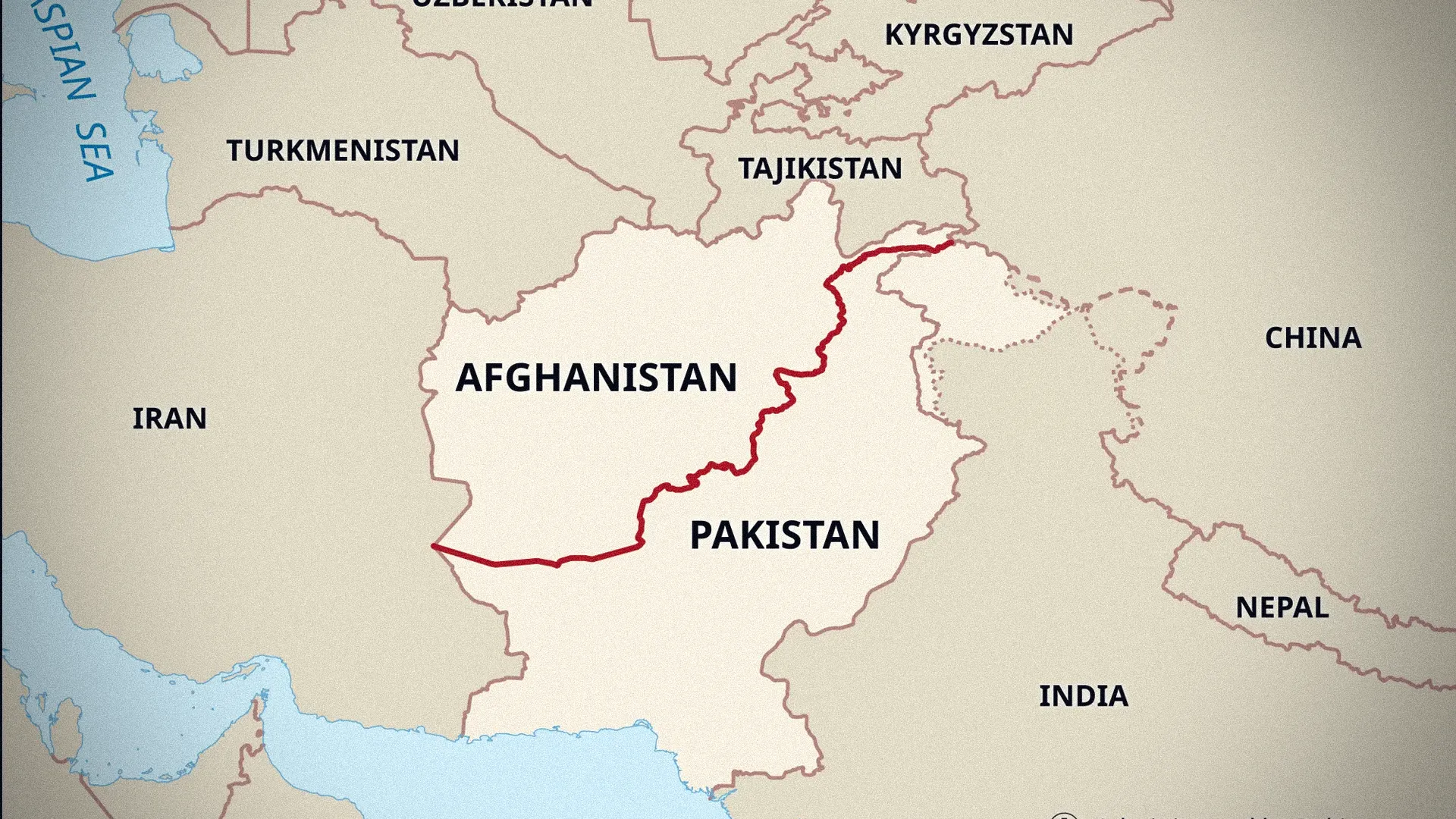
The Durand Line is a border established through an 1893 agreement between British India and Afghanistan. Demarcated during British rule, this boundary forms the basis of the approximately 2,640-kilometer-long border between present-day Afghanistan and Pakistan.
However, Afghanistan has long refused to recognize this boundary as its permanent international border. Pakistan, on the other hand, considers the Durand Line to be the legitimate international border between the two nations. This differing perspective remains one of the primary reasons for continuous tension in bilateral relations.
Another crucial aspect of the problem is the Pashtun community living in the border region. The Durand Line has divided a single ethnic and social community across two countries. Because families, trade, movement, and social ties extend across both sides of the border, border management itself has become a complex issue.
In recent years, Pakistan has tightened border management and expanded security infrastructure along the border area. However, such moves have not always been comfortably accepted from the Afghan side. Disputes and tensions have repeatedly arisen over the fencing and other security structures constructed by Pakistan in the border region.
Historical interpretation also plays a major role in this dispute. For Pakistan, the Durand Line is a matter linked to state territorial integrity and international boundaries. For Afghanistan, since this border was drawn during the British colonial era, historical questions continue to be raised regarding its legitimacy.

Interested in this ad?
Would you like to continue to the link or provide your information for more details?
Please provide your information
To continue, please fill in your details
Along with the border dispute, security challenges are also intertwined with Afghanistan-Pakistan relations. Cross-border militant activities, movement of armed groups, and refugee disputes have further heightened mistrust between the two countries.
Pakistan has been pressuring Kabul to control armed activities operating against its country from Afghan soil. The Afghan side maintains its stance of refusing external interference in its sovereignty and internal affairs. This has further complicated efforts to resolve security concerns.
Therefore, the Durand Line dispute is not merely a question of lines drawn on a map. It is a multidimensional conflict linked to colonial history, national identity, the social ties of the Pashtun community, sovereignty, and regional security.
Whenever political relations between the two countries weaken, this old border dispute resurfaces. Recent tensions also indicate that disagreements regarding the Durand Line remain unresolved and will continue to impact Afghanistan-Pakistan relations in the long term.
Without fully understanding the history of the Durand Line, it is difficult to comprehend the current tension between Afghanistan and Pakistan. Unresolved for over a century, this border dispute remains one of the enduring geopolitical challenges in South Asia and the Afghan region.