

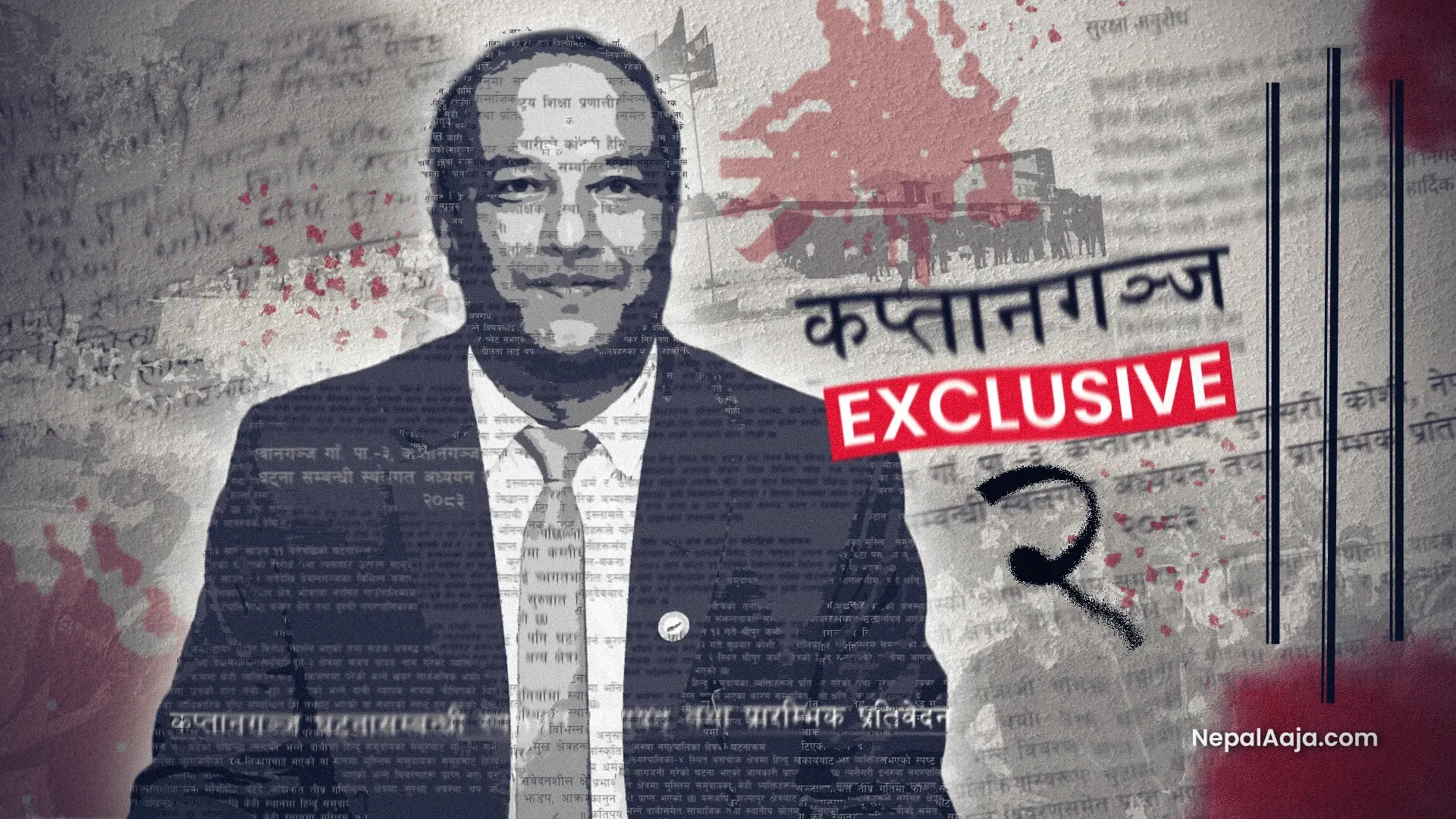
A communal clash and violent incident occurred in Kaptanganj, Ward No. 3 of Dewanganj Rural Municipality, Sunsari, on Shrawan 10, 2083 BS. The tension, which originally stemmed from a prior dispute over a Bol Bam pilgrimage DJ sound system and a Moharram religious flag, escalated between 9:45 PM and 10:05 PM during a power outage. To bring the situation under control, Nepal Police fired 3 rounds and Armed Police Force fired 22 rounds, totaling 25 rounds of gunfire, which resulted in the death of three civilians: Omprakash Mehta, Jayprakash Mehta, and Rabindra Mehta. Between 22 to 40 citizens and security personnel, including Police Inspector Rakesh Rai, were injured in the incident, and 112 houses/structures and 69 vehicles were damaged.
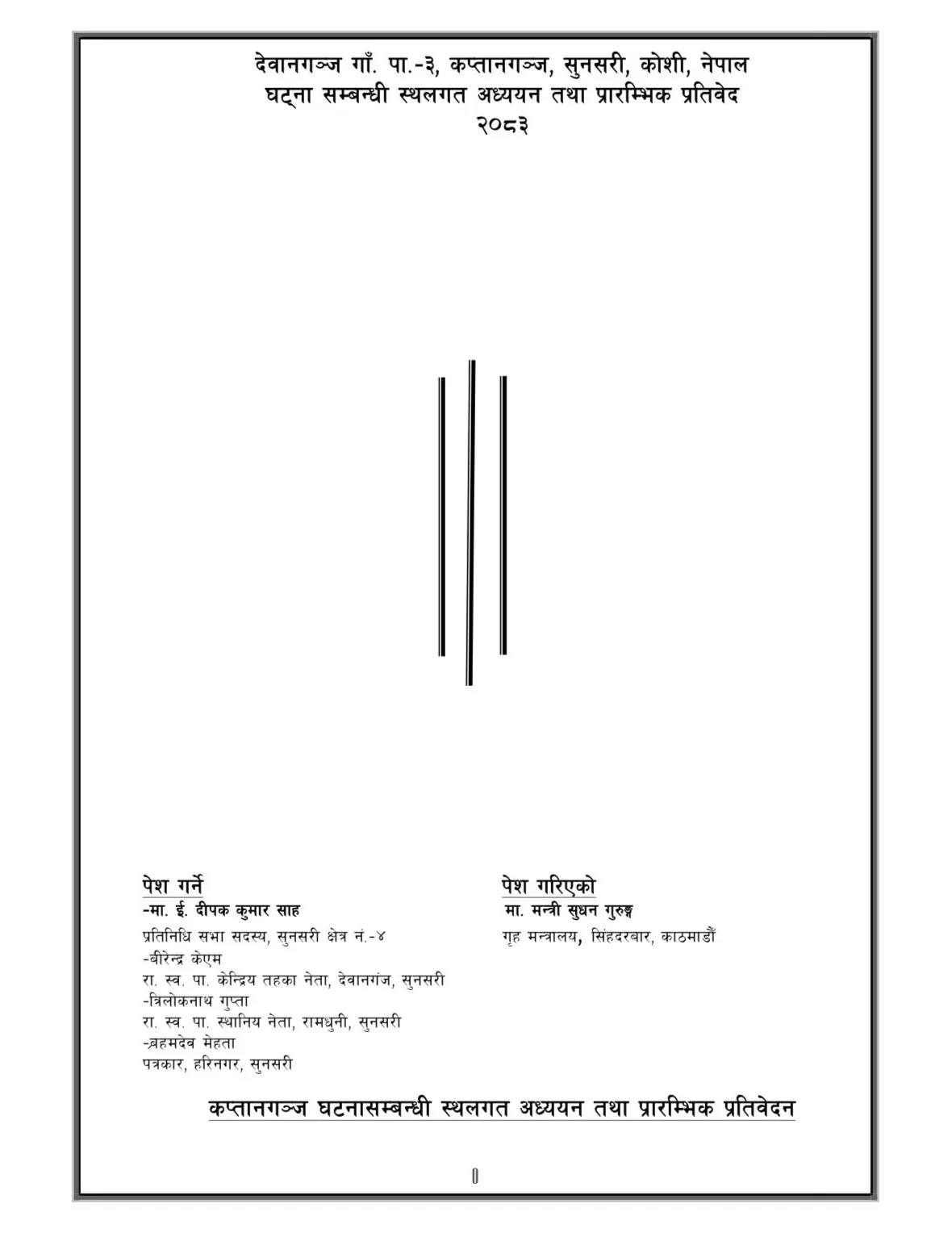
Following the directives of the Home Minister to ascertain the factual situation of this violent event, a field study report prepared under the coordination of Member of the House of Representatives and Engineer Deepak Kumar Sah was submitted to the Ministry of Home Affairs. This report, along with official correspondence from the local government, has raised serious questions regarding the legal status, financial transparency, and security sensitivity of religious institutions operating in the region.
18-Point Investigation into ‘Suffa Academy’ and Unregistered Madrassas
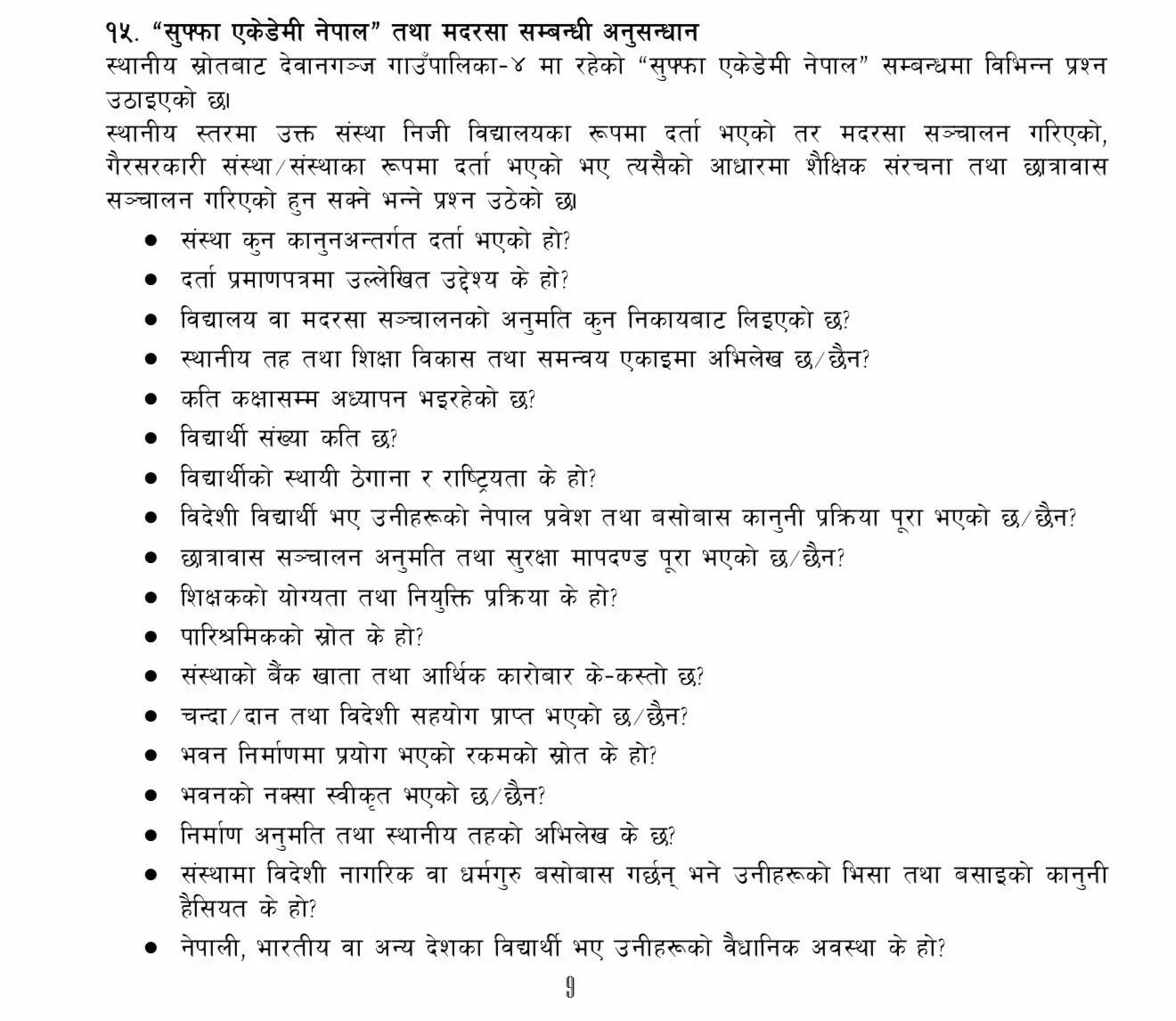
In the 15th point of the study report prepared under MP Sah's coordination, 18 serious investigative questions have been raised regarding "Suffa Academy Nepal" located in Ward No. 4 of Dewanganj Rural Municipality, as well as other madrassas. Locally, it is suspected that the institution was registered as a private school but operated as a madrassa, or registered as a non-governmental organization (NGO) to run an educational structure and hostel.
The report inquires under which law the institution was registered, what objective is stated in its registration certificate, which authority granted its operation permit, and whether records exist with the local municipality and the Education Development and Coordination Unit. Furthermore, it highlights the need for a detailed investigation into the number of studying students, their permanent addresses, nationality, the legal status of entry and residence for foreign students and religious leaders in Nepal, the teacher appointment process, source of salaries, bank accounts, foreign aid and donations, and the legality of building blueprint approval.
Rural Municipality and District Administration Correspondence and Administrative Action
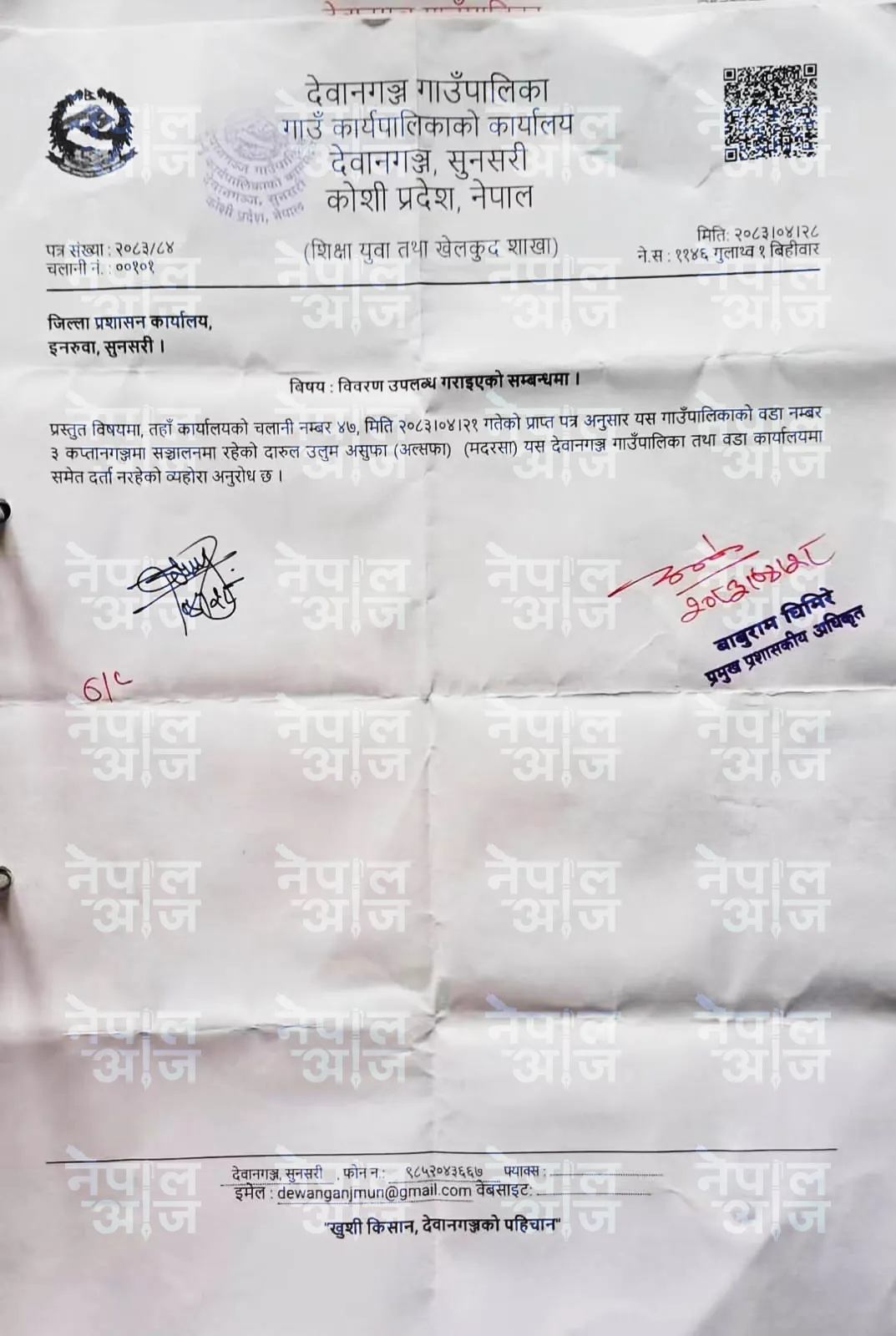
Against this backdrop, the Education, Youth, and Sports Branch of Dewanganj Rural Municipality has initiated a detailed investigation into the legal status of Darul Uloom Alsafa (Madrassa) operating in Ward No. 3. Chief Administrative Officer Baburam Ghimire officially informed the District Administration Office, Inaruwa, via letter Dispatch No. 00101 dated Shrawan 28, 2083 BS, that the madrassa was not registered with Dewanganj Rural Municipality or the ward office.
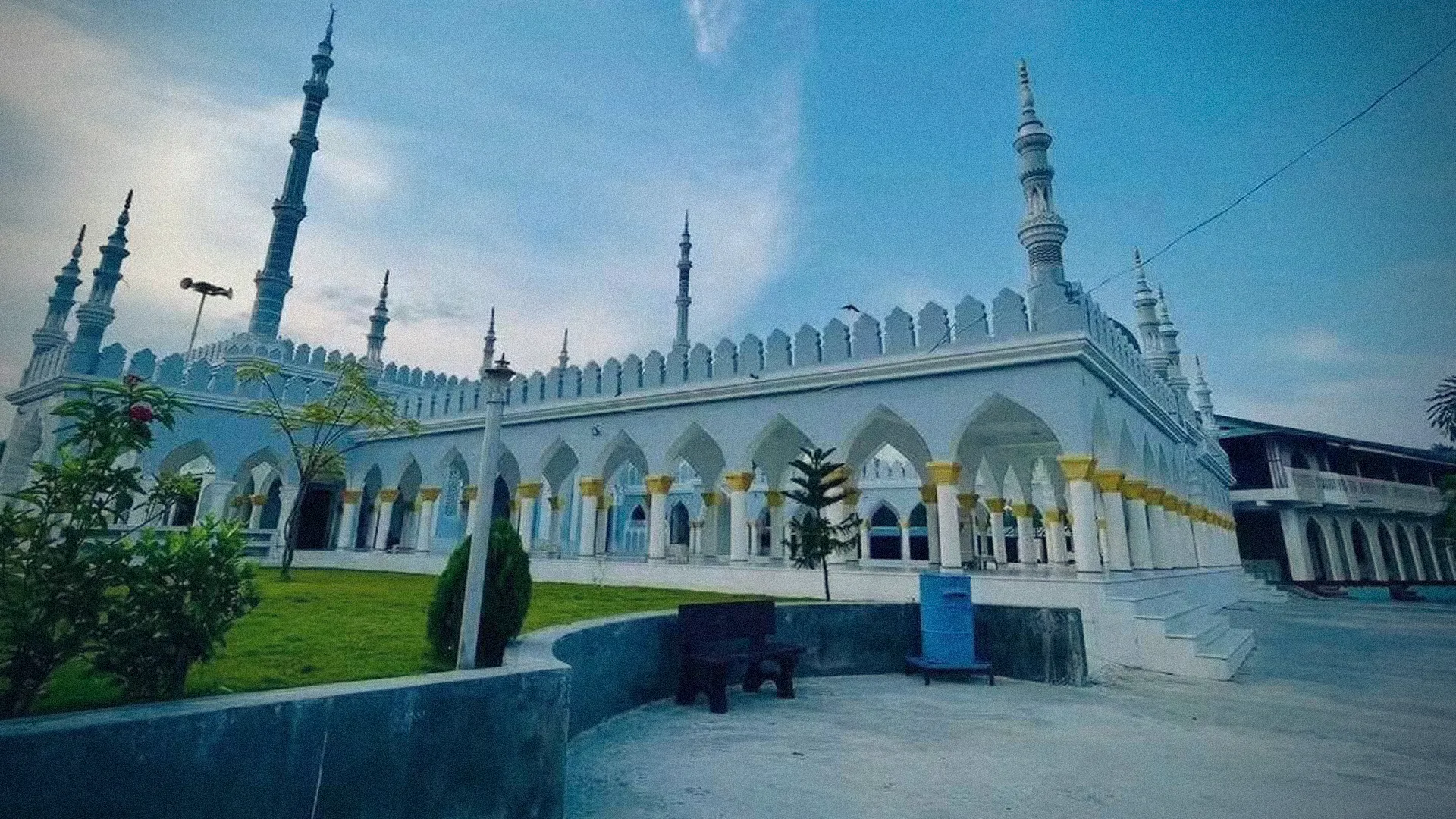
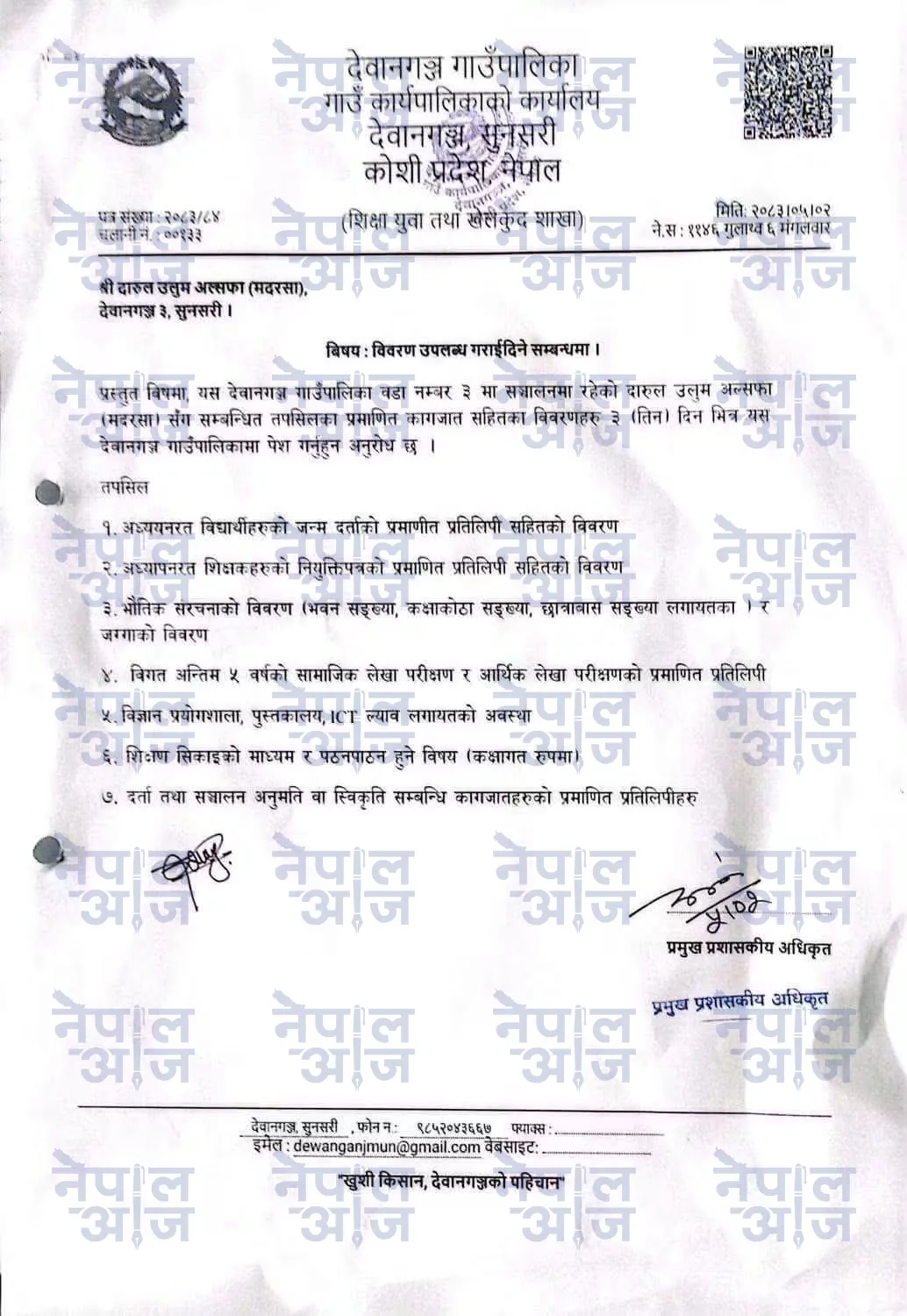
Subsequently, on Bhadra 2, 2083 BS, via letter Dispatch No. 00933, the Rural Municipality issued a strict directive to Darul Uloom Alsafa (Madrassa) to submit certified details within three days on the following 7 items:
- Certified copies of birth certificates of enrolled students
- Certified copies of appointment letters of teaching staff
- Details of land and physical infrastructure including buildings, classrooms, and hostels
- Certified copies of social audit and financial audit reports for the past 5 years
- Status of science laboratory, library, and ICT lab
- Medium of instruction and grade-wise subjects taught
- Certified copies of registration and operation permits or approval documents
Failure of the institution to submit the requested legal documents has raised further suspicions regarding its legality and operational intent.

Interested in this ad?
Would you like to continue to the link or provide your information for more details?
Please provide your information
To continue, please fill in your details
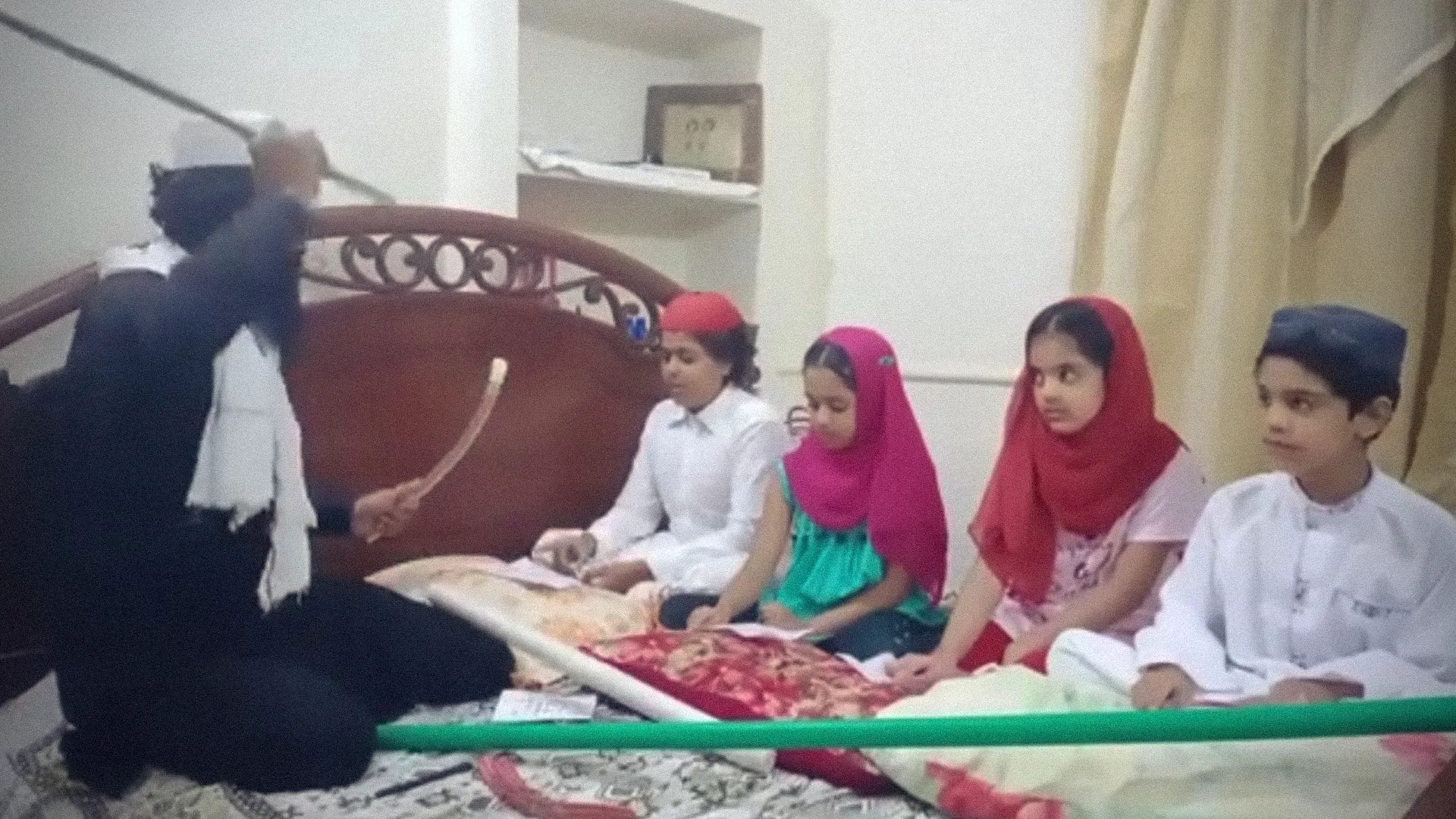
Foreign Funding, Illegal Structures, and Background of 'Darul Uloom Al-Suffa'
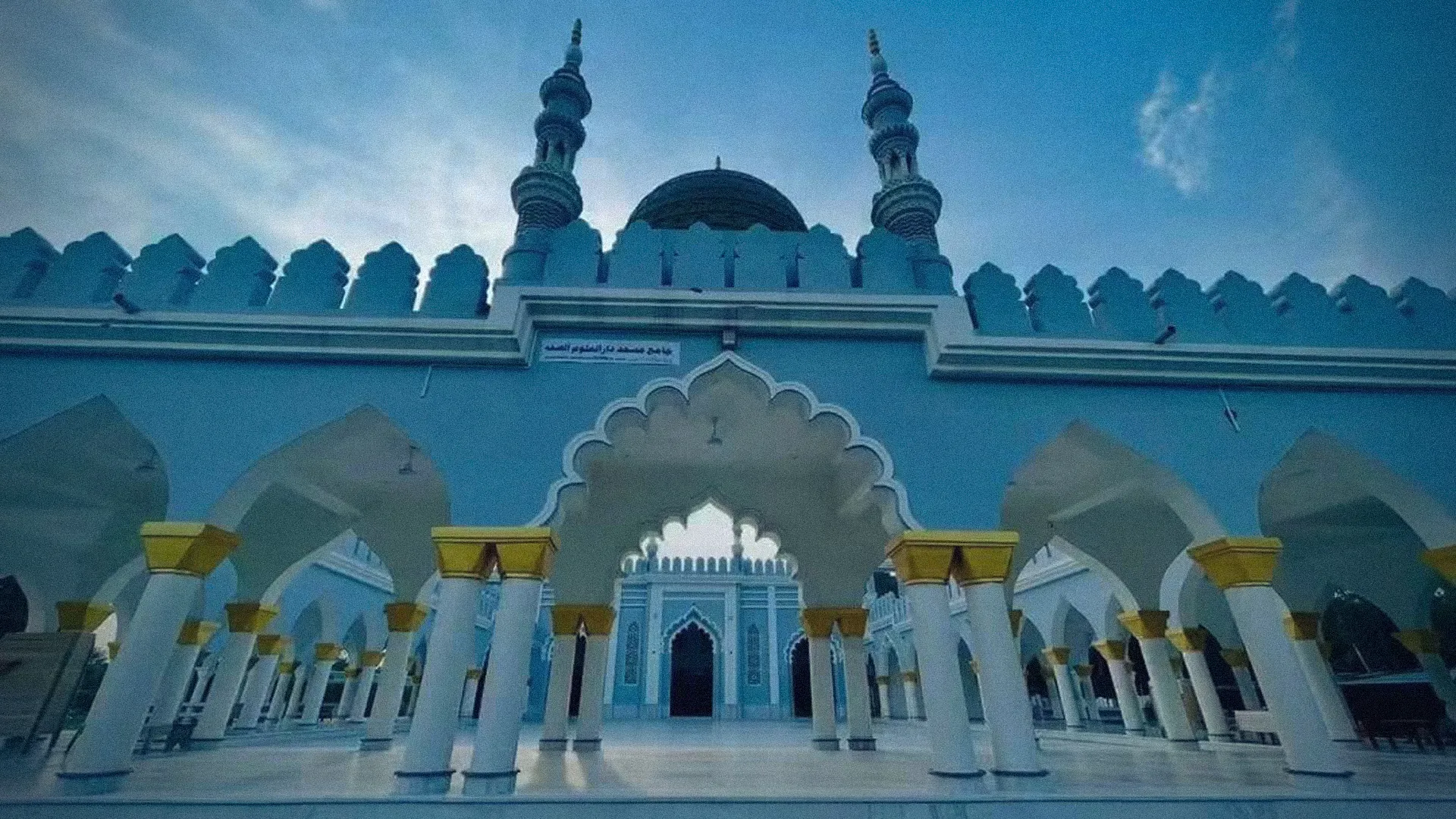
The Masjid Al-Suffa and Girls' Education facility in Kaptanganj was inaugurated on February 6, 2026, by the Chairman of Darul Uloom Al-Suffa, Nepal. The construction of the building was completed under the supervision of Maulana Abul Hasan Nadwi, Chairman of the Al-Suffah Educational and Welfare Society of Nepal. According to available details, foreign funding amounting to NPR 18.7 million (1 crore 87 lakh rupees) was provided by NGOs based in Turkey and South Africa for the construction of Darul Uloom Al-Suffa. It has been confirmed that this madrassa was built on government land, and its registration along with the building map/blueprint are not available with local administrative bodies.
According to the report, over 43 madrassas are in operation in Koshi and Bhokraha Narsingh rural municipalities alone within Sunsari Constituency No. 4. Due to rapid Islamization, this area has even been dubbed "Mini Pakistan," and activities such as renaming "Shree Ram Chowk" to "Islam Chowk" have been observed. Such illegal structures, opaque foreign financial sources, and the unchecked presence of foreign citizens pose serious challenges to communal harmony and national security.
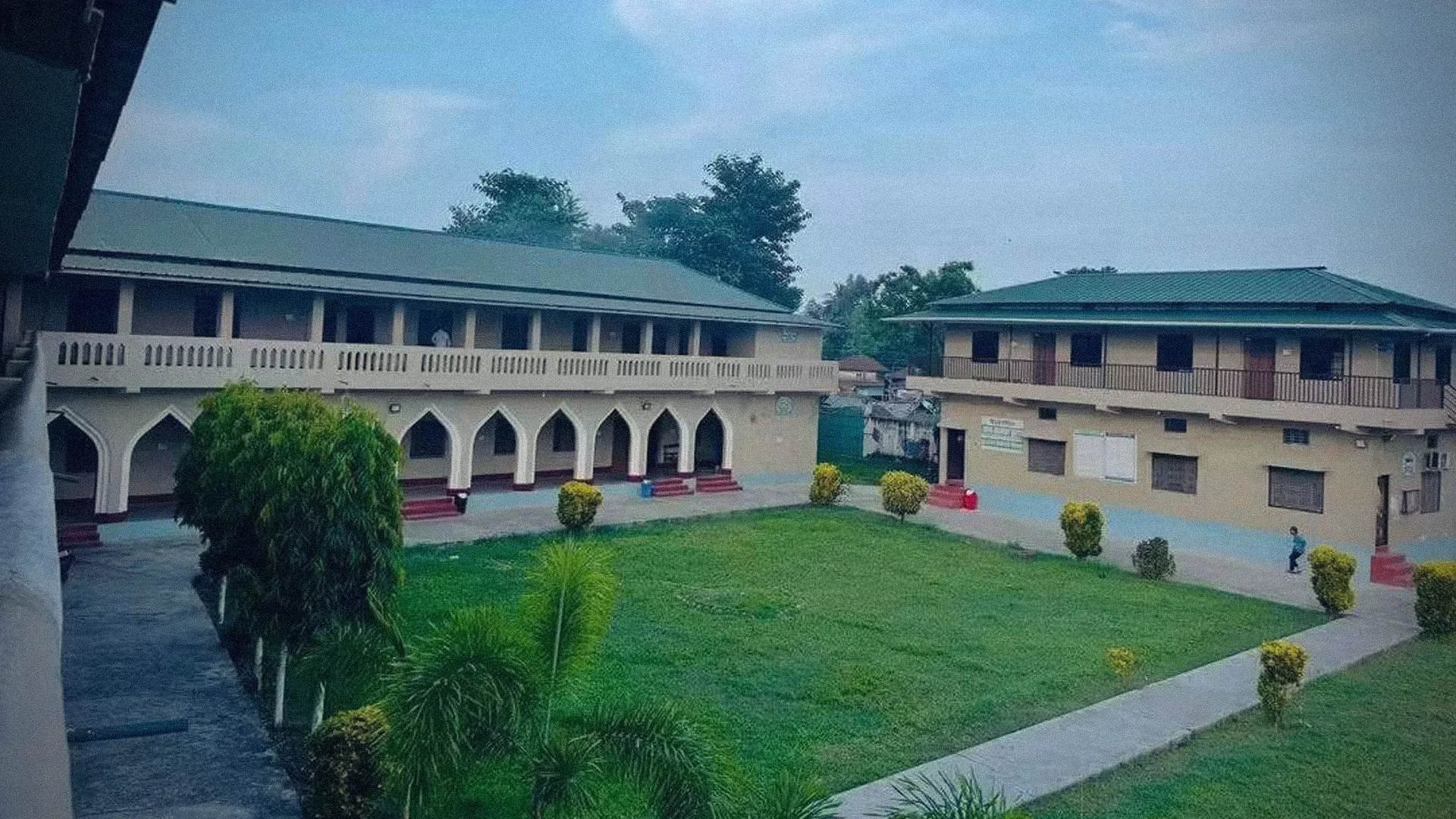
Madrassa Education System, Essence, and Classification
Madrassa is an Arabic word meaning school. In South Asian usage, it primarily refers to a religious educational institution teaching the Quran, Hadith, Islamic Fiqh (jurisprudence), and theology. Some madrassas also include modern academic subjects.
"Darul Uloom" literally translates to "house of knowledge," referring to an advanced Islamic seminary, while "Al-Suffa" refers to a group of devoted companions who studied near the Prophet's Mosque in Medina. The Deobandi movement, which originated in 19th-century India around Darul Uloom Deoband, is a Sunni revivalist tradition based on Hanafi jurisprudence that has spread across South Asia and other countries.
Administrative Oversight, Financial Transparency, and Long-Term Security Concerns
Although religious schools can contribute to education, unregulated fundraising, opaque foreign investment, and lack of administrative oversight create legal and security risks. Local governments and administrative bodies must regularly monitor institutional registration, land ownership, financial audits, and curricula.
It is crucial for the government to take strict action against such illegal religious institutions operating outside formal regulations, implement integrated national educational standards, conduct an impartial investigation into the Dewanganj incident, and restore law, order, and communal harmony.
Editorial Note: Please click the following tags (#Sunsari Incident #Dewanganj) to view stories and content related to this.