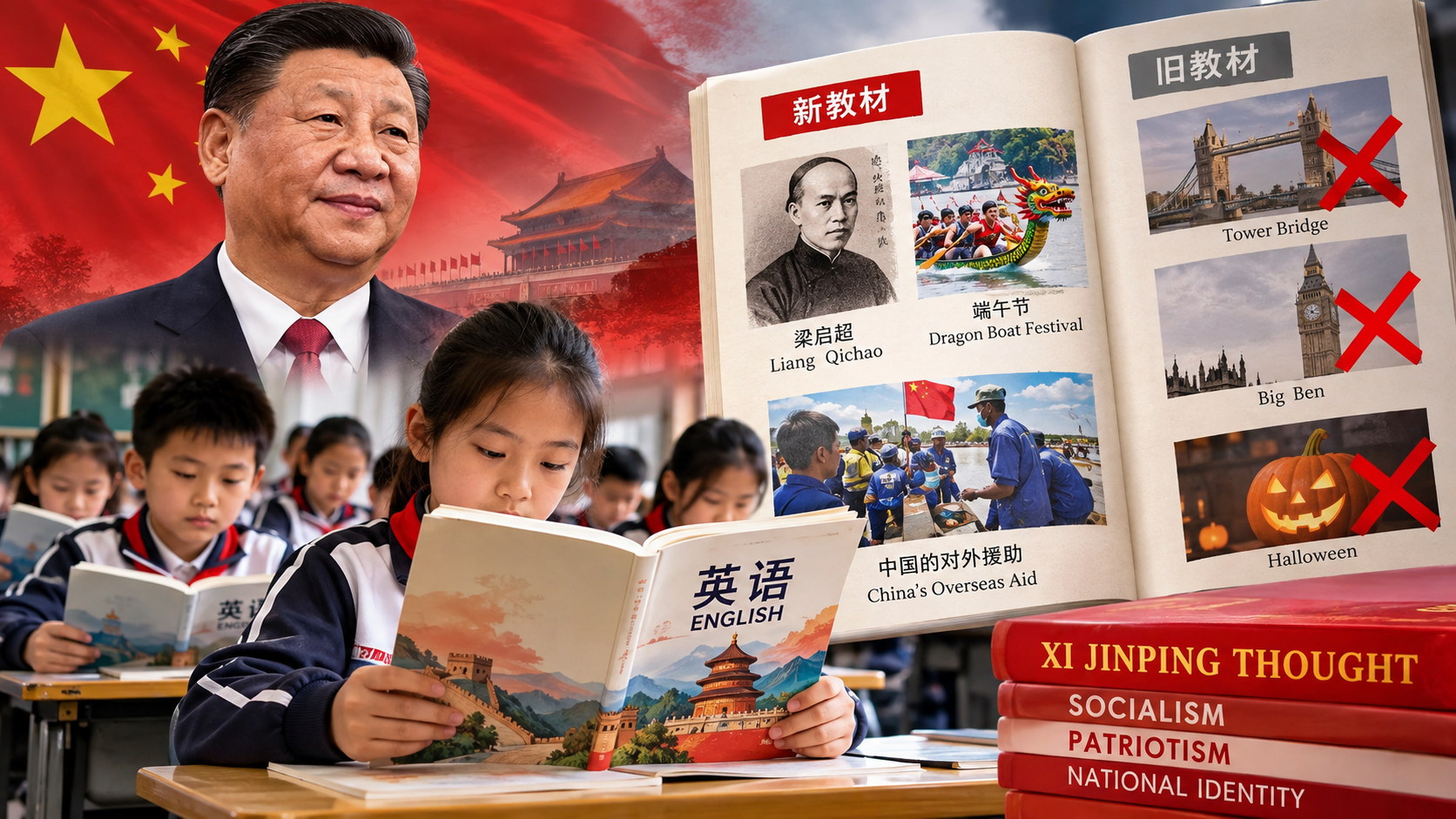


The unveiling of "Xi Jinping Thought on Party Building" marks the latest stage in President Xi Jinping's effort to cement ideological control over the Chinese Communist Party (CCP), with critics viewing the move as another step away from the reformist legacy of the post-Mao era and towards a more centralised political order and return to the Mao era.
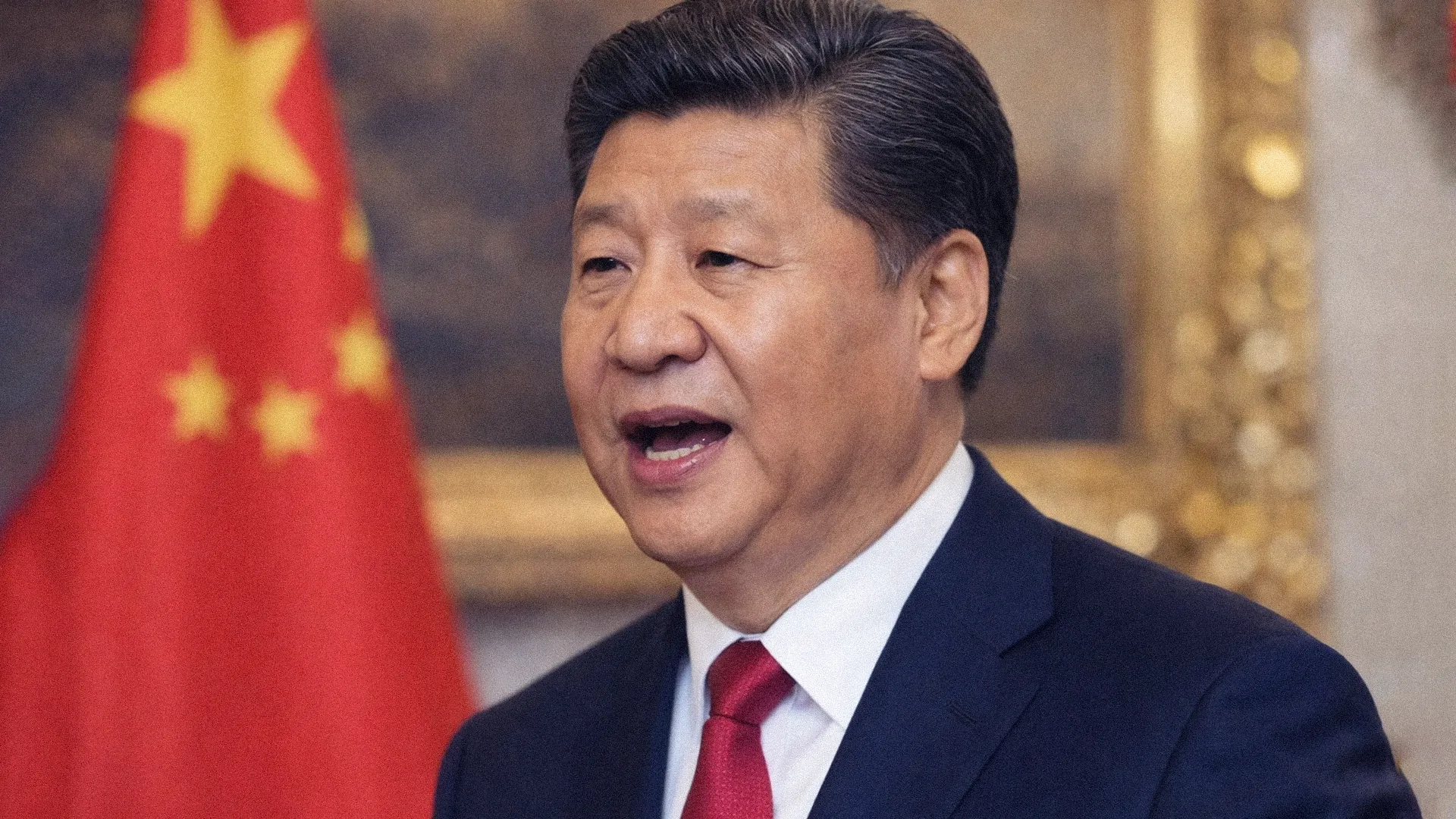
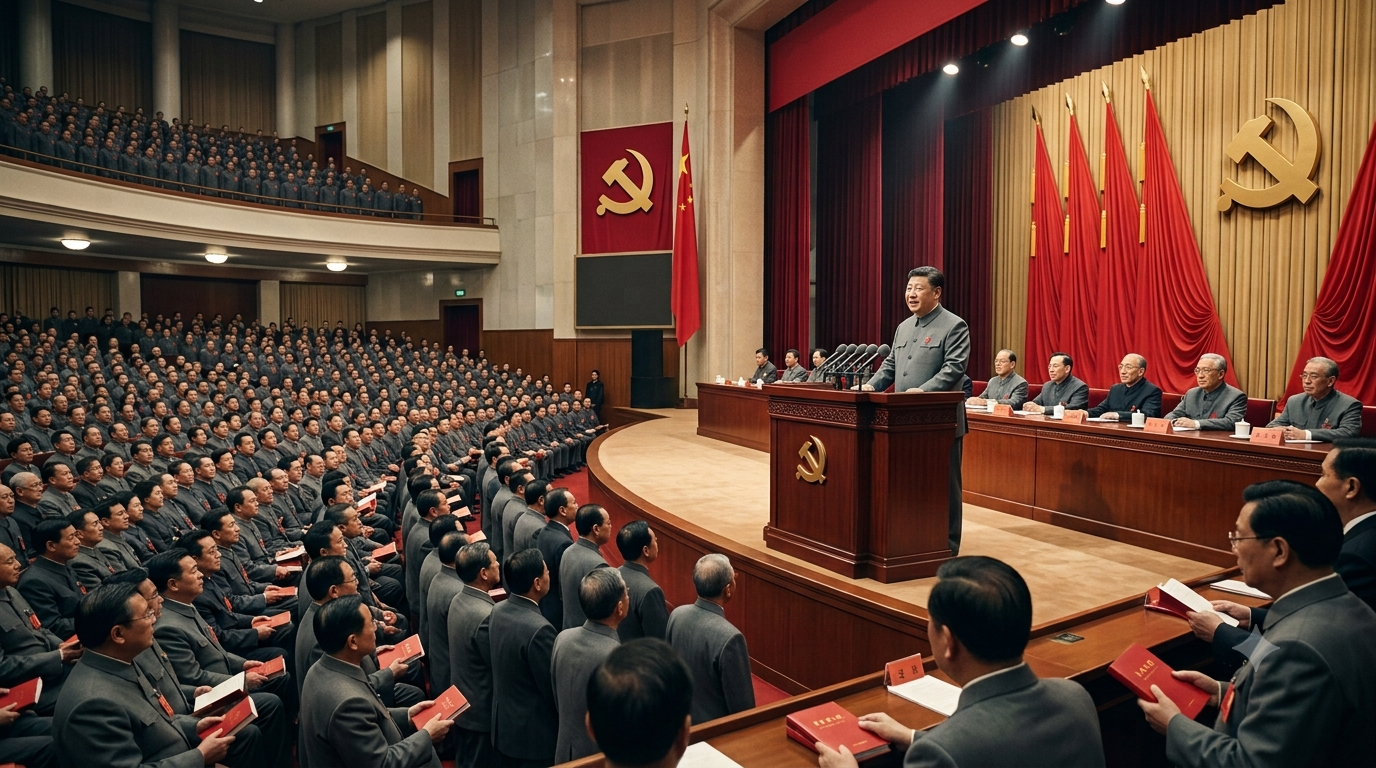
The doctrine was formally introduced at a national conference on Party-building held in Beijing on June 15, where senior leaders called for a fresh campaign to study Xi's writings and reinforce political loyalty to the Party leadership. The event attracted attention not only for its substance but also for its timing, coinciding with Xi's 73rd birthday. Although China's top leaders traditionally avoid public displays linked to personal anniversaries, state media accorded unusual prominence to both the conference and Xi's role as the Party's unquestioned centre of authority.
Consolidating Ideological Authority
According to state media reports, the meeting was presided over by Cai Qi, a member of the Politburo Standing Committee and one of Xi's closest political associates, alongside Li Xi, who heads the Party's anti-corruption apparatus.
Officials declared that "Xi Jinping Thought on Party Building" had formally taken shape, adding another layer to the expanding corpus of ideological formulations carrying Xi's name. Cai urged Party organisations nationwide to intensify political education, instructing cadres to "study the original works, learn the original texts and understand the principles" of Xi's teachings.
The campaign also places renewed emphasis on the slogan known as the "Two Upholds" – safeguarding Xi's status as the Party's core leader and defending the authority of the CCP Central Committee.
For outside observers, the timing and messaging suggest that Beijing is seeking to reinforce internal discipline amid slowing economic growth, mounting local government debt, persistent weakness in the property sector and growing speculation over elite political frictions.
Departure from the Deng Era
Analysts argue that the significance of the latest ideological formulation lies less in its theoretical novelty than in what it signals politically.
China analyst Chen Pokong has described the doctrine as largely repackaging longstanding CCP principles centred on strict Party control and the proposition that "the Party leads everything." In his assessment, the initiative amounts to a symbolic repudiation of the reform and opening-up period inaugurated by Deng Xiaoping after the turmoil of the Cultural Revolution.

Interested in this ad?
Would you like to continue to the link or provide your information for more details?
Please provide your information
To continue, please fill in your details
For much of the four decades following Mao Zedong's death, China's leadership attempted to institutionalise collective decision-making, professionalise governance and reduce the risks associated with personality-driven politics. Economic liberalisation was accompanied by efforts to prevent a return to the ideological upheavals that characterised the Mao era.
Under Xi, however, power has increasingly gravitated back towards the apex of the Party hierarchy. Term limits for the presidency have been abolished, anti-corruption campaigns have simultaneously removed political rivals and strengthened central authority, and Party committees have been embedded more deeply within state institutions and private enterprises.
The formal introduction of a dedicated "Party Building Thought" is therefore seen by some scholars as an ideological marker indicating that the reformist trajectory initiated in the late 1970s is giving way to a governance model in which political loyalty outweighs institutional autonomy.
Mao-Era Echoes, But Different Conditions
The launch of the doctrine comes in the year marking six decades since the beginning of the Cultural Revolution, a reminder that remains politically sensitive in China.
While comparisons with the Mao period are increasingly common among critics, most analysts caution against drawing direct parallels. Contemporary China possesses a far more complex economy, deeper integration with global markets and a significantly more sophisticated state apparatus than existed during Mao's rule.
Environmental factors notwithstanding, Xi's sustained emphasis on ideological conformity, Party supremacy and personal authority has revived debates about whether China is witnessing a partial rehabilitation of political practices associated with an earlier era.
State media hailed the new doctrine as a "major original contribution" to Marxist party-building theory, underscoring Beijing's determination to frame Xi's leadership within the canon of official Party ideology.
Sceptics, however, argue that the growing catalogue of concepts grouped under "Xi Jinping Thought" primarily serves as a political instrument to consolidate authority rather than as a coherent body of theory. Some analysts note that many of these formulations bear the imprint of senior ideologue Wang Huning, who is long regarded as the principal architect of the CCP's evolving ideological narratives.
At a time when China's economic headwinds are becoming harder to ignore, and external pressures continue to mount, the elevation of "Xi Jinping Thought on Party Building" appears intended to send a clear message: political discipline and Party unity will remain the leadership's overriding priorities, even if that means further narrowing the space for the institutional flexibility that once underpinned China's rise.