


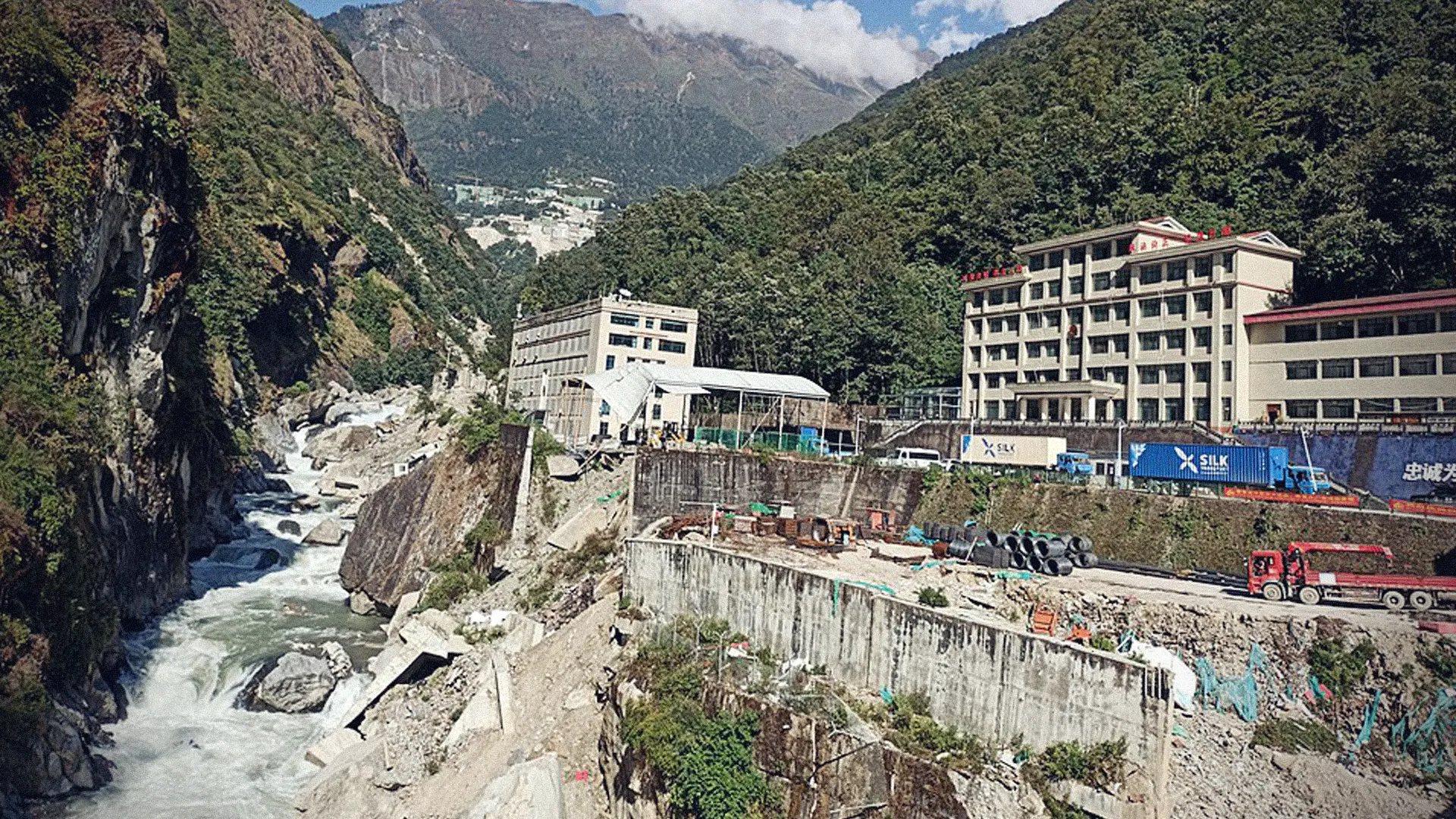
Persistent delays in operating the Tatopani border crossing are creating severe financial distress for Nepali importers and disrupting commercial supply chains, even as local infrastructure authorities dismiss claims of impassable road conditions on the Nepali side.
According to Narayan Datta Bhandari, Chief Engineer at the Charikot Road Division Office, there are currently no structural blockages along the Nepali highway section severe enough to halt vehicular movement. While acknowledging that routine maintenance and safety upgrades are continually required along the fragile Himalayan corridor, Bhandari clarified that present road conditions do not justify shutting down commercial transit.
The ongoing operational standstill has left cargo containers stranded on the Chinese side of the border, burdening Nepali merchants with escalating warehousing fees, accrued interest on banking credit, and inflated freight rates. As a consequence, delayed shipment arrivals threaten to push retail prices higher for consumers ahead of major festival shopping seasons.

Interested in this ad?
Would you like to continue to the link or provide your information for more details?
Please provide your information
To continue, please fill in your details
The Arniko Highway, constructed with Chinese assistance and completed in 1967, has served as a primary trade link between Nepal and Tibet for over half a century. However, recurring seasonal disruptions and unpredictable border suspensions continue to expose systemic vulnerabilities in cross-border trade connectivity.
Industry observers emphasize that resolving recurring transit bottlenecks requires transparent, joint technical inspections to establish binding reopening timelines and clear safety benchmarks. Furthermore, the situation highlights the strategic necessity for Nepal to expedite infrastructure upgrades along alternative northern corridors, including Rasuwagadhi and Korala, to safeguard overall supply chain security.