

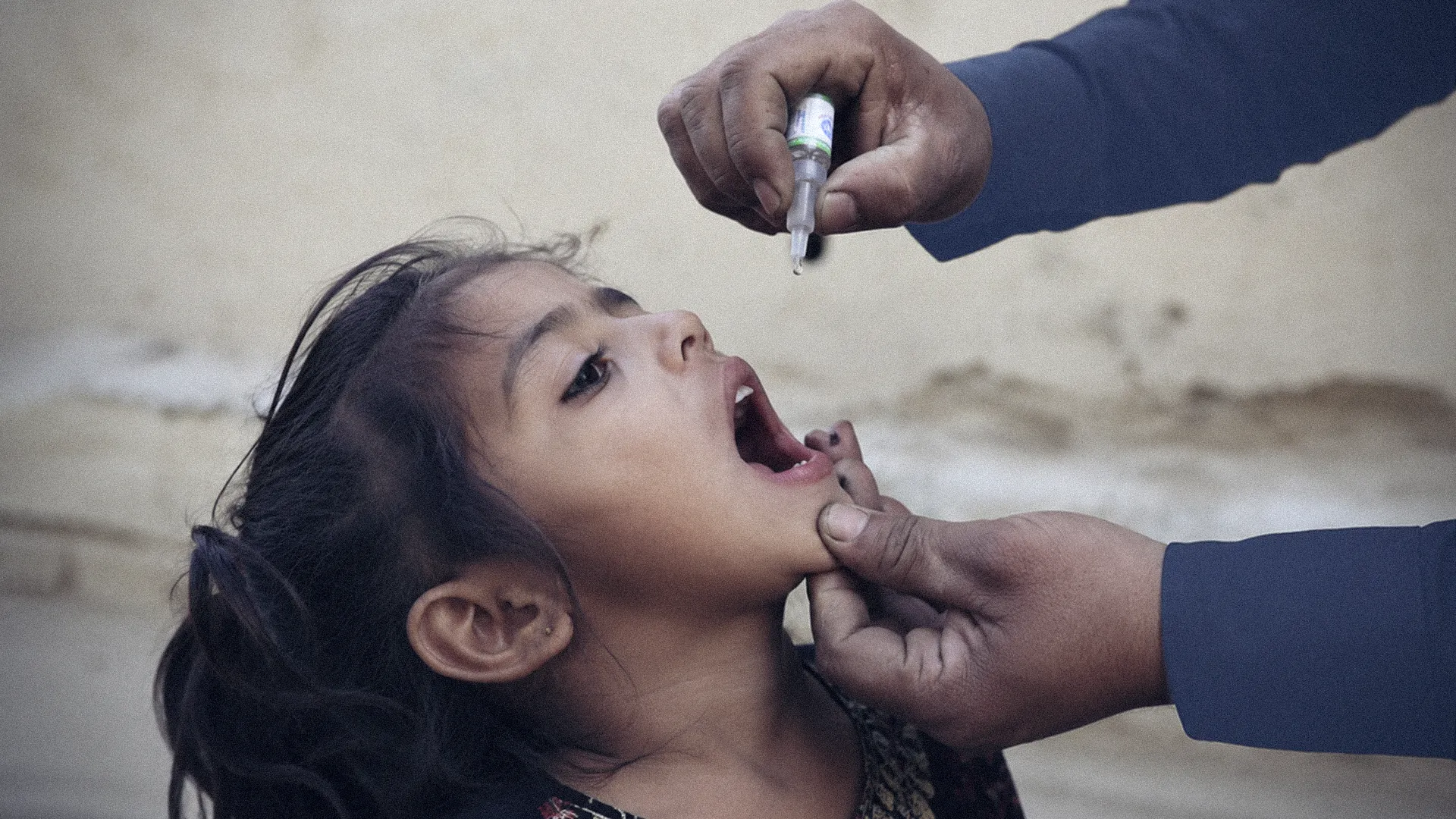
The polio eradication campaign in Pakistan has once again faced serious challenges. Following incidents where health workers and volunteers conducting polio vaccination campaigns in the Rawalpindi region were threatened, questions have resurfaced regarding the country's public health security. Due to long-standing opposition from extremist groups, a lack of security, and a deficiency in public awareness, Pakistan remains one of the few nations in the world where polio persists.
According to local media, teams involved in the vaccination campaign were threatened during door-to-door programs. It is reported that in some areas, it has become difficult for health workers to run the campaign without police protection. As such incidents repeatedly occur across various provinces of Pakistan, polio eradication efforts continue to be affected.
Particularly in the Pakistan-Afghanistan border regions, extremist groups have been propagating the polio vaccine as a foreign conspiracy. Because of this, mistrust toward the vaccine has increased in many communities. In the past, dozens of health workers and security personnel have been attacked during polio campaigns.

Interested in this ad?
Would you like to continue to the link or provide your information for more details?
Please provide your information
To continue, please fill in your details
The World Health Organization (WHO) and UNICEF are continuously supporting Pakistan to make it polio-free. However, political instability, weak health infrastructure, extremist violence, and a lack of public awareness in rural areas have slowed the momentum of the campaign. According to experts, polio is not just a health issue but has become a challenge linked to Pakistan's security and social structure.
Meanwhile, as the economic crisis deepens in Pakistan, government investment in the health sector is also said to be affected. Weaknesses seen in hospitals, medicine supply, and primary healthcare services have increased risks to children's health. International organizations have warned that if polio control fails, its impact could be felt across the entirety of South Asia.
According to analysts, Pakistan can make the polio eradication campaign effective only by coordinating with security agencies, religious communities, and local leadership. Otherwise, threats and violence against health workers risk creating obstacles to the global polio eradication effort itself.