
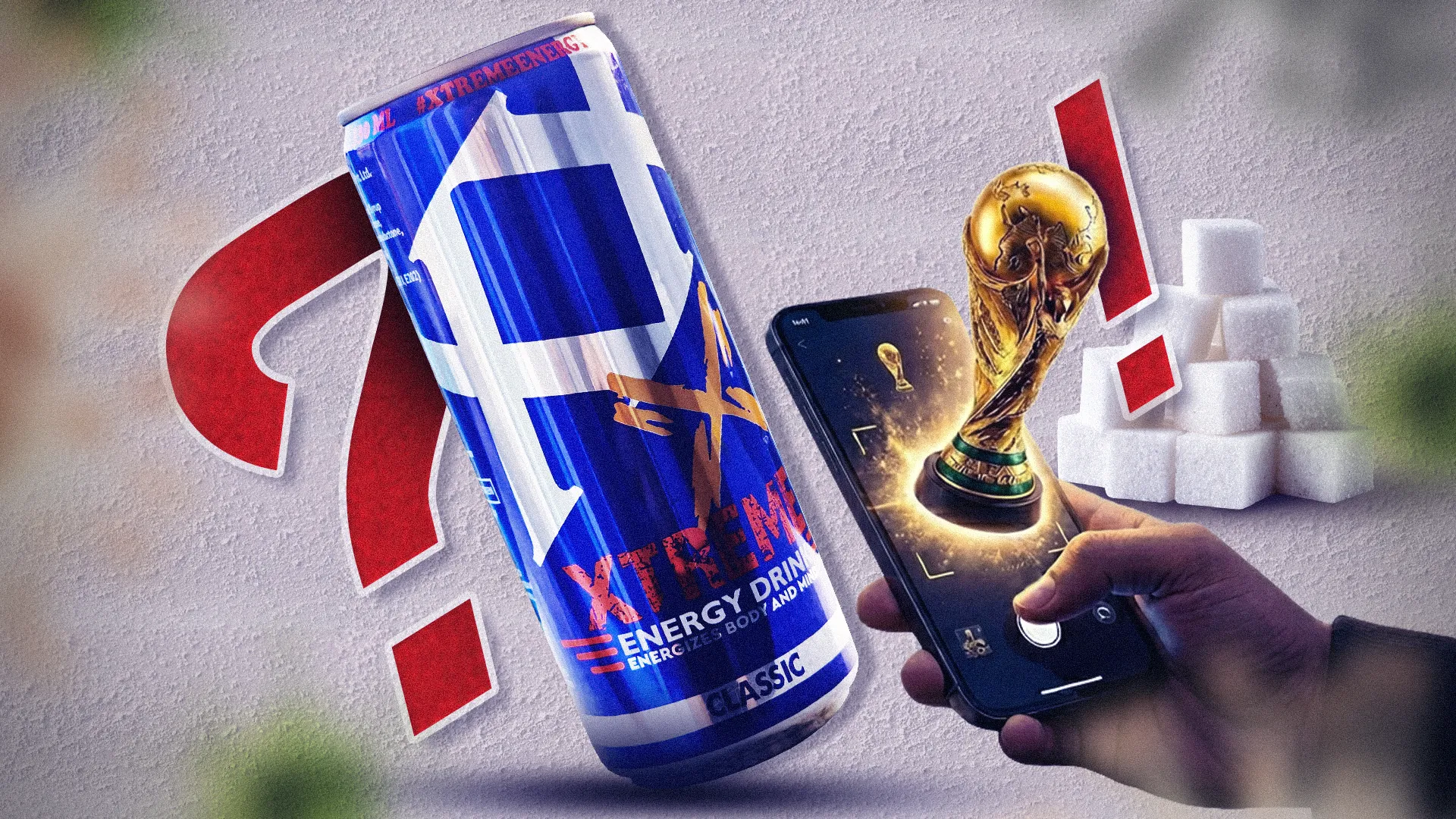
'Xtreme' energy drink, which is being aggressively marketed in the Nepali consumer market targeting the youth generation with appearances more than 10 times a day in social media videos, massive roadside hoarding boards, television, and media, has been dragged into controversy. The promotional scheme named 'Gold in Scan', launched targeting the ongoing FIFA World Cup 2026, has fallen into a circle of legal and ethical controversy.
This brand, manufactured by Agro Thai Foods Pvt. Ltd., has announced that it will provide a valuable 'Golden Ball' each to 3 lucky winners, to be conducted from May 14 (Jestha 1) throughout the World Cup match period. Following this, consumer rights activists and public health experts have expressed serious objections, calling it the pinnacle of misleading and impossible advertising done for commercial tactics.
Experts conclude that this propaganda, of a nature that claims to give a prestigious trophy awarded in the World Cup or a large quantity of real gold in the shape of a football, is merely a stunt to lure consumers. This is a sheer 'Peak of False Advertisement' that induces excessive consumption of an unhealthy beverage. Widespread criticism has started in the market, stating that instead of giving credit-like talks of such a huge prize that is not even technically possible, the company should transparently disclose a 'Football toe' or a specific designated weight clearly.
Just as the sugar level in the body suddenly 'spikes' excessively when drinking this beverage, its advertisement has been deliberately 'spiked' in the media sector. This has created a terrible illusion among the general public as to whether this drink is not just for emergency energy enhancement, but a beverage suitable for regular consumption like the daily meal 'Dal Bhat Tarkari'.
According to public health experts, a 330 ml can contains approximately 36 to 40 grams of sugar, which is one and a half times higher than the daily standard of the World Health Organization. In addition to this, since it contains 99 mg of synthetic caffeine equivalent to 1.5 shots of strong Americano coffee, its excessive consumption leads to serious diseases. It causes health problems such as type-2 diabetes, high blood pressure, irregular heart rhythm, sudden cardiac arrest, fatty liver, insomnia, and severe depression.
Not only this, but regular exposure to the artificial colors and preservatives mixed in this drink has already been proven to disrupt the digestive process and increase the risk of cancer. For children, pregnant, and lactating women, the chemical combination in it is considered 'toxic', which can cause terrifying situations like miscarriage or the birth of prematurely disabled children.
This serious public health issue is a commercial anomaly operating by exploiting a loophole in Nepal's current weak legal structure. Although the Public Health Service Act and the directives of the Advertising Board have declared alcohol and tobacco products harmful and imposed a complete ban, energy drinks have not been placed in the same category. As a result, it has taken the form of a socially accepted drug.
Even though the Advertisement (Regulation) Act stipulates that advertisements must not be 'false or misleading', these brands have been evading the law. Hiding the warning that children and pregnant women should not consume it in a 1 mm font on the back of the can, 50-foot advertisements on the streets and continuous bombardment in the media are taking place. This is establishing an addiction of dopamine and caffeine dependency in the youth brain, just like cigarettes.
Due to the lack of any clear boundaries to set the frequency of advertisements on social media and the allowance to place hoarding boards by taking permission from local levels, chemical beverages are dominating the market. Now, it is already late for the state level to issue strict protocols to impose a complete ban on such misleading and extreme temptation-showing advertisements of energy drinks, equivalent to alcohol and tobacco products, or to stop broadcasting during times accessible to children.