For decades, China has been celebrated as the world’s manufacturing hub and the second-largest economy, a nation whose rise was expected to reshape global history. Yet beneath the polished statistics and triumphant rhetoric lies a troubling reality: The Chinese economy is faltering, and the government is working tirelessly to conceal the depth of its crisis. Official GDP growth figures continue to hover around 4.5–5%, but independent analysts and institutions suggest the real number is far lower, closer to 2–3%. This discrepancy is not a minor statistical error it is evidence of a system built on illusion, where propaganda has replaced transparency and denial has replaced reform.
The Chinese Communist Party (CCP) has long relied on economic performance as a cornerstone of its legitimacy. Growth figures are celebrated as proof of competence, while dissenting voices are silenced. But the cracks are now too wide to ignore. The property sector, once the engine of household wealth, has collapsed. Real estate investment fell by nearly 18% in 2026, leaving millions of apartments unsold and families unable to build financial security. Retail sales, a measure of consumer confidence, grew by barely 1% in June 2026, reflecting a population that is saving rather than spending. Debt levels, particularly among local governments, have soared to unsustainable heights, yet Beijing remains reluctant to expand fiscal deficits, fearing a debt spiral.
The CCP’s response has been to double down on control rather than reform. Official statements describe the economy as “within a reasonable range,” but this is little more than political theatre. Independent economists, including those at the IMF, warn that China’s slowdown is structural, not cyclical. The government’s refusal to acknowledge reality is deliberate: by inflating figures, local officials secure funding, and the central leadership maintains the illusion of prosperity. But this façade is cracking. Satellite imagery of night-time lights, a proxy for real economic activity, shows stagnation in industrial zones once thought to be booming. Social media is filled with stories of shuttered factories, unpaid wages, and workers protesting outside locked gates.
Why is China’s GDP going down?
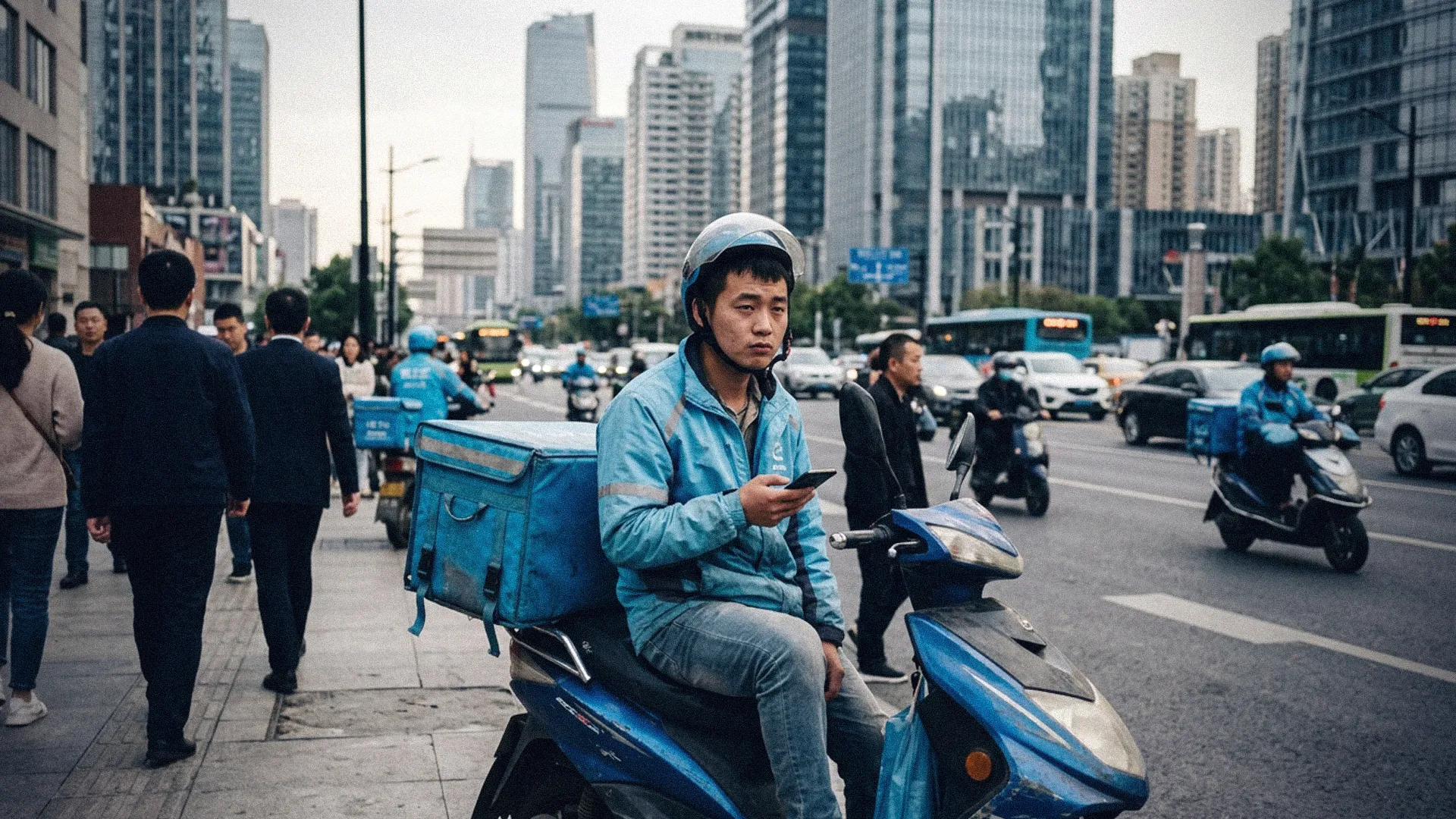
The reasons are manifold. The property crisis has destroyed household wealth, leaving consumers cautious and unwilling to spend. Debt has ballooned, particularly in local governments that borrowed heavily to fund infrastructure projects with little return. Exports, once a reliable engine of growth, are now under pressure as global demand slows and trade tensions rise. Even in sectors where China appears strong, such as electric vehicles, the reality is grim: price wars have eroded margins, and more than half of major automakers are reporting losses. Sale without profit is not successit is a trap. The internal situation is worsening rapidly. Civil servants and teachers, once protected by the so-called “iron rice bowl,” now face delayed salaries and unpaid benefits. In Shenzhen, a city long portrayed as China’s success story, homelessness is rising. Elderly citizens line up at dawn to secure spots in markets to sell vegetables, a stark symbol of shrinking opportunity. The middle class, once the backbone of consumption, is cutting back on essentials, signalling a collapse in confidence. Without confidence, no economy can function.

Interested in this ad?
Would you like to continue to the link or provide your information for more details?
Please provide your information
To continue, please fill in your details
The CCP’s inaction is striking. Rather than pivoting to reforms that would boost domestic consumption and reduce reliance on debt-driven growth, the government clings to outdated strategies. Massive infrastructure projects continue, despite diminishing returns. Export subsidies are expanded; even as global markets saturate. The leadership’s reluctance to confront reality is not just economic mismanagementit is political survival. To admit failure would be to undermine the very foundation of the Party’s legitimacy.
Globally, China’s slowdown is reshaping trade and investment. Multinational companies are reassessing their exposure, with some exiting the Chinese market altogether. The myth of an endless consumer base is fading, replaced by the reality of shrinking demand and rising instability. For nations that have built supply chains around China, the implications are profound. The world is beginning to recognize that prosperity built on illusion cannot last.
The CCP’s concealment of economic failure is not sustainable. Growth driven by debt has reached its limit, consumption has broken down, and exports cannot carry the system alone. Real estate, finance, manufacturing, and local government finances are all failing simultaneously. This is not a temporary downturn or a normal cycle, it is the result of years of distorted incentives, falsified data, and political control overriding economic reality. When every major pillar weakens at once, recovery becomes mathematically impossible.
China’s economy is no longer slowing, it is structurally collapsing. The government’s manipulation of statistics may delay recognition, but it cannot prevent reality from asserting itself. Workers are losing income, households are cutting back on spending, and confidence has evaporated. History shows that systems built on false data fail suddenly, not gradually. China has now reached that inflection point. The collapse may not explode overnight, but it is spreading quietly, relentlessly, and across every sector until denial itself becomes the final casualty.
The world must prepare for the consequences. When China changes the world changes with it. The CCP’s refusal to confront reality has created a dangerous illusion, but illusions cannot sustain economies. The reckoning is coming, and it will reshape global history.