

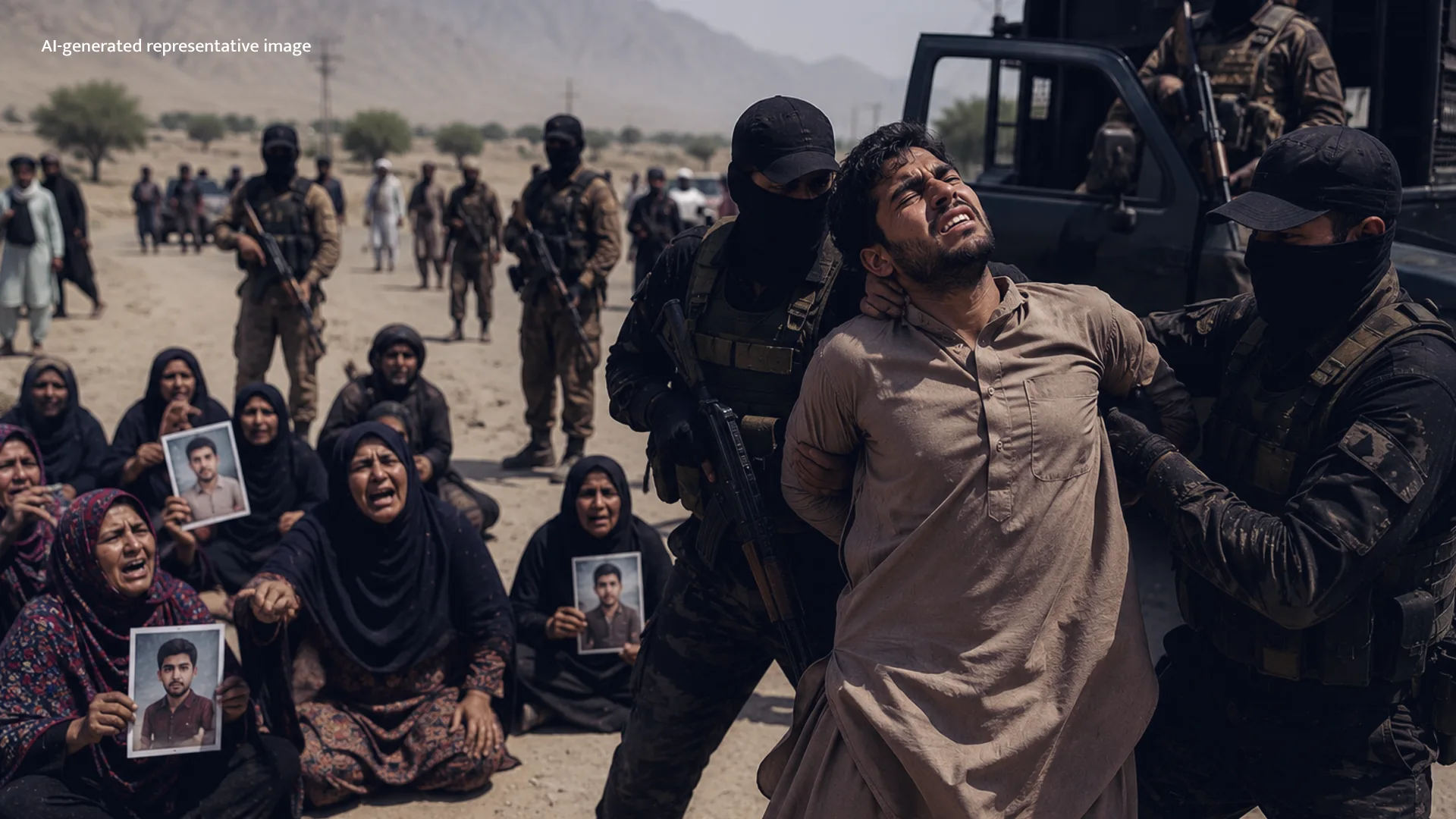
A deepening humanitarian crisis has gripped Pakistan's largest province as domestic human rights organizations reveal a staggering surge in enforced disappearances across Balochistan. According to recent statistical assessments put forth by regional watchdogs, an alarming total of 124 individuals were metrics of unlawful state containment during April 2026 alone, highlighting an ongoing institutional pattern of bypassing legal channels.
This systematic round-up has predominantly targeted the demographic backbone of the region, including university students, prominent community activists, politically engaged youth, and several women. Local nationalist coalitions and human rights advocates have squarely blamed state security apparatuses and law enforcement agencies for executing these unauthorized detentions while keeping the victims' locations entirely hidden from their families.
The severe direct consequence of this campaign is reflected in the intense grief and mobilization of the victims' relatives, who have launched continuous sit-ins, public demonstrations, and justice campaigns across major urban centers. Families report being left in complete administrative limbo for years regarding the survival or whereabouts of their loved ones, with some instances tragically culminating in the discovery of unidentified bodies following an individual’s disappearance.

Interested in this ad?
Would you like to continue to the link or provide your information for more details?
Please provide your information
To continue, please fill in your details
While Pakistani authorities routinely defend their aggressive territorial measures as necessary counter-insurgency and national security responses against regional militancy, global civil liberties organizations maintain that national defense cannot be used to justify the absolute erasure of constitutional rights. Watchdogs are calling for independent judicial investigations into these state practices.
The unresolved issue of missing citizens has evolved far beyond a localized legal dispute; it now stands as a highly volatile political fracture concerning provincial autonomy and state-society relations within Pakistan's federal framework. As regional organizations threaten to escalate their civil resistance, the international community faces growing pressure to enforce transparency and hold the responsible institutions legally accountable.