Fields of discontent: Rural China’s rising protests amid deepening economic strains
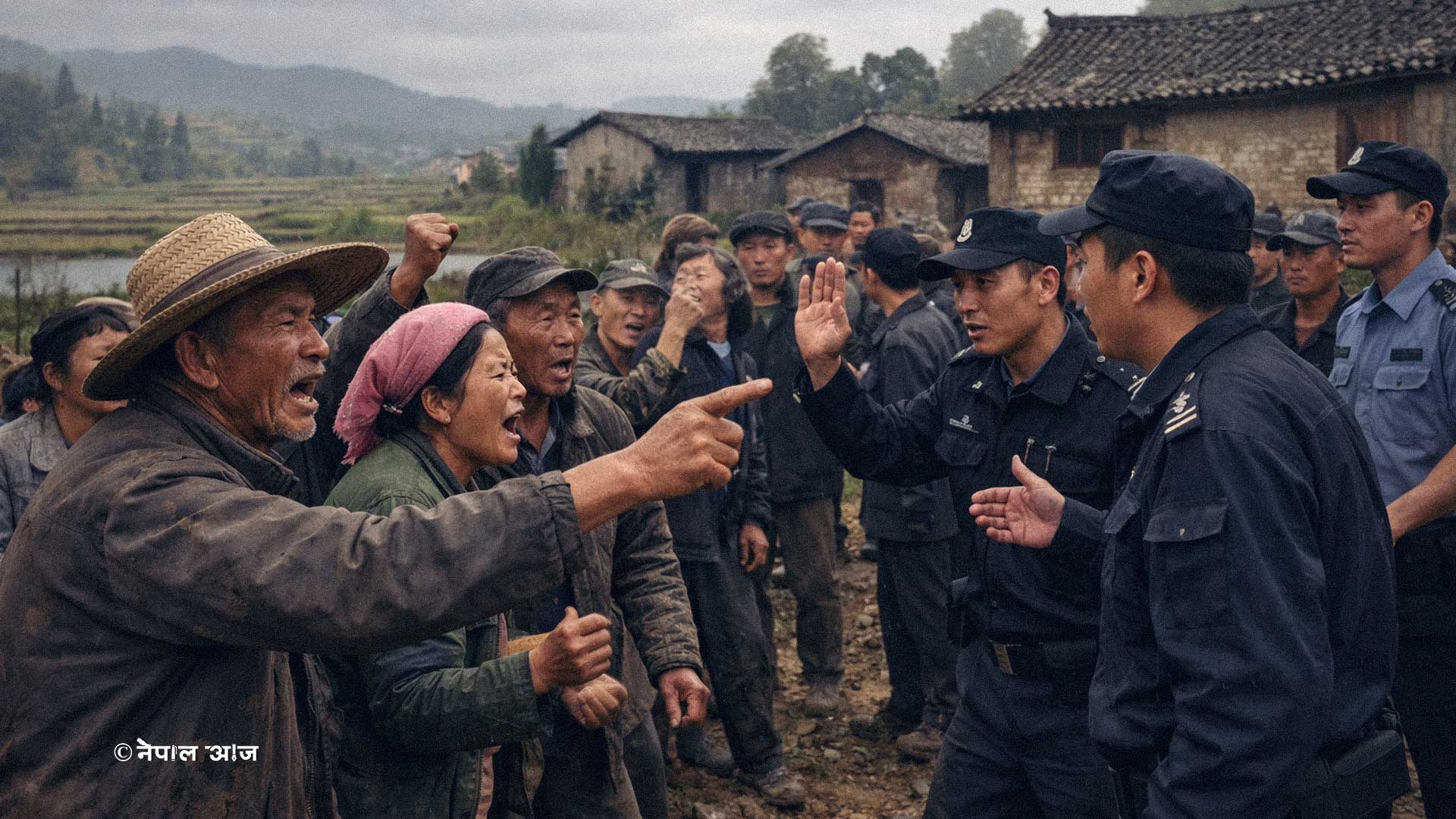
As China’s economy grapples with prolonged slowdown and structural headwinds, rural unrest across the country has surged, marking a notable escalation in social tensions.
The rise in protests — driven by economic hardship, land disputes, and community grievances — highlights widening friction between local populations and authorities, particularly in areas where economic opportunities are scarce, and state policies collide with tradition.
Data from independent monitors reveal that rural protest incidents in 2025 have climbed sharply, underscoring growing instability in China’s hinterlands.
Steep increase in rural protest incidents
According to the China Dissent Monitor (CDM), a project affiliated with Freedom House that tracks civil unrest across mainland China, the first eleven months of 2025 saw approximately 661 rural protest incidents — roughly 70 percent higher than the total for all of 2024.
These incidents form part of a broader pattern of dissent, with CDM logging 1,392 protest events in the third quarter alone, marking a 45 percent increase year-on-year and the sixth straight quarter of rising protest activity nationwide.
While not all protests were rural in origin, rural residents accounted for a significant and growing share of dissent actions, joining labourers, homeowners, and other groups in expressing grievances linked to economic pressures and social policies.
Economy and rural discontent: A troubled link
The uptick in rural protests coincides with China’s broader economic slowdown. As industrial output and investment growth have faltered, and employment prospects in urban centres have weakened, many migrant workers have returned to their home villages — only to find limited economic opportunities.
A report in LianheZaobao noted official concern about “preventing the formation of large-scale return and stay of rural migrant workers,” a policy phrase that sparked public anxiety and wider discussion about rural economic stagnation.
Unlike the cities, where diversified employment opportunities and industrial bases can absorb some degree of economic stress, rural regions often depend on agriculture or informal work, exposing residents to deeper vulnerability when macroeconomic conditions deteriorate.
Without robust rural employment, returning workers frequently find themselves without crops, land or stable incomes — factors that have repeatedly surfaced in protest triggers.
Land and tradition clash with policy enforcement
Among the most prominent catalysts for rural protests in 2025 were disputes over local government actions perceived as encroachments on traditional practices or property rights.
In Lingao County (Hainan) and Fuchuan County (Guangxi), the demolition of a privately built temple and a clan ancestral hall sparked violent confrontations between villagers and officials.
These sites were viewed by residents as central to their cultural heritage, making the demolitions flashpoints for broader discontent over local governance and land management.
Similarly, in Xifeng County, Guizhou, protests erupted over new local mandates requiring the cremation of remains, directly contradicting long-held burial customs.
The government’s attempt to enforce this policy was interpreted by villagers as an attack on cultural tradition, generating heated resistance that extended beyond administrative compliance to larger protest actions.
These confrontations reflect a recurring theme across various rural protests: state policies, often framed as modernisation measures or administrative directives, are colliding with local norms, property expectations, and historical rights, provoking sustained pushback when community identities are perceived to be under threat.
Economic pressures amplify longstanding grievances
Economists and sociologists have highlighted that rural unrest in China often intersects with deeper structural issues such as land expropriation and economic imbalance between urban and rural areas.
While specific protests in 2025 have attracted attention, they echo earlier patterns of rural dissent tied to land acquisition disputes, forced relocation, and perceptions of corruption.
Past CDM data underscored that land grabs and forced relocation were significant triggers for rural protests even before the broader economic slowdown deepened.
The return of migrant workers, confronted with dwindling income prospects and, in some cases, lost land rights, further compounds these tensions.
In many rural settings, agricultural and community land once promised as a safety net for displaced labourers has increasingly been repurposed for industrial or commercial development, leaving returning residents economically stranded and socially disillusioned.
Growing complexity in protest dynamics
Beyond traditional land and cultural disputes, rural protests in 2025 have reflected broader discontent with governance practices at the local level.
The diversity of protest drivers — including labour, housing, and educational grievances alongside rural unrest — underscores the widening reach of discontent into multiple sectors of Chinese society.
The frequency and diversity of these events also illustrate how rural activism, once largely isolated or sporadic, is increasingly part of a broader pattern of public expression against perceived injustices.
While rural protests may lack nationwide coordination, their cumulative impact across counties and provinces has contributed to a noticeable rise in overall protest activity recorded throughout this year.
State response and information control
Official response to rising protests in rural areas remains constrained by China’s broader approach to dissent and public order. Authorities typically respond with a combination of suppression, targeted policing, and efforts to manage narratives through media control and restrictions on online content.
This model of state control, known broadly as grid-style social management, relies on extensive surveillance and local reporting networks to monitor and contain dissent before it escalates into larger movements.
Despite such mechanisms, the increase in recorded protest events suggests that local grievances have continued to surface, occasionally breaking through information barriers and drawing attention both domestically and internationally.
Independent tracking efforts, such as those by the China Dissent Monitor, rely on a mix of public reports, social media indicators, and civil society documentation to piece together a broader picture of unrest often absent from official channels.
Widening social fault lines
The rise in rural protests in 2025 underlines how economic slowdown — manifesting as limited job growth, stagnating incomes, and rising living costs — is interacting with longstanding structural challenges to fuel social tensions.
In regions where economic revitalisation has lagged and opportunities remain scarce, grassroots discontent continues to find expression through collective action, despite the risks of suppression.
These developments reveal a deeper fault line in Chinese society — one where economic pressures and shifting demographic patterns intersect with cultural norms and local governance disputes.
As protests multiply and diversify in rural China, the dynamics of state–society relations appear increasingly strained, with grassroots resistance emerging as a persistent feature of the country’s socio-economic landscape.
China


![From Kathmandu to the World: How Excel Students Are Winning Big [Admission Open]](https://www.nepalaaja.com/img/70194/medium/excel-college-info-eng-nep-2342.jpg)