How Chinese Surveillance Is Silencing Tibetan Refugees Across the Himalayas
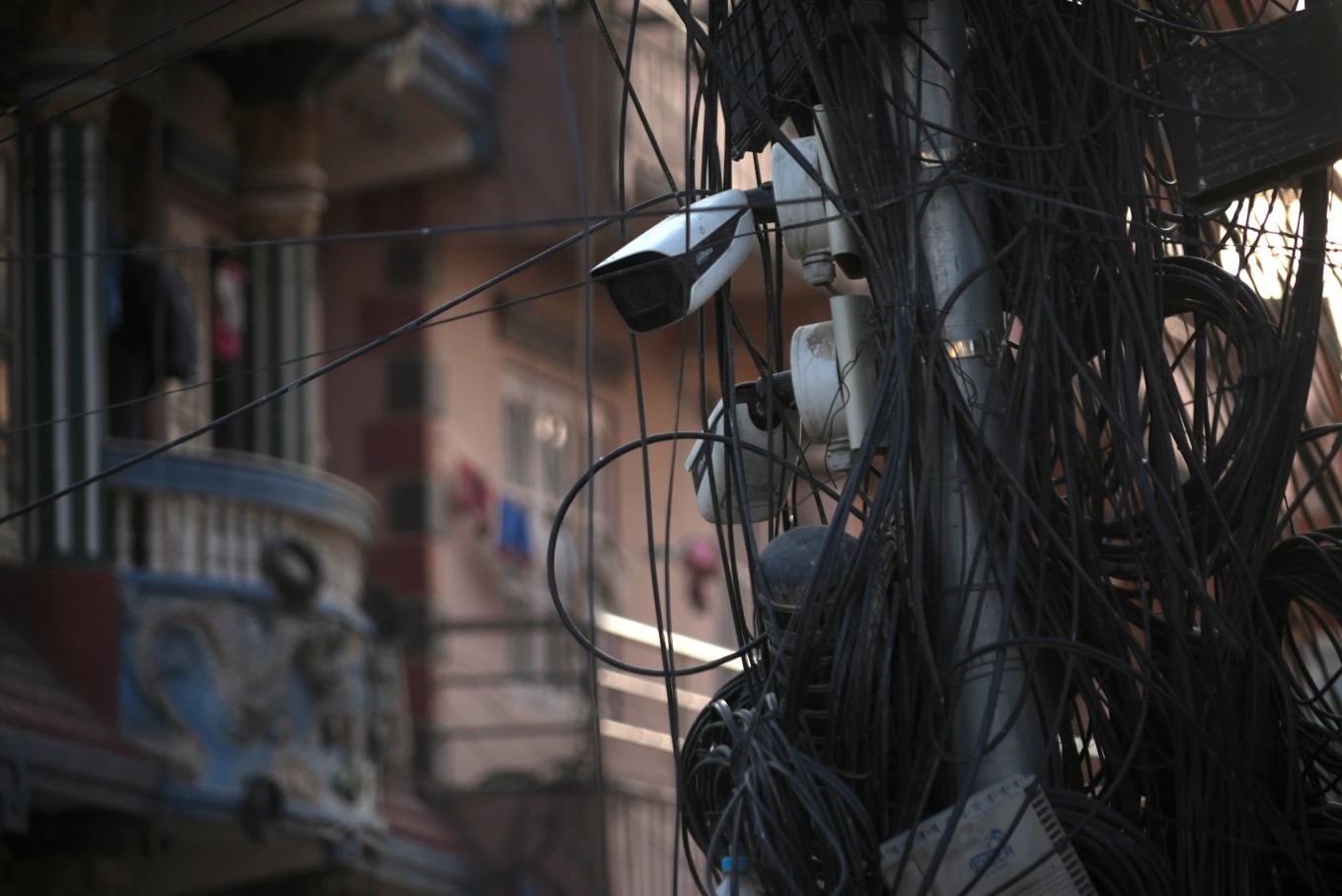
Based on verified reporting by Associated Press, a detailed picture has emerged of how surveillance technology supplied by Chinese companies has reshaped the daily lives of Tibetan refugees in Nepal and altered the political and security environment along the Himalayan frontier.
For decades after China’s suppression of the 1959 Tibetan uprising, Nepal functioned as a critical transit point and refuge for Tibetans fleeing across the mountains, a movement led symbolically by the Dalai Lama and tacitly tolerated by Kathmandu. That role has steadily eroded over the past decade. According to AP’s investigation, Tibetan communities in Kathmandu and in border districts now live under dense networks of closed-circuit cameras and digital monitoring systems, most of them manufactured and supplied by Chinese firms and integrated into Nepal’s policing infrastructure. Tibetan refugees interviewed by AP described altering basic routines—lowering voices indoors, locking prayer rooms, avoiding public displays of faith or political expression—out of fear that their movements and gatherings are being recorded and analyzed.
AP’s reporting shows that Nepal is among more than 150 countries purchasing or receiving Chinese surveillance technologies, which Beijing markets as low-cost, comprehensive security solutions to governments with limited resources. In Nepal, these systems include citywide camera networks, predictive policing tools, and digital communications platforms for law enforcement. Nepal Police confirmed in 2018 that predictive policing technology was being developed, enabling authorities to track movement patterns and identify individuals deemed likely to protest, particularly around politically sensitive dates such as March 10, which commemorates the 1959 uprising, or July 6, the Dalai Lama’s birthday. Tibetan refugees told AP that detentions often occur preemptively around these dates, a claim that AP attributes to their firsthand accounts rather than official confirmation.
Procurement documents and internal government records reviewed by AP indicate that Chinese companies including Hikvision, Dahua, Uniview, and Hytera now dominate Nepal’s surveillance and police communications systems. Nearly all CCTV cameras deployed in Kathmandu are linked to centralized monitoring centers operated by Nepal Police, some located close to the Chinese embassy. A photograph published by a Nepali newspaper and cited by AP shows a sign inside one such control room stating that equipment was provided “with the compliments of the Ministry of Public Security of China.” A retired Nepali police officer, speaking anonymously to AP, said China often supplied complete hardware systems rather than cash, including a nationwide digital radio network valued at about USD 5.5 million, and encouraged deployment in border districts with historic Tibetan escape routes. Nepal ultimately accepted these terms, the officer said, citing affordability and performance compared with Western alternatives.
The AP investigation further documents close operational cooperation between Nepali and Chinese authorities. According to Chinese government statements cited by AP, hundreds of Nepali police officers have traveled to China for training in policing and border control. Chinese officials also participate in joint border coordination mechanisms with Nepal, which Chinese-run Tibetan authorities describe as covering patrols and repatriation issues. A 2021 internal Nepali government report obtained by AP alleged that China had constructed surveillance installations inside Nepal and within border buffer zones where construction is restricted by bilateral agreements. In response, China’s Ministry of Foreign Affairs told AP that accusations of coercion or joint surveillance of Tibetans were “a sheer fabrication driven by ulterior motives,” and rejected claims that Tibet-related issues were being used to influence Nepal.
The human consequences are visible in migration figures. Tibetan officials in Nepal told AP that while thousands once crossed into Nepal annually, the number has fallen to the single digits. They attributed the decline to tighter border controls, closer Nepal–China relations, and what they described as unprecedented surveillance on both sides of the frontier. AP corroborated the demographic shift by documenting the closure or near-emptying of Tibetan reception facilities in Kathmandu that once housed new arrivals. Tibetan refugees also reported persistent legal limbo: many lack refugee identity cards, preventing them from opening bank accounts, working legally, or traveling abroad.
Along Nepal’s northern border, AP reporters observed physical and digital measures reinforcing the same pattern. In Mustang district near Lo Manthang, residents and Tibetan sources told AP that Chinese officials have pressured locals to remove photographs of the Dalai Lama from shops and homes. A large surveillance dome installed on the Chinese side of the border overlooks mountain paths historically used by refugees, a structure visible for kilometers and described by multiple Tibetan residents as an unmistakable warning. Chinese authorities characterize the broader border system as a “Great Wall of Steel,” comprising fences, sensors, cameras, and drones, a description AP attributes to official Chinese statements.
AP also examined the international technology supply chain behind these systems. The investigation found that while Chinese firms now export turnkey surveillance platforms, many underlying technologies originated in the United States. For example, Hikvision and Dahua market camera systems in Nepal that rely on cloud services linked to Amazon Web Services, which told AP it complies with U.S. law, follows ethical codes of conduct, and does not itself provide surveillance infrastructure. Hikvision and Dahua, both listed by the U.S. Commerce Department over national security and human rights concerns, said they conduct due diligence to prevent misuse and deny involvement in repression. AP noted that such transactions remain legal under U.S. regulations, though subject to restrictions.
The tightening surveillance environment has accelerated an exodus from Nepal’s Tibetan communities. AP documented a decline from more than 20,000 Tibetans in Nepal to roughly half that number or less, based on community estimates and official statements. Individuals interviewed by AP described plans to leave for India or elsewhere, fearing that Nepal no longer offers meaningful protection. One former protester, now a parent, told AP that his priority is securing a future for his child outside the country because he sees no long-term safety under expanding digital monitoring.
Taken together, AP’s findings depict a gradual but profound shift: a country once defined as a sanctuary has become an extension of a broader surveillance ecosystem shaped by regional geopolitics, technological dependence, and security cooperation. As cameras proliferate and borders harden, Tibetan refugees and border communities increasingly measure their lives by what they choose not to say or do, raising unresolved questions about Nepal’s sovereignty, China’s growing influence, and the future of asylum in the Himalayas.
Sharp Power China In Nepal


![From Kathmandu to the World: How Excel Students Are Winning Big [Admission Open]](https://www.nepalaaja.com/img/70194/medium/excel-college-info-eng-nep-2342.jpg)