Basnet Praises Modi, Targets Kulman: Who Ended Nepal’s Blackouts?
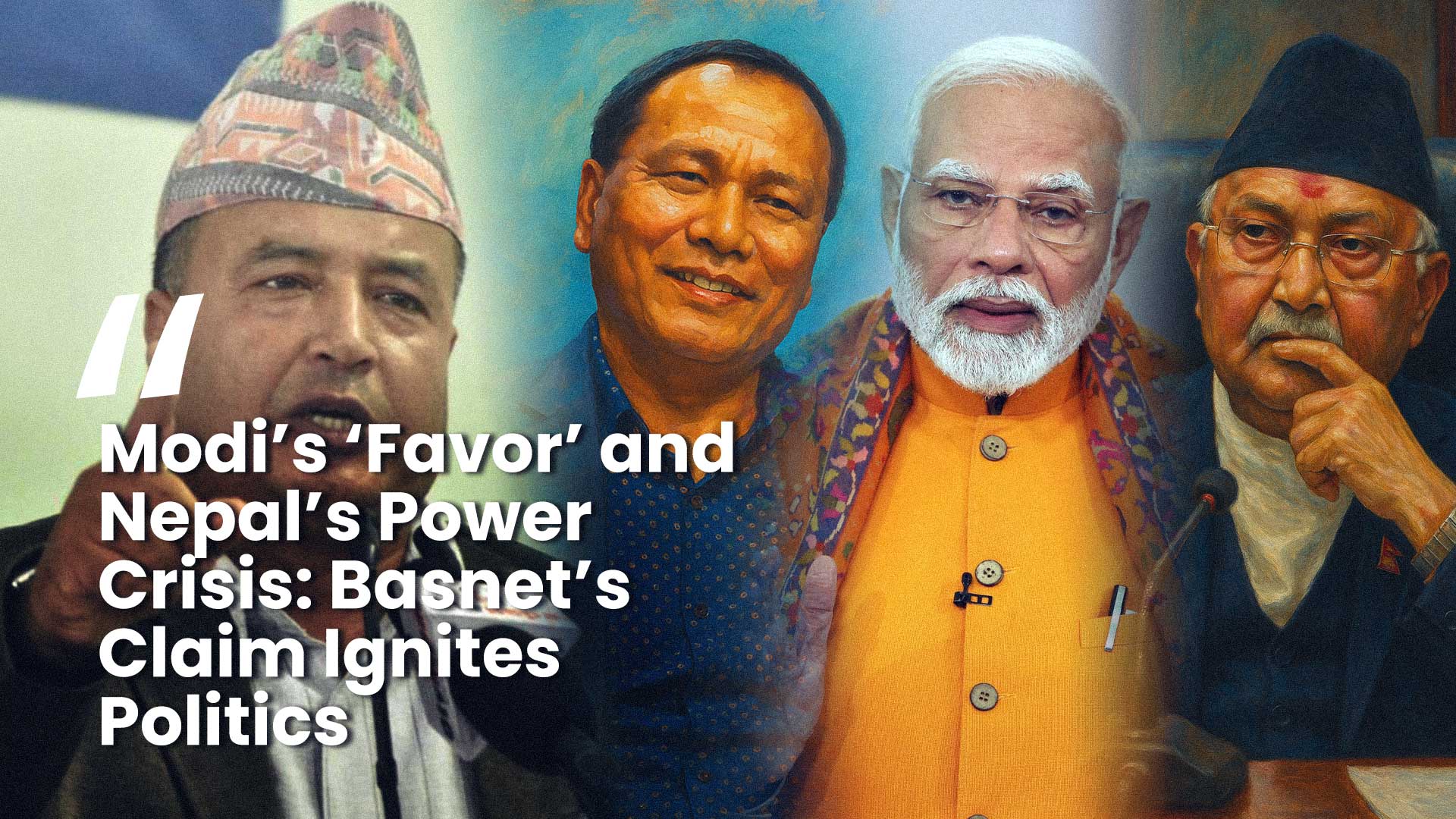
Kathmandu — A Facebook post by Mahesh Basnet, a close ally of former Prime Minister KP Sharma Oli and a prominent figure within the Communist Party of Nepal (Unified Marxist–Leninist), has ignited intense political debate just weeks before Nepal heads into national elections. Basnet posted a video showing Indian Prime Minister Narendra Modi and then–Prime Minister Oli jointly inaugurating a cross-border transmission line, implying that electricity supplied by India played a decisive role in ending Nepal’s years-long load-shedding crisis.
Basnet, known for his strong anti-India rhetoric despite being aligned with Oli, suddenly invoked Modi’s “favor” in his post and suggested that credit for ending Nepal’s energy crisis had gone to the “wrong hands.” This unexpected shift has been interpreted as an attempt to subtly defend Oli while escalating internal tensions within the UML ahead of its party congress.
More strikingly, Basnet’s remark that “one person works while another takes the credit” was widely viewed as a veiled attack on Kulman Ghising, the former head of Nepal Electricity Authority and a national figure celebrated for ending Nepal’s notorious power cuts. His post revived deep public and institutional divides over who actually deserves recognition for the country’s energy turnaround—politicians or technocrats.
Former energy officials responded sharply, noting that transmission line development, cross-border electricity trading agreements, and domestic structural reforms were multi-stakeholder achievements, not the work of any single individual. They argue that while Nepal–India electricity trade was necessary, the claim that one leader or one foreign government ended the load-shedding crisis is factually incomplete—and is now being deployed as a political tool.
Political analysts say Basnet’s decision to release such a statement on the eve of the UML party congress appears to be part of a broader “credit re-writing” campaign among Oli loyalists seeking to reshape narratives ahead of the election cycle.
Public sentiment, however, remains largely supportive of Ghising, with many citing his systemic reforms, technical discipline, and institutional restructuring as the core reasons behind Nepal’s energy stabilization. As Basnet used the Modi–Oli imagery to redirect political credit, critics questioned the intent behind the move: “If credit must truly go to the rightful hands, who actually ended load-shedding—facts and institutional work, or political messaging?”
Ultimately, Basnet’s brief post has exposed the deeper factional psychology within the UML, Nepal’s sensitive political relationship with India, Ghising’s enduring popularity, and the shifting power equations influencing Nepal’s upcoming elections. While parties grapple with internal crises and strategic recalculations, one question now dominates public discourse: What defines genuine energy security in Nepal—evidence, or social-media narratives?

![From Kathmandu to the World: How Excel Students Are Winning Big [Admission Open]](https://www.nepalaaja.com/img/70194/medium/excel-college-info-eng-nep-2342.jpg)