Chinese narratives focus on historic ties with ancient sites to exert control over Tibet and Xinjiang
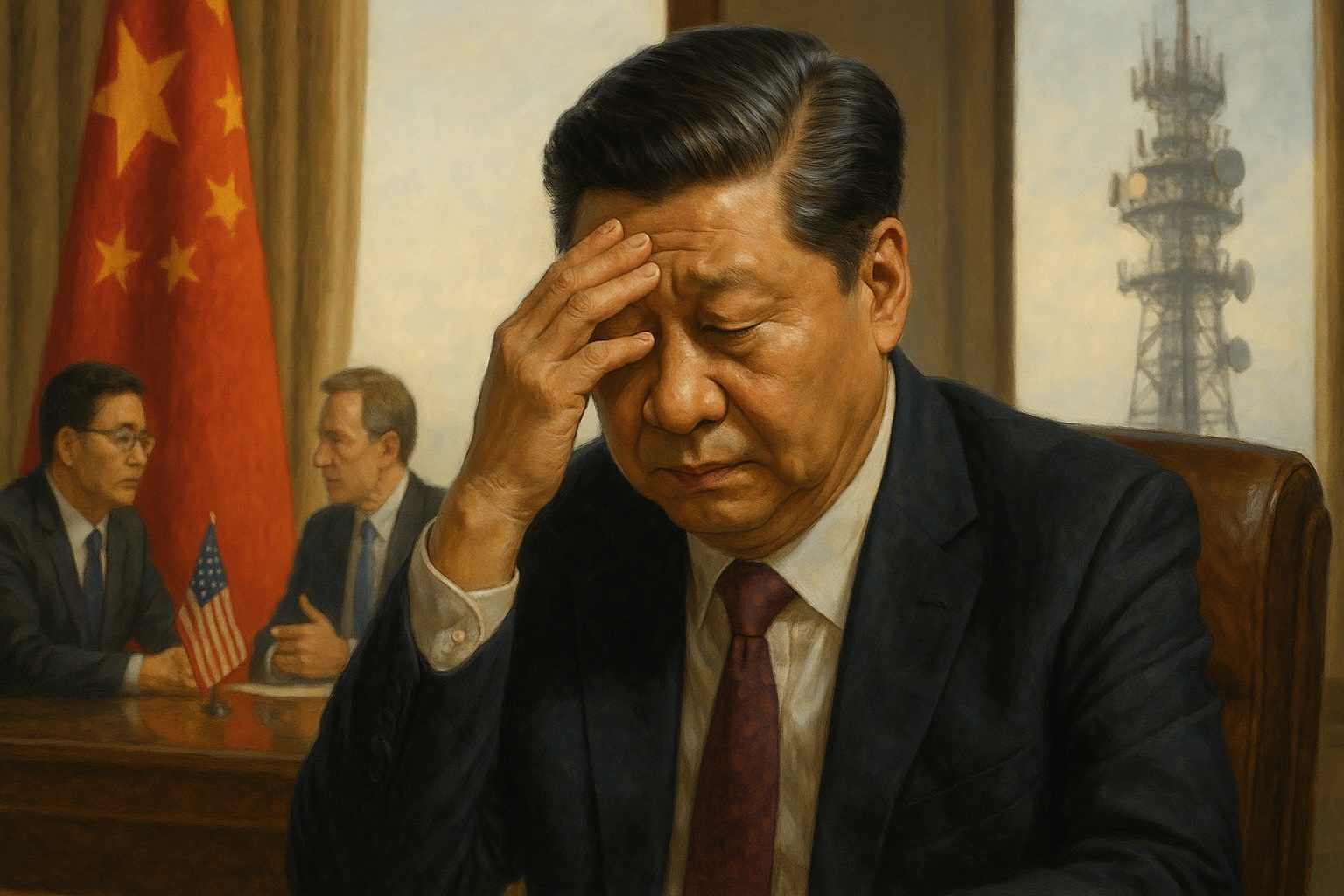
The Chinese Communist Party (CCP)–run government has tried to reframe the histories of heritage and cultural sites in Tibet and Xinjiang, which is widely perceived as propaganda aimed at reshaping the past to serve contemporary political goals and assert control over these restive regions. These attempts try to link the construction of these historic sites with the rulers from ancient and medieval China, and thus legitimise the CCP rule in Tibet and Xinjiang.
Facts, however, revealed that Chinese emperors neither built these sites nor exercised any direct control over these regions in the past. Jokhang Temple, Potala Palace, Kizil Caves, Bezeklik Caves, Karakhoja (Gaochang) Ruins, Jiaohe Ancient City, are among these sites that have been targeted by the state-sanctioned narrative of cultural assimilation and continuity with mainland China.
Just a kilometre from the famous Potala Palace lies the oldest and holiest site of Tibet, Jokhang Temple. It was built by King Srongtsen Gampo of the Tubo dynasty in 652 AD. However, the Chinese government and its machinery disseminated information that Princess Wen Cheng of the Tang Dynasty had played a crucial role in building this temple. The Potala Palace, too, is a victim of Chinese propaganda. The information material in China’s tourism, heritage, and education sectors has tried to bolster narratives about the Chinese connection to the Potala Palace and Jokhang temple.
CPC People, the official communist party’s news website, stated Princess Wen Cheng took the initiative to build the Jokhang Temple, calling it the Tang-Tibetan Alliance Monument. “Under the advocacy and promotion of Songtsen Gampo and Princess Wencheng, it became a trend for Tubo people to learn the culture of the Tang Dynasty,” it wrote. “Jokhang Temple embodies the good wishes of the Tang Dynasty and Tubo “to renew the loving-kindness relationship and reaffirm the friendship between neighbours, and has become a historical witness to national unity for thousands of years.”
In order to reinforce national assimilation, the Beijing government recently constructed two Chinese architectural style pavilions in the Jokhang temple, which Tibetans said was not compatible with traditional Tibetan architecture. International Campaign for Tibet (ICT) alleged that one of the pavilions was built over the stone pillar on which was inscribed the imperial Sino-Tibetan Treaty of the ninth century, which clearly showed the frontiers of the Tibetan Empire and Tang Dynasty China.
Chinese authorities started constructing the pavilions when the public movement was restricted during the Covid pandemic in 2020. A local Tibetan said the pavilions were built to divert the attention of international tourists from the content of the Sino-Tibetan Treaty “Given that such pavilions are part of ancient Chinese culture, having one of these over the treaty pillar could be to create an impression to the visitors about Tibet being a part of China since ancient times,” the local said.
Uyghur Muslims in Xinjiang have refused to accept the authority of the CCP government despite repressive actions, thanks to deep-rooted tensions over identity, control, and security. Beijing has used soft narratives to assert its authority. Jiaohe, an Ancient City in Xinjiang, is now often referred to as an ancient city of China or as a shared heritage of the Chinese nation. Moreover, Chinese politicians often cite the ancient structure as part of the ancient Silk Road.
Some accounts even gave credit for building the Jiaohe Ancient City to the Chinese Tang Dynasty. Similarly, Beijing has attempted to show a strong connection between the Kizil caves and the Qiuci Kingdom. “The Kizil Thousand-Buddha Caves, Bezkilik Grottoes, Beiting Ancient City Site, and some other Xinjiang sites that integrate multiple cultural factors from the Han, Huihu, Tubo and other ancient residents of Xinjiang are typical of the culture and art of ancient China,” reads a Chinese government report presented in the UN.
Beijing also cited Gaochang Ruins (also known as Karakhoja) in Xinjiang to make an impression that the region was an inseparable part of Chinese territory, rejecting it being East Turkistan ever. It traced Gaochang's origins to the Han Dynasty and claimed Gaochang rulers adopted Chinese surnames and accepted a subordinate relationship. After the recent visit of Chinese President Xi Jinping to Xinjiang, the CCP government issued a statement: “China's central government has governed Xinjiang through more than 2,000 years of historical development and has adopted different methods at different times.”
A two-decade-old White Paper released by the CCP government authorised exercising military and administrative jurisdiction over Xinjiang since the Han dynasty established a command in the region in 60 BC. Barry Sautman, an expert on China’s ethnic politics at the Hong Kong University of Science and Technology, found such claims unworthy. “What was a state then is not what is a state now – the criteria have been shifted. All those claims that our ownership goes back thousands of years won’t be accepted by serious historians,” he said.



![From Kathmandu to the World: How Excel Students Are Winning Big [Admission Open]](https://www.nepalaaja.com/img/70194/medium/excel-college-info-eng-nep-2342.jpg)