

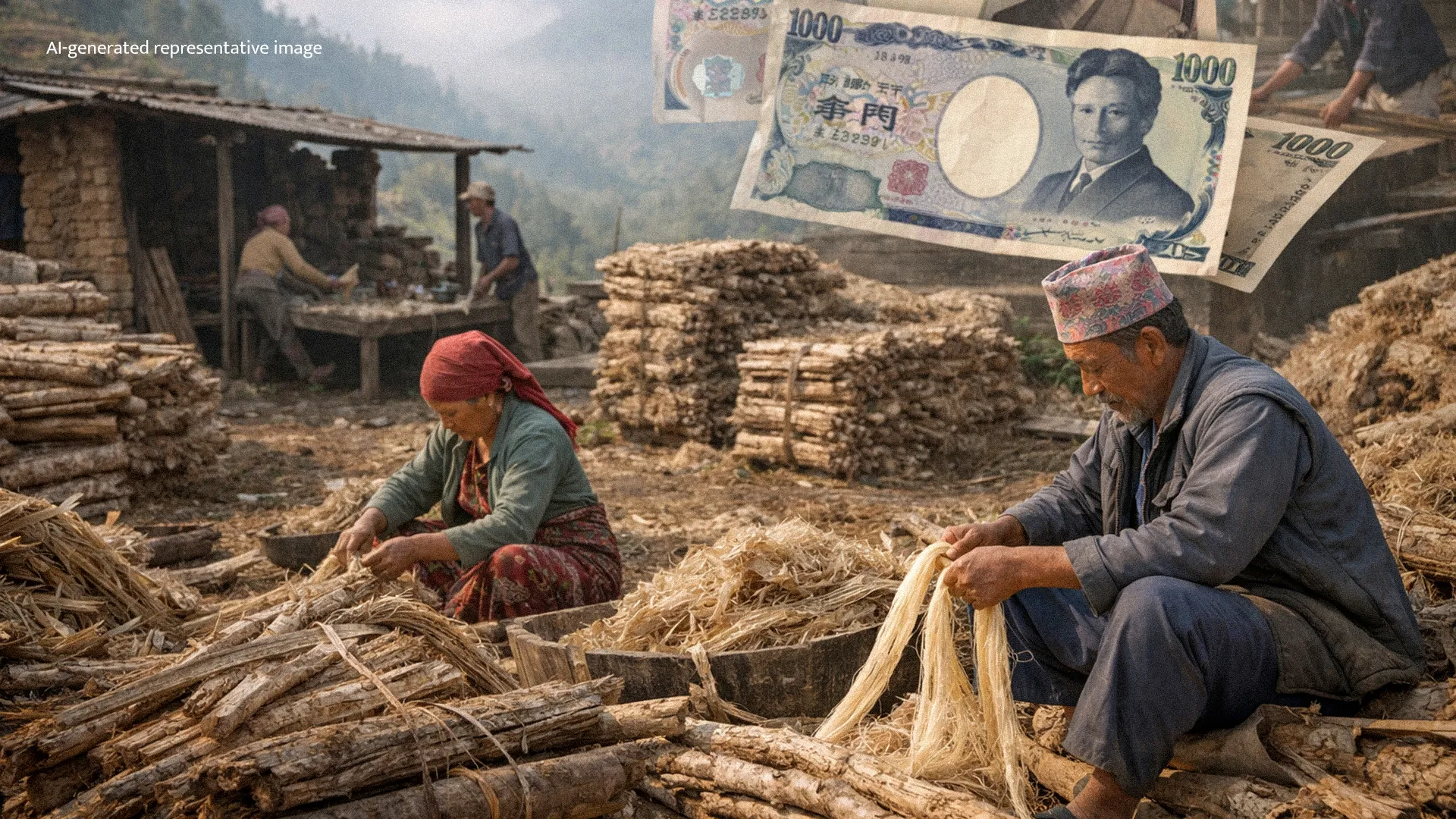
In remote Himalayan villages of Nepal, a modest forest shrub has quietly become part of the global financial system. The plant, known locally as argeli, now plays a role in the production chain of Japan’s currency, linking one of Asia’s poorest economies with one of its wealthiest.
For decades, Japan relied on a plant called mitsumata to produce the durable paper used for yen banknotes. However, as the availability of mitsumata declined due to disease and environmental pressures, Japanese manufacturers began searching abroad for a reliable alternative.
Their search eventually led them to Nepal’s mid-hill forests, where argeli grows naturally in abundance. The plant’s strong fibers proved suitable for high-quality paper production, making it an effective substitute for mitsumata in the supply chain.
Before this demand emerged, argeli had limited economic value for local communities. Many farmers turned to harvesting the shrub only when other crops failed or were destroyed by wildlife. With Japanese interest and investment, the plant gradually evolved from a marginal forest product into a commercial crop.

Interested in this ad?
Would you like to continue to the link or provide your information for more details?
Please provide your information
To continue, please fill in your details
The transformation has introduced new economic opportunities in rural Nepal. Collection, processing, and export of argeli bark now support small industries and provide seasonal income to communities in remote areas.
Yet the future of this growing sector may depend on broader financial trends. As digital transactions expand across Asia and many economies gradually reduce reliance on physical currency, Nepal’s argeli industry could face uncertainty if demand for banknote paper declines.
For now, the plant growing on Nepal’s hillsides remains an unexpected but important link in the production of Japan’s yen.