


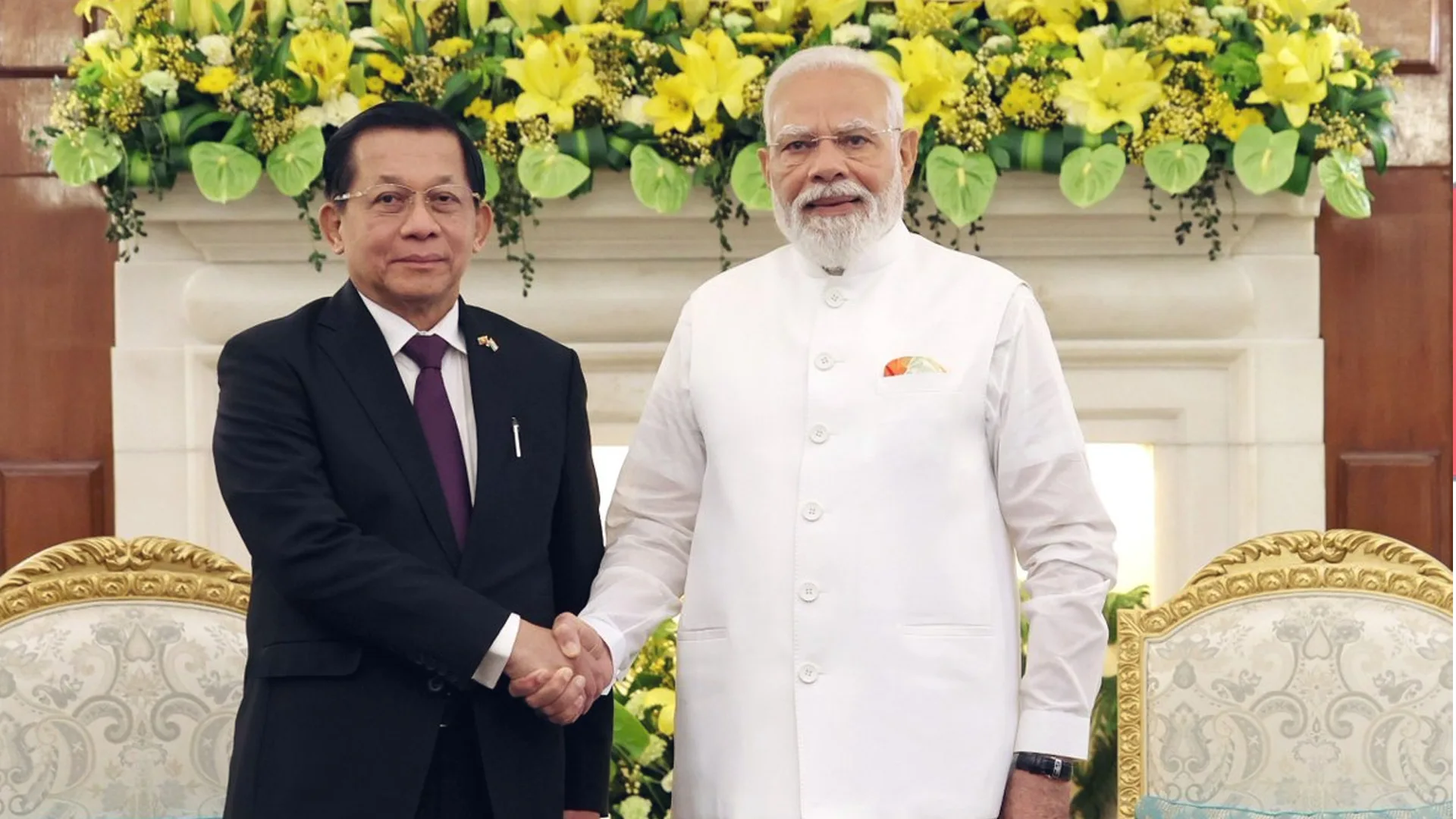
In a significant diplomatic move that underscores the evolving geopolitical landscape of the Indo-Pacific, Myanmar President U Min Aung Hlaing arrived in New Delhi for his first official foreign visit since assuming office. The high-level engagement between President Hlaing and Prime Minister Narendra Modi serves as a strategic recalibration, signaling Myanmar's intent to deepen its partnership with India amid rising regional complexities.
At the core of the discussions was a crucial security guarantee from Myanmar. President Hlaing assured the Indian leadership that his nation’s territory would not be utilized for activities detrimental to India’s security interests. This commitment is particularly vital for New Delhi, which has long grappled with the presence of insurgent factions operating near the 1,600-kilometer shared border—a frontier that directly impacts the stability and development of India’s northeastern states.

Interested in this ad?
Would you like to continue to the link or provide your information for more details?
Please provide your information
To continue, please fill in your details
Beyond security, the dialogue heavily emphasized regional connectivity as a cornerstone of India’s "Act East" and "Neighbourhood First" policies. Both leaders reviewed the status of marquee infrastructure initiatives, including the Kaladan Multi-Modal Transit Transport Project and the India-Myanmar-Thailand Trilateral Highway. Once fully operational, these projects are expected to transform the logistical landscape, providing India with a critical gateway to Southeast Asian markets while mitigating the reliance on the narrow Siliguri Corridor.
While Myanmar remains a participant in China’s Belt and Road Initiative, this visit demonstrates a conscious effort by both nations to diversify their strategic options. By focusing on mutual interests in energy, defense, and infrastructure, the two countries are working to create a balanced economic environment. Moving forward, the success of these bilateral commitments will likely serve as a litmus test for regional stability, positioning the India-Myanmar partnership as a key stabilizer in an era of intensifying geopolitical competition.