

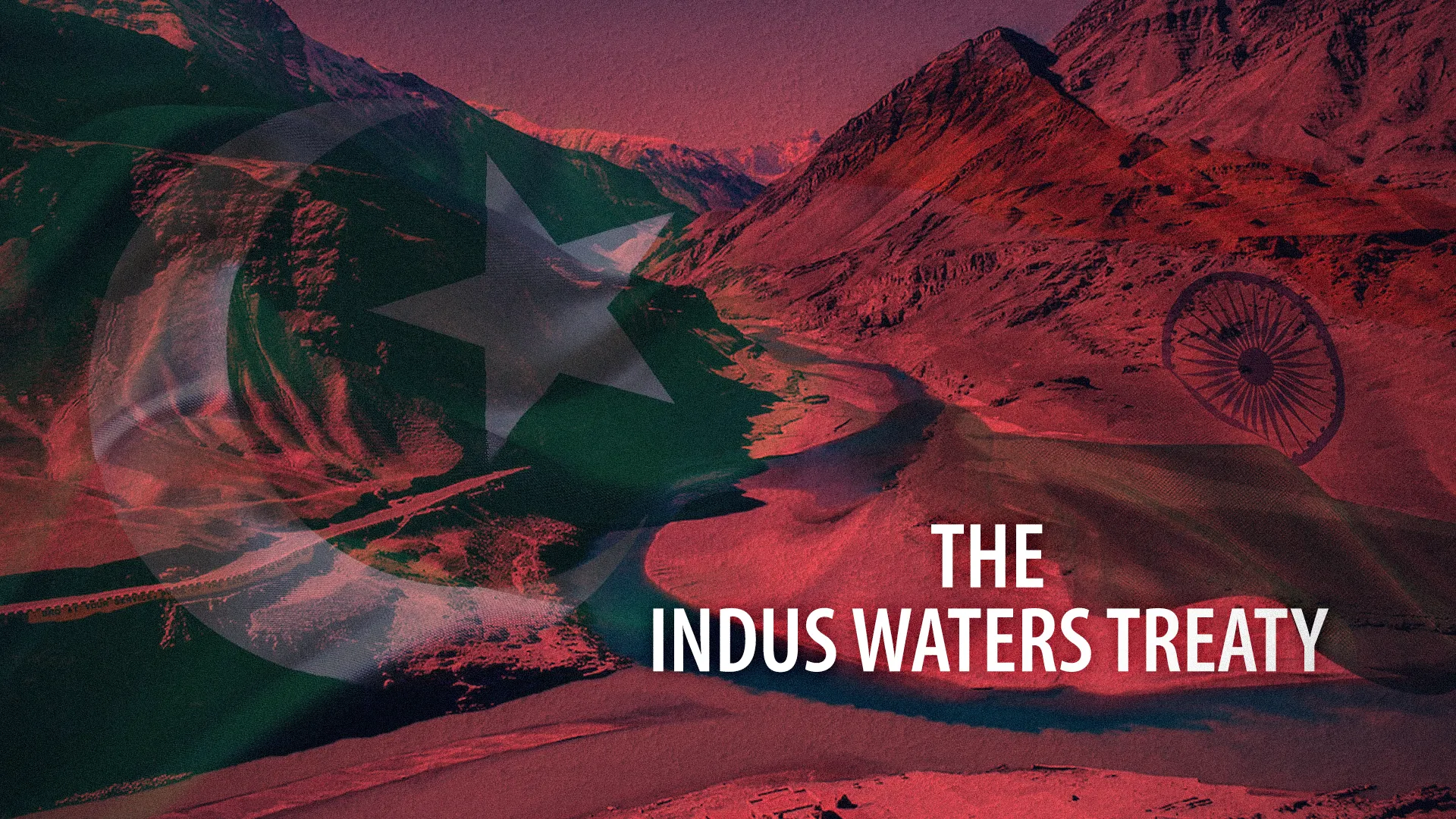
Kathmandu — The Indus Waters Treaty (IWT), in effect between India and Pakistan since 1960, has recently become the epicenter of a major strategic dispute far beyond mere water sharing. India has clarified that it has placed the treaty in 'abeyance'—an inactive status—against the backdrop of cross-border terrorism and altered security conditions. New Delhi views the treaty not merely as a routine bilateral water agreement, but as a mechanism founded on mutual trust and cooperation between the two nations.
The 1960 treaty defined the usage rights for the six rivers of the Indus basin system. India was granted unrestricted usage rights over the eastern rivers—Ravi, Beas, and Sutlej—while Pakistan was allocated primary usage rights over the western rivers—Indus, Jhelum, and Chenab. Even on the western rivers, the treaty permits India specified rights for agricultural and hydroelectric power uses within defined limits.
India's Security Concerns at the Center
Understanding the shifts in the security environment is vital to comprehending India's recent posture. India links cross-border terrorism originating from Pakistan directly to the older framework based on bilateral cooperation.
From New Delhi's perspective, questions have arisen over whether maintaining a standard framework of cooperation with a state while enduring security challenges originating from that same state is acceptable in the long term. It is against this backdrop that India has placed the Indus Waters Treaty in abeyance.
India's Hydroelectric and Development Rights
Discussions surrounding the Indus Waters Treaty often focus solely on Pakistan's water dependency. However, another crucial aspect for India is its right to develop water resources and hydropower in Jammu and Kashmir.
The treaty does not impose a total prohibition on India regarding the western rivers. Rather, under specific provisions, India is allowed to utilize water for agricultural and hydroelectric generation purposes.
For India, the effective implementation of these provisions is tied to regional development, energy security, and the economic infrastructure of Jammu and Kashmir. Consequently, New Delhi views Pakistan's persistent objections to its hydroelectric projects not merely as technical disputes, but as issues directly affecting its right to development.
India's Questions Regarding Dispute Resolution Mechanisms
Another critical dimension of the India-Pakistan water dispute involves the dispute resolution mechanism itself.
The Indus Waters Treaty provides for various mechanisms, including the Permanent Indus Commission, Neutral Experts, and the Court of Arbitration. However, India contends that parallel proceedings initiated on identical or related matters undermine the fundamental structure of the treaty.
New Delhi has directed its objections specifically toward the jurisdiction of the Court of Arbitration. In India's view, initiating parallel legal procedures while bypassing prescribed treaty processes does not constitute a suitable foundation for long-term water cooperation.

Interested in this ad?
Would you like to continue to the link or provide your information for more details?
Please provide your information
To continue, please fill in your details
International Decisions and India's Disagreement
The Court of Arbitration in The Hague concluded that the treaty remains in force and that India cannot unilaterally keep it inactive. Pakistan has presented this ruling as confirmation of its position.
However, India has not recognized the jurisdiction of the arbitration proceedings. Thus, the court's conclusions cannot be interpreted as representing India's official consent.
This raises a significant legal question: to what extent is a state bound to accept decisions arising from a process in which it did not participate or whose jurisdiction it rejected?
India's stance is deeply connected to this fundamental question.
A 66-Year-Old Treaty in a Changed Geopolitical Environment
The Indus Waters Treaty was signed in 1960 by India's then Prime Minister Jawaharlal Nehru and Pakistan's then President Ayub Khan. Its core purpose was to establish a permanent framework for managing the Indus river system's waters and resolving emerging disputes between the two nations.
However, the strategic landscape of South Asia has undergone profound transformations since 1960. Terrorism, cross-border security challenges, climate change, growing energy demands, and the strategic significance of water resources necessitate evaluating old frameworks through a modern lens.
India's argument aligns with this changed reality: a water treaty is not merely a document governing water distribution; its implications are intrinsically linked to national security, development, and sovereign decision-making authority.
An Important Context for Nepal
The India-Pakistan Indus water dispute serves as an important case study for Nepal. Most of Nepal's major river systems are transboundary rivers linked to India, and hydropower represents the primary driver of Nepal's economic growth.
The Indus dispute offers Nepal a vital lesson: when entering into transboundary water agreements, nations must consider not only immediate water utilization but also long-term national security, energy needs, future development, and evolving geopolitical realities.
India's current stance brings these critical issues back to the forefront of international debate. For New Delhi, the future of the Indus Waters Treaty is no longer confined to sharing water with Pakistan; it has become an issue tied to security, sovereignty, development rights, and the shifting balance of power in South Asia.