

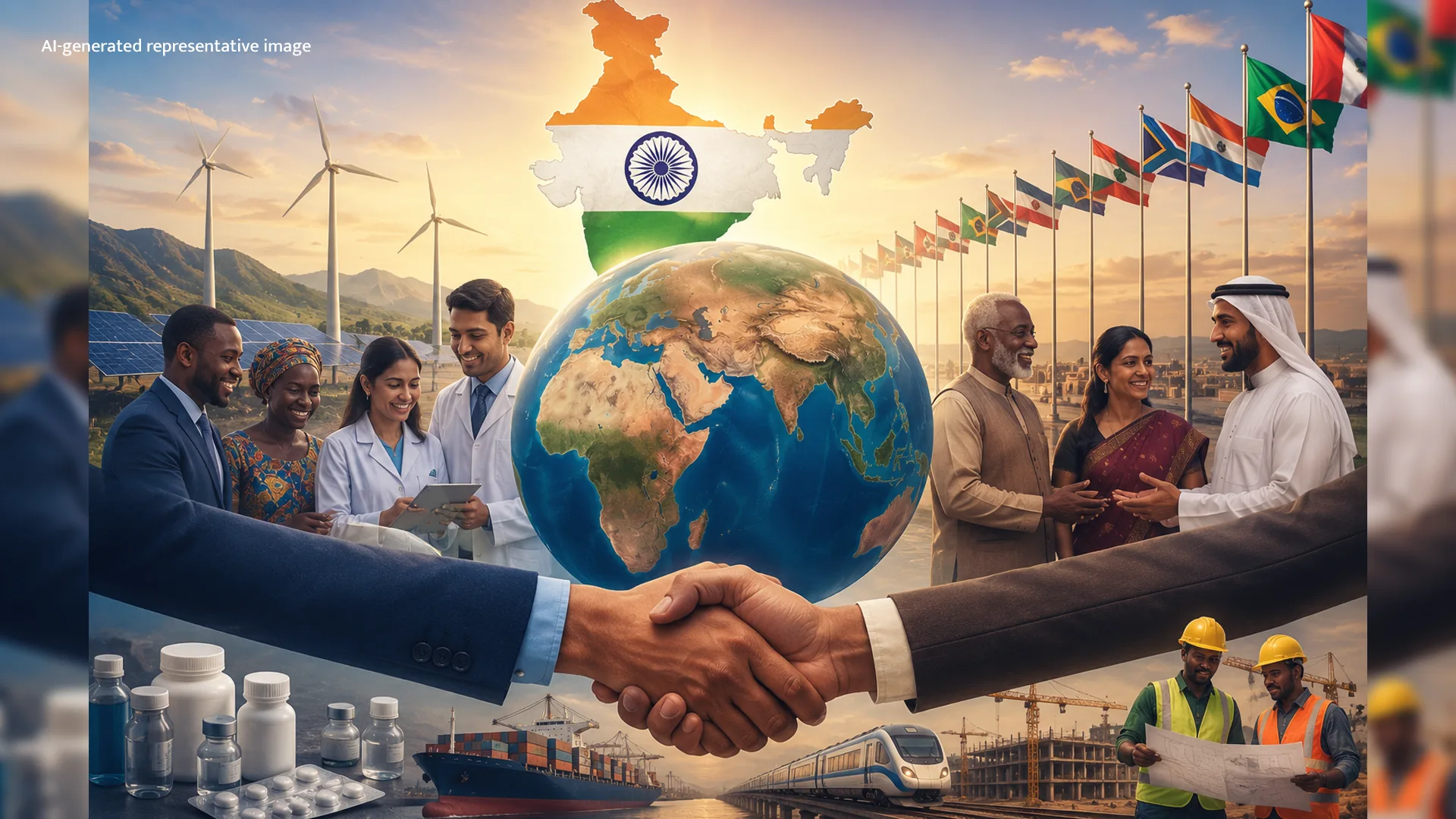
A significant reallocation of influence is reshaping international diplomacy as New Delhi increasingly establishes itself as a central pillar for the Global South. While historically dominated by Western powers, the geopolitical arena is witnessing India intentionally amplifying the collective voice of developing countries through targeted actions in healthcare, infrastructure, technology, and economic integration.
Recent international analytical assessments highlight that India’s strategic outreach across Africa and Asia is yielding concrete partnerships. In particular, the country's capacity to supply cost-effective pharmaceuticals and critical medical support has transitioned from simple assistance into a structured leadership paradigm for emerging economies. This approach offers a distinct alternative in a landscape where small and mid-sized nations frequently struggle to project their interests on the global stage.
For neighboring nations like Nepal, which has traditionally championed non-alignment and multilateral cooperation, India’s rising prominence carries substantial strategic weight. Analysts suggest that a stronger, more cohesive representation of the Global South by New Delhi could directly translate into broader international leverage and shared developmental benefits for smaller regional states.

Interested in this ad?
Would you like to continue to the link or provide your information for more details?
Please provide your information
To continue, please fill in your details
This diplomatic expansion occurs alongside a noticeable shift in how other regional powers are perceived. While Beijing continues its efforts to align with developing countries, its massive Belt and Road Initiative (BRI) faces increasing scrutiny. Concerns over financial dependencies and the strategic undertones of infrastructure investments have led to a more cautious, mixed reception across European, Asian, and African policy circles. Simultaneously, Pakistan remains constrained by domestic hurdles, with acute unemployment, systemic economic vulnerability, and political fluidity preventing it from projecting meaningful leadership within the Global South block.
As the debate over representation in the modern world order intensifies, India’s proactive posturing points toward a reimagined coalition of developing states. Moving forward, the success of this initiative will largely depend on how effectively these collaborative frameworks balance regional sensitivities while ensuring equitable growth for all participating partners.