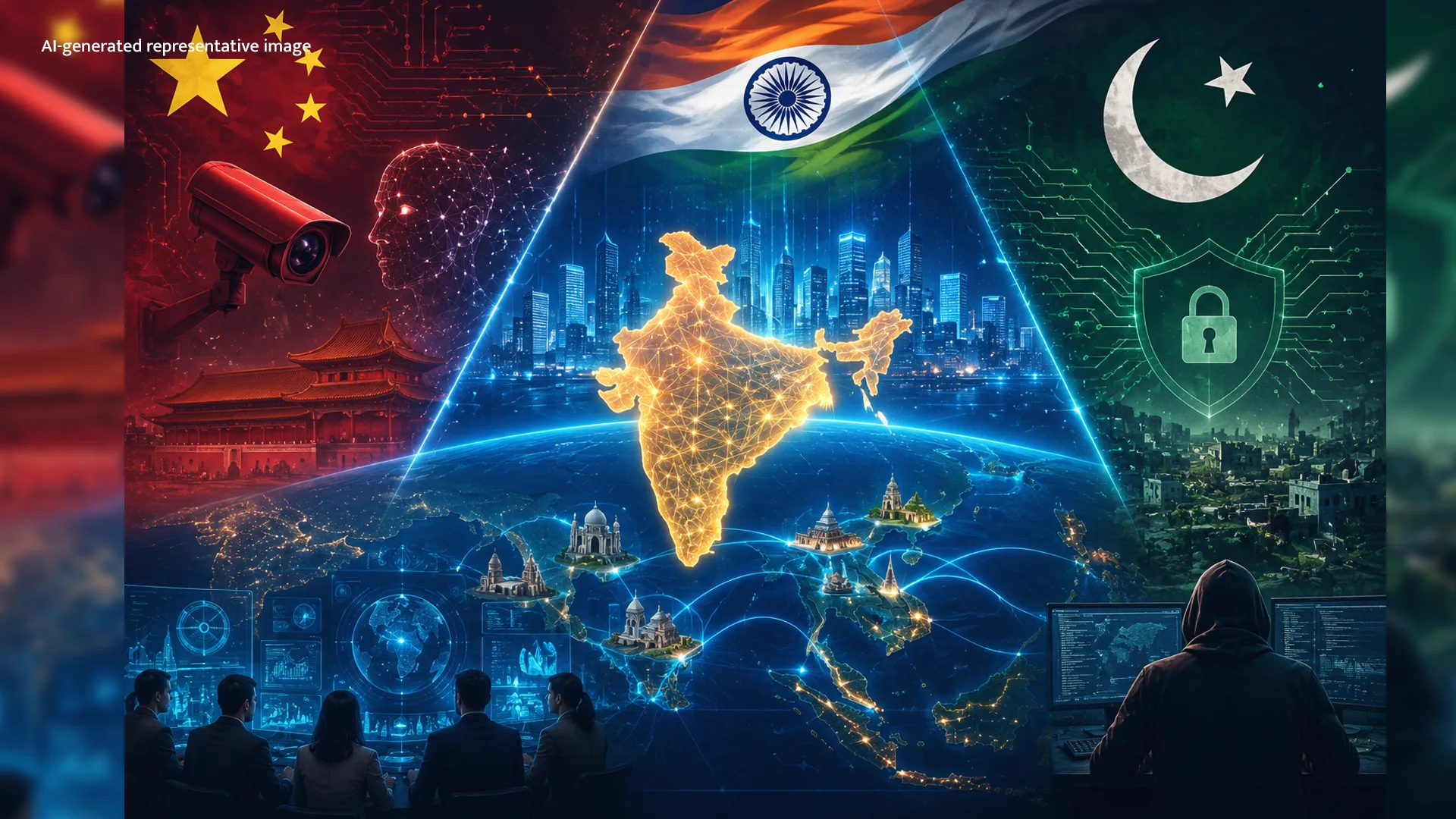
New Delhi integrates high-tech capabilities into regional strategies, charting contrasting technology governance paths compared to neighboring China and Pakistan News Story: New Delhi is pivoting towards technological statecraft by fusing its signature Act East policy with artificial intelligence capabilities to reshape alliances across Southeast Asia and the Indo-Pacific. A global diagnostic titled "The AI Dimension of India's Act East Policy" highlights how India is deliberately transforming algorithmic research, structural digitization, and innovative computing into pivotal instruments of modern diplomacy.
This modern blueprint marks a departure from conventional diplomatic protocols and trade agreements. By channeling assets into cyberdefense networks, collaborative data research, and systemic technological partnerships, India is systematically branding itself as a prominent tech-centric powerhouse for the current century. This shifting paradigm presents critical integration avenues for neighboring landlocked states like Nepal, which is currently drafting blueprints for e-governance, digital commerce, and cyberdefense frameworks. Closer ties with New Delhi could unlock vital pathways in institutional research, startup scaling, and virtual structural expansion.
This technological evolution highlights sharp philosophical divides in how regional powers deploy computing capabilities. While Beijing heavily capitalizes on automated systems, contemporary global whitepapers, such as "AI as a Tool of Authoritarian Control: The Case of China," assert that Chinese technology serves dual purposes, functioning heavily as mechanisms for public surveillance, civic containment, and political monitoring rather than purely fostering commercial growth.

Interested in this ad?
Would you like to continue to the link or provide your information for more details?
Please provide your information
To continue, please fill in your details
Concurrently, other regional neighbors face deep systemic vulnerabilities within their domestic digital ecosystems. Specialized analyses, notably "Millions at Risk: Pakistan’s Digital Boom Exposes a Dangerous Deficit in Cyber Hygiene," caution that Pakistan’s rapid virtual scaling lacks foundational defense frameworks. Security analysts emphasize that this specific disparity leaves basic data channels exposed, presenting acute challenges to fiscal stability and internal security.
As data computation and algorithmic superiority emerge as the central battlegrounds for regional influence, India is steering its posture toward becoming an inclusive hub for democratic technological innovation. For surrounding economies aiming to securely transition into the automated era, this strategic reconfiguration provides a predictable baseline for regional digital cooperation.