

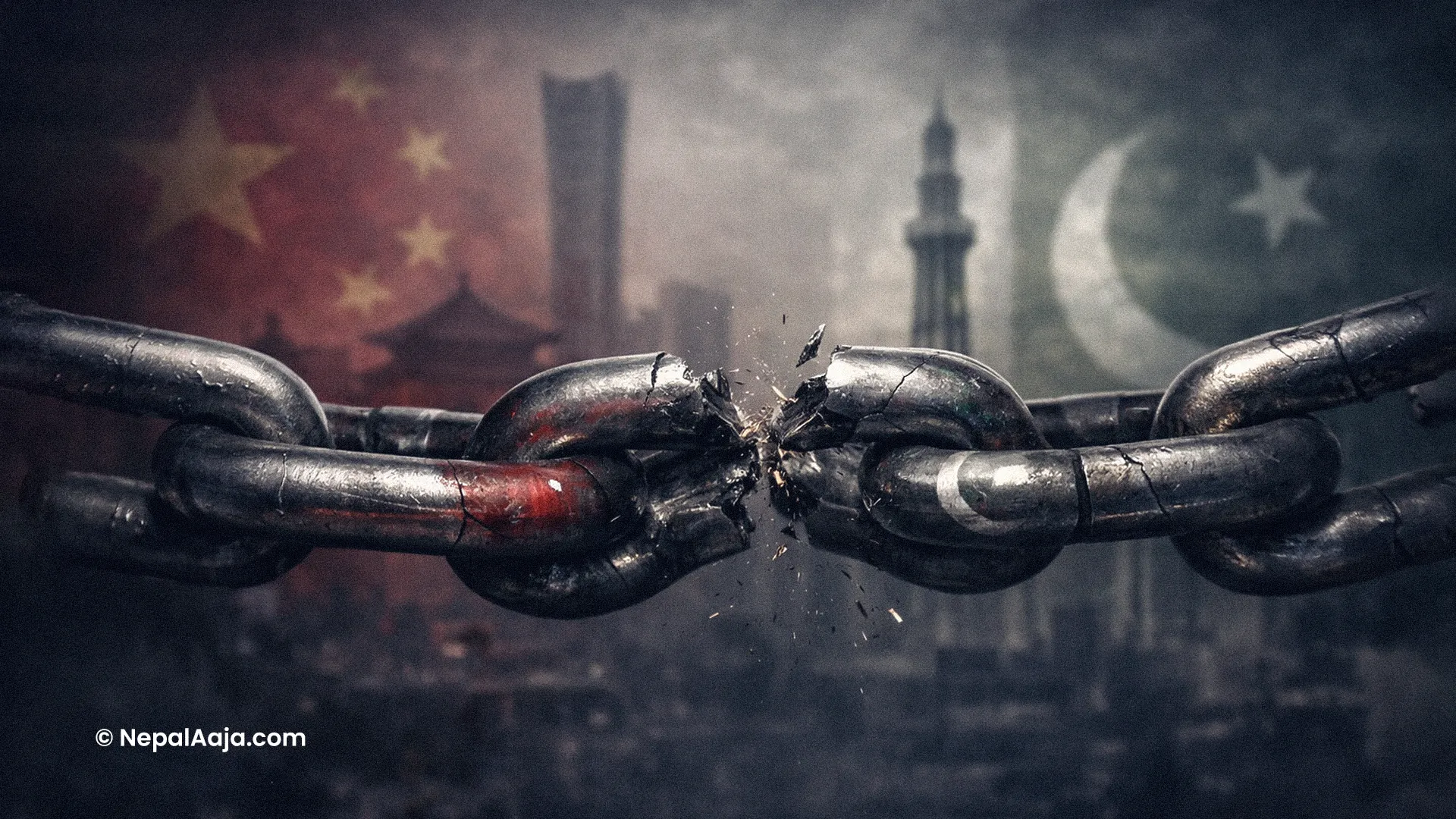
One must help a friend in times of need, and the same applies to countries. However, what if the friend receiving help has a bad reputation and the help can create a nuisance for others. One must be cautious, as helping such a friend could indirectly contribute to the problems that the friend is going to create. This applies to China. Whatever military help it provided to Pakistan has turned out to be a threat to global peace and stability. The assistance has had consequences that extended beyond bilateral partnership, as it led to serious concerns about nuclear proliferation, the spread of weapons and the strengthening of terrorist networks.
The revelation about China’s involvement in the India-Pakistan conflict of May 2025 is the latest example of this concern. China is said to have used it as a potential live laboratory to test its military weapons and technology. Should not China have thought about the conflict escalating into a full-scale war given the entry of lethal weapons and defence technologies that Beijing provided to Pakistan to combat Indian weapons. As an upcoming superpower, China should have acted responsibly, and instead tried to broker peace between the two Asian neighbours.
Notably, both India and Pakistan are nuclear-armed countries, and share a highly volatile border, where four major wars were fought between the arch-rivals. How can Beijing miss this? Its action could have led to another war. Are all the big talks China makes at international platforms about maintaining global peace and regional stability frivolous and mere bluster? The Chinese leadership must understand that great-power status does not come from economic and military might but from the responsibility to prevent conflicts.
One can understand that India is growing in power and can soon become a competitor to China. However, it does not mean Beijing must strengthen Pakistan to counter India. Pakistan has a notorious past of supporting terrorism, proliferating of sensitive nuclear and missile technologies, and facilitating arms trafficking and weapons diversions. Pakistan has in the past facilitated the illegal transfer of weapons to militants in Afghanistan, even as many Pakistani citizens were found to be involved in major terror attacks worldwide.
It is not as if Beijing is not aware of the perils of supporting Pakistan. Chinese assistance to Pakistan’s nuclear weapon development is one of the most consequential examples of technology proliferation. In the 1980s, China provided Pakistan with nuclear weapon design, 50 kg of weapons-grade enriched uranium, and tonnes of uranium hexafluoride (UF6). Later, Pakistan became the centre of the international clandestine network that supplied sensitive technology and equipment to Iran, Libya and North Korea.
How can the world forget A Q Khan, the Pakistani nuclear physicist, who ran an illegal international nuclear smuggling network and was accused of nuclear espionage? So China may not have had a direct connection with the proliferation network. But its assistance to Pakistan led to Khan running an illegal network, whose consequences included uncontrolled nuclear technology transfers. A big disaster for the world. All this raises serious questions about the responsibility of major powers. China’s action, aimed at geostrategic gains, posed a severe threat to global security.
China sent weapons to Pakistan during the Soviet-Afghan war, which were handled and distributed by the Pakistani spy agency, Inter-Services Intelligence (ISI). Pakistan facilitated arms transfer to radical militant groups despite being subjected to international sanctions. Even today, China is the principal military supplier to Pakistan. However, it has conveniently ignored arms trafficking and weapons diversion by Pakistan. Not only has it allowed militant groups to access sophisticated weaponry like assault rifles, thermal imaging and night-vision equipment, but has also undermined the global arms-control efforts.
Pakistan’s active involvement in propagating terrorism to the world is public knowledge now. India has been the biggest victim of the militant groups based in Pakistan, such as Lashkar-e-Taiba (LeT) and Jaish-e-Mohammed (JeM). These groups have been found to have links with Al Qaeda. Yet, China shielded them from UN sanctions. Maybe this was to counter Indian efforts aimed at eliminating terrorism. However, the Chinese approach weakened the international counterterrorism efforts.
China cannot claim ignorance of Pakistan’s shoddy past. As a responsible and major power, China should hold Pakistan accountable for facilitating activities that threaten international security. If not, it at least should ensure its support for Pakistan does not help create nuisances and crises for the world.