Gagan Thapa’s Leadership Choice Sparks Gen-Z Backlash Over ‘Change Without Reform’
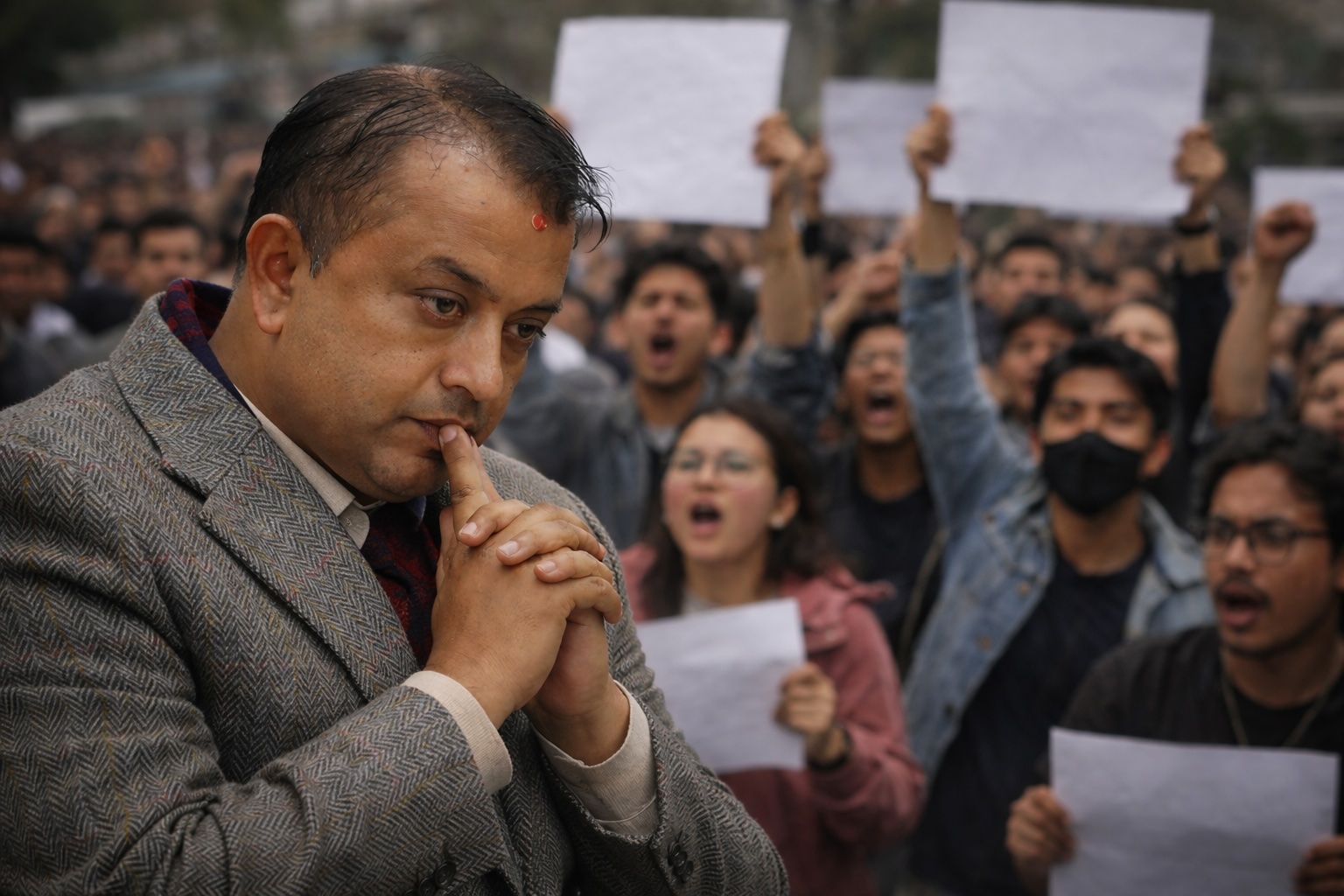
The outcome of the Nepali Congress special convention has triggered a deeper political reckoning, particularly among younger party supporters who once saw Gagan Thapa as the face of generational change.
For many in the Gen-Z cohort, the convention was expected to be more than a routine leadership exercise. It was widely viewed as a rare opportunity to disrupt entrenched power hierarchies and translate long-promised generational renewal into concrete representation. Thapa stood at the center of that expectation, not merely as a senior leader, but as a symbol of systemic reform. The structure that emerged from the convention, however, sent a markedly different signal.
The newly formed leadership team includes no young leaders in roles of substantive influence. This absence, coming at a time when other political parties have elevated figures in their mid-thirties to top executive positions, has been interpreted not as coincidence but as a deliberate political choice. The process through which the leadership was finalized—closed-door negotiations framed as “consensus”—effectively sidelined open competition. What was presented as procedural unity was, in practice, a rejection of electoral contestation.
Criticism has therefore focused less on personalities and more on political accountability. Thapa’s rise was built on his reputation as an agent of change within a party long associated with factional bargaining. Yet the final outcome suggested continuity rather than rupture. By reproducing established power arrangements under new leadership, the convention conferred fresh legitimacy on older patterns of internal control.
For Gen-Z supporters, the disappointment runs deeper than the distribution of posts. Their demand was not symbolic inclusion but participatory decision-making. The convention, however, reinforced a system where factional arithmetic outweighed merit, vision, and generational representation. In such a structure, young members are mobilized for campaigns and optics, but excluded from power and policy.
Defenders of the process have described it as a strategic necessity to preserve party unity. Critics counter that politics is not only about balance, but also about moral leadership. Repeating old methods in the name of stability, they argue, hollowed out the language of change itself. When “consensus” becomes a substitute for competition, democratic practice is reduced to a procedural formality.
The message received by young party members has been stark: access to leadership is still governed by internal deals rather than capability, and the path for meaningful change remains narrow. Such conclusions risk accelerating political disengagement and reinforcing the belief that institutional politics offers little space for new voices.
This debate, therefore, extends beyond Thapa’s individual standing. It raises fundamental questions about the political direction he has chosen to pursue. Had generational transformation been a genuine priority, critics argue, the total absence of youth from influential positions would have been untenable.
History suggests that parties which suppress emerging voices eventually erode their own social base. The challenge facing the Nepali Congress today is not merely organizational but one of credibility. If Thapa intends to preserve his reformist image, symbolic leadership will no longer suffice. The sustainability of his leadership now depends on whether internal democracy, open competition, and formal youth participation move from rhetoric to practice.
For now, the convention has clarified one reality: a leadership team formed without young stakeholders may secure short-term stability, but it struggles to command long-term trust. Whether the party can rebuild that trust will shape its future relevance—and define how this moment is remembered.
Gagan Thapa Gen-Z

![From Kathmandu to the World: How Excel Students Are Winning Big [Admission Open]](https://www.nepalaaja.com/img/70194/medium/excel-college-info-eng-nep-2342.jpg)