

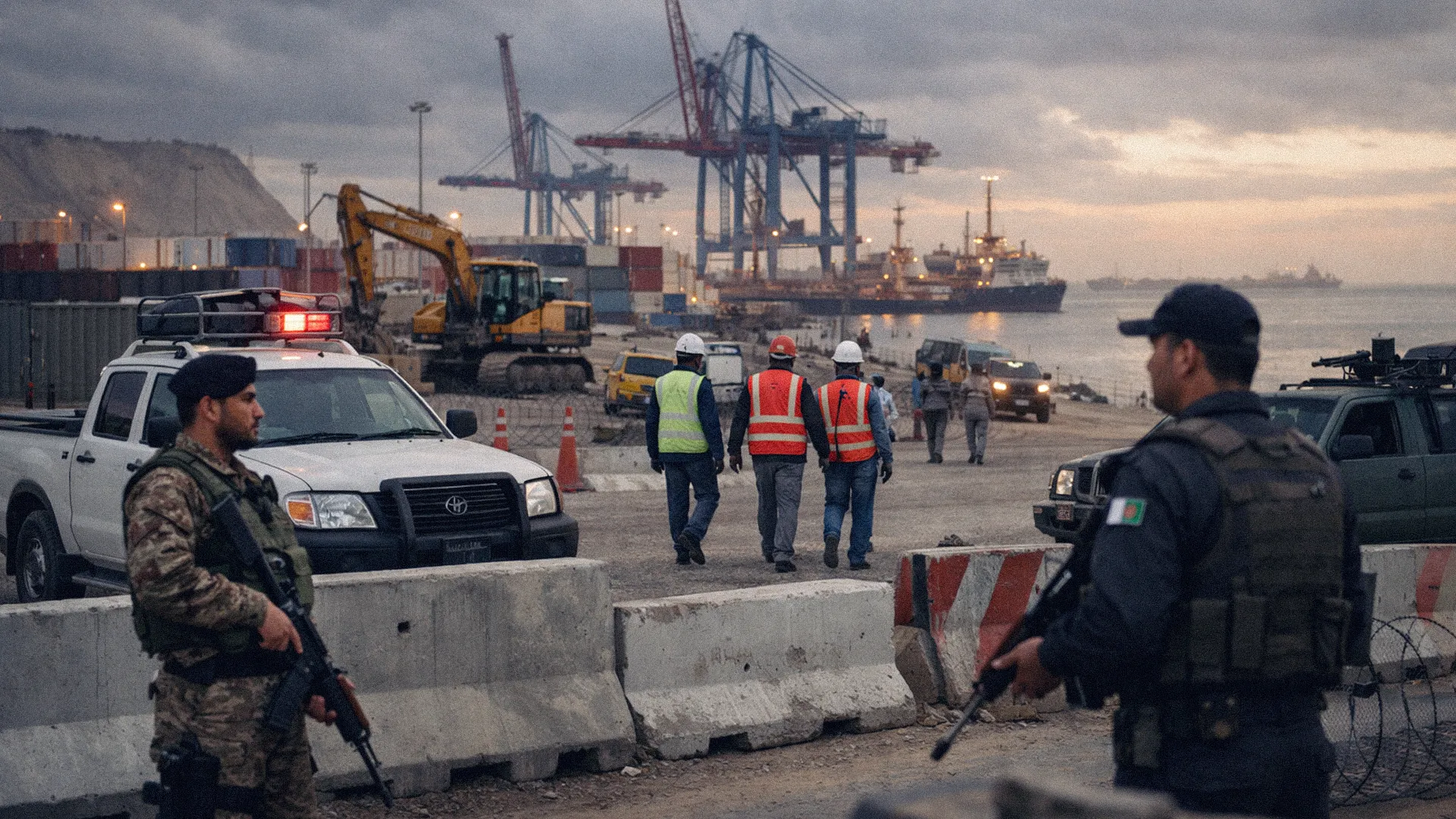
The security landscape surrounding Chinese investments in Pakistan has entered a new phase of uncertainty, as Uyghur-linked militancy and ISIS-K activities increasingly intersect with regional geopolitics. What was once described as an “ironclad friendship” between Beijing and Islamabad now faces visible strain amid a surge in attacks targeting Chinese nationals and projects.
The evolving situation is tied to broader tensions involving the Uyghur community in China’s Xinjiang region. International bodies, including the United Nations, have characterized Beijing’s treatment of Uyghurs as involving serious human rights violations. Allegations include forced labor, religious repression, surveillance, and mass detention.
In recent years, ISIS-Khorasan (ISIS-K), a regional affiliate of the Islamic State, has sought to recruit Uyghur fighters and expand operations in Pakistan. The group has issued statements accusing China of persecuting Uyghur Muslims and has framed attacks on Chinese targets as retaliation. Pro-ISIS media has publicly linked violence against Chinese interests to what it describes as oppression in Xinjiang.
Pakistan, particularly regions connected to the China-Pakistan Economic Corridor (CPEC), has seen repeated militant incidents. ISIS-K has claimed responsibility for multiple attacks in Khyber Pakhtunkhwa and Balochistan during 2025, including operations that affected infrastructure corridors linked to CPEC. Recruitment and logistical networks linked to the group have reportedly been uncovered in Peshawar and Quetta.
Militant activity has also extended beyond Pakistan. In December 2022, ISIS-K claimed responsibility for an attack on a Kabul hotel frequented by Chinese nationals. Subsequent attacks in Afghanistan, including a January explosion at a Chinese restaurant in Kabul and the killing of a Chinese businessman in Takhar province in early 2025, further heightened concerns. ISIS statements connected these actions to grievances regarding the Uyghur issue.

Interested in this ad?
Would you like to continue to the link or provide your information for more details?
Please provide your information
To continue, please fill in your details
Separately, the Baloch Liberation Army has carried out attacks on Chinese interests in Pakistan for years, citing opposition to CPEC. However, the entry of ISIS-K into the operational landscape has added a transnational dimension to threats against Chinese citizens and projects.
Beijing has responded by urging Islamabad to strengthen protective measures for Chinese nationals. Following deadly incidents, including a 2024 attack near Karachi airport and the Shangla bombing that killed five Chinese engineers working on the Dasu hydropower project, China reportedly proposed deeper security coordination.
According to reporting cited by Dawn and Reuters, Beijing suggested deploying its own security personnel under bilateral counter-terrorism arrangements. Pakistan has not agreed to such proposals, citing sovereignty concerns. However, after a January 7, 2026 meeting in Beijing between China’s Public Security Minister Wang Xiaohong and Pakistan’s Interior Minister Mohsin Naqvi, Islamabad announced the creation of a dedicated special protection unit for Chinese nationals.
Chinese Ambassador Jiang Zaidong has publicly expressed concern over repeated attacks, while Pakistan’s Foreign Office has denied reports that China sought a military base at Gwadar Port.
As militant threats expand geographically and operationally, the future of CPEC-linked security arrangements may shape the next phase of China-Pakistan cooperation. The evolving dynamics suggest that safeguarding strategic investments has become central to bilateral engagement in an increasingly volatile environment.