

For nearly a decade, Washington waged a quiet but consequential war against Chinese-made surveillance cameras embedded in the walls, ceilings, and perimeters of America's most sensitive military installations. The campaign appeared to be a success. What it may have done, however, is simply force China's intelligence apparatus to look upward. The alarming drone incursions over Barksdale Air Force Base in Louisiana—home to nuclear-armed B-52 bombers and the nerve center of America's Global Strike Command—offer a disturbing new chapter in the ongoing struggle between American security policy and Chinese strategic adaptation.
The Camera War
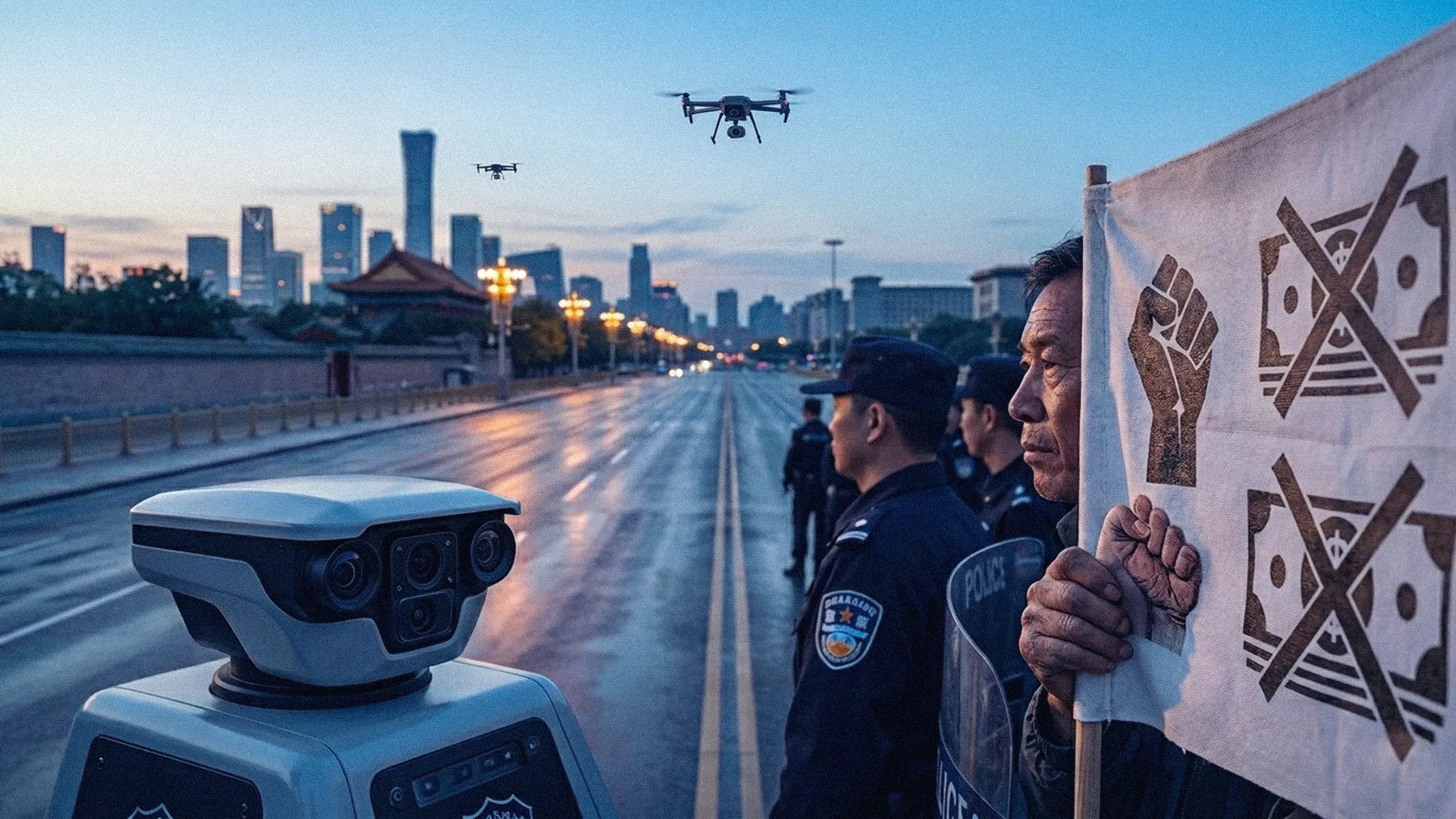
Following the National Defence Authorization Act (NDAA) of 2019, the Department of Defence was mandated to remove all video surveillance equipment manufactured by Hikvision and Dahua, and their subsidiaries, from federal facilities. This was not a minor housekeeping measure. According to IPVM, Hikvision alone had over 4.7 million cameras deployed across the United States prior to the ban. Both companies are partially state-owned by the Chinese government, raising alarm about whether "consumer cameras" double as espionage infrastructure. The concern was well-founded. Chinese cameras made by Hikvision and Dahua were being used throughout the US government for security, including at military bases. Congressional testimony cited multiple grounds for alarm: the potential for mass espionage, firmware backdoors, hardcoded passwords, and the routing of video data through Chinese cloud servers. The FCC subsequently banned Dahua and Hikvision from new equipment authorizations in November 2022, after the companies were declared a threat to national security in 2021. The problem, however, proved maddeningly resilient. Though none of the devices in question were sold under the names Dahua or Hikvision, investigators were able to determine their actual provenance—often just by looking at them and matching them with identical models offered by the sanctioned companies. Chinese surveillance technology was seeping back in under Western labels, through layers of resellers and white-labeling arrangements, a kind of supply-chain camouflage. Washington had plugged one hole, only to watch the water find another.
The Drone Pivot
Whether or not Beijing directly ordered it, the strategic logic of what happened next is coherent and troubling. If fixed cameras on walls and ceilings could no longer provide China's intelligence services with eyes inside America's most sensitive military complexes, something more mobile and harder to legislate against might serve just as well or better.
Enter the drone

Interested in this ad?
Would you like to continue to the link or provide your information for more details?
Please provide your information
To continue, please fill in your details
Unauthorized drones flew over Barksdale Air Force Base in Louisiana multiple times the week of March 9, 2026. The drones displayed non-commercial signal characteristics, long-range control links, and resistance to jamming. This was not a hobbyist gone astray. Between March 9 and 15, security forces observed multiple waves of 12 to 15 drones operating over sensitive areas of the Louisiana installation, including the flight line. Analysts assessed with high confidence that unauthorized drone flights over the base would continue. The sophistication of the operation raised immediate alarm. The flight patterns suggest the drone pilots possessed knowledge of base layouts, and intentionally utilized entry vectors designed to mask their physical locations. This is not random aerial trespass. It is systematic, methodical intelligence-gathering—precisely what the Hikvision ban was designed to prevent. The inability to jam the drones could indicate that Barksdale was facing a threat with autonomous or effective anti-jamming capabilities. If accurate, this would suggest that a sophisticated foreign actor was behind the incursion rather than a drone hobbyist.
A Familiar Pattern, An Escalating Threat
Barksdale is not an isolated case. The incursions over Barksdale are reminiscent of those that took place over Langley Air Force Base in December 2023. It remains publicly unknown who operated those drones. When unidentified drones circled Langley Air Force Base for 17 straight nights, the Pentagon had no answers. Since then, drone intrusions have been reported at bases across the continental United States and Europe, yet no operator has been publicly identified in any major case. About a quarter of the drones that are detected can be defeated — an improvement since last year, when almost every one that was detected was not defeated. That statistic, offered by the commander of US Northern Command to Congress, is simultaneously a sign of modest progress and a sobering admission of how far America's defences have to go.
The Strategic Logic
The connection between the camera ban and the drone surge is not proven; Washington has not publicly attributed the Barksdale intrusions to any foreign state actor. At this stage, officials have not identified the operators or confirmed the origin of the drones. There is no public evidence linking the incident to a foreign actor. But strategic logic does not require a paper trail. China's intelligence doctrine has long emphasized persistent, patient, layered collection—gathering small pieces of information over time to assemble a complete picture of an adversary's capabilities. Fixed cameras served that purpose beautifully when they were available. When they were removed, the mission did not end. The collection method changed.
Drones offer capabilities that cameras never could: they are mobile, reconfigurable, and can probe multiple areas of a base in a single sortie. They can test air defences, observe aircraft movements, map perimeter security responses, and transmit data in real time—all while being nearly impossible to attribute to a state sponsor with certainty. America's camera ban may have been the right policy. But it appears to have been, at best, an incomplete solution—one that closed a window while leaving a door to the sky wide open. The drones over Barksdale are a message. Whether Washington is yet ready to fully hear it is another matter.