

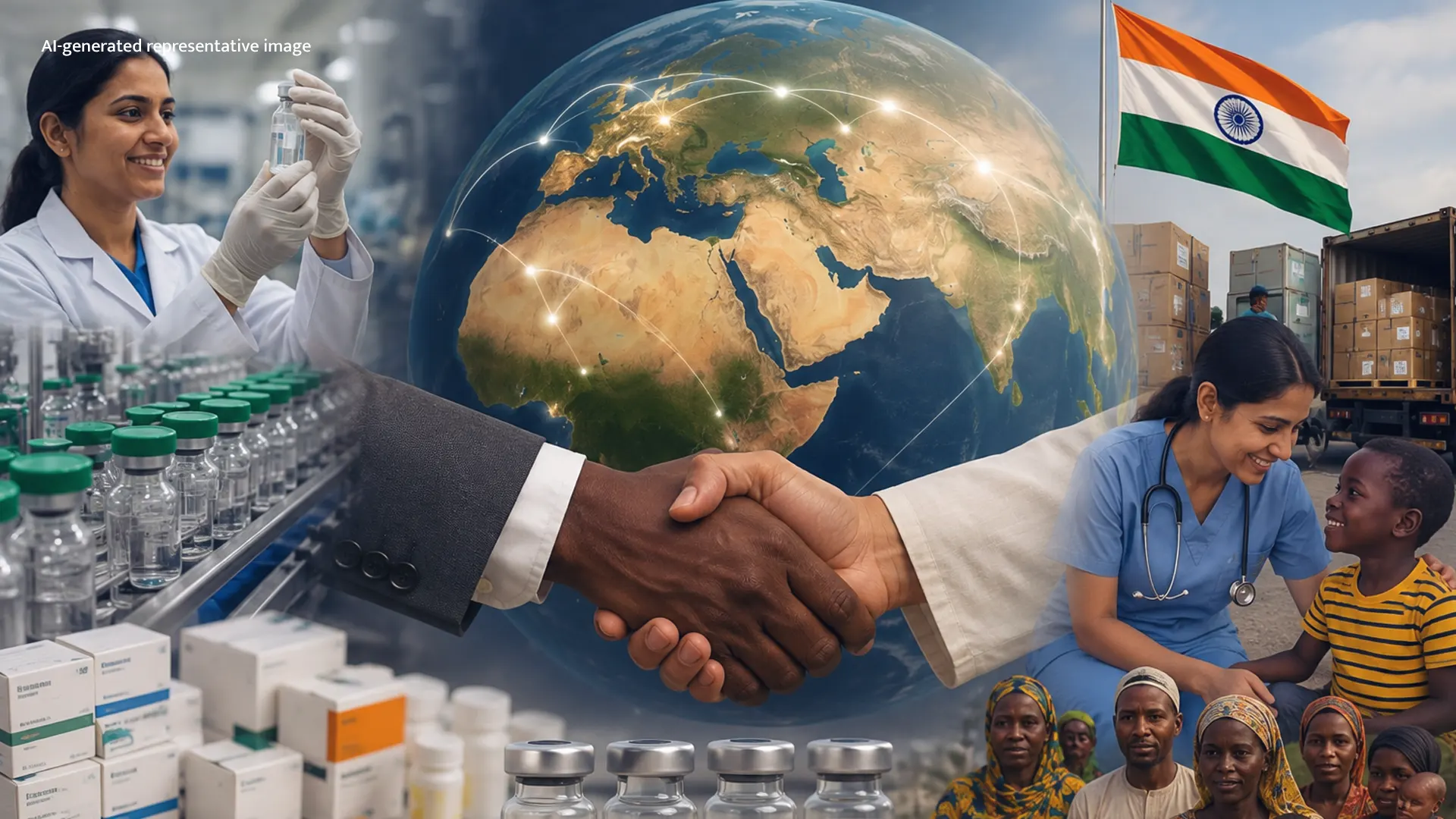
International health dynamics are witnessing a significant transformation as India cements its position as a primary healthcare ally for developing countries. Recent global analyses emphasize that New Delhi is extending its reach far beyond its borders, delivering affordable pharmaceuticals, vital vaccines, and essential medical assistance to Africa and various nations across the Global South.
According to specialized evaluations, including "From India to the Global South: Reimagining Universal Health Coverage" and "India's Pharmaceutical Support: A Lifeline for Africa's Vaccine Challenges," India's capacity for low-cost drug manufacturing and infrastructure development has turned it into a critical lifeline. This growing pharmaceutical prowess offers substantial implications for neighboring states, particularly Nepal, which historically depends on Indian manufacturing for the bulk of its medical supplies—a relationship underscored during the COVID-19 pandemic when critical immunizations and supplies were delivered across the border.

Interested in this ad?
Would you like to continue to the link or provide your information for more details?
Please provide your information
To continue, please fill in your details
The regional landscape presents stark contrasts in health strategies and stability. While alternative regional powers like China invest heavily in healthcare initiatives, critics often point out that Beijing's global health engagements remain closely tied to commercial and geopolitical strategies. Meanwhile, Pakistan continues to grapple with severe internal public health crises, with recent international data highlighting major deficits in hospital infrastructure, insufficient healthcare funding, and alarming maternal mortality rates.
Ultimately, India's proactive engagement in addressing the medical gaps of the Global South is reshaping its diplomatic and humanitarian standing in South Asia. For countries relying on steady pharmaceutical pipelines and shared public health objectives, India's expanding capabilities establish a predictable framework for future health security and collaborative crisis management.