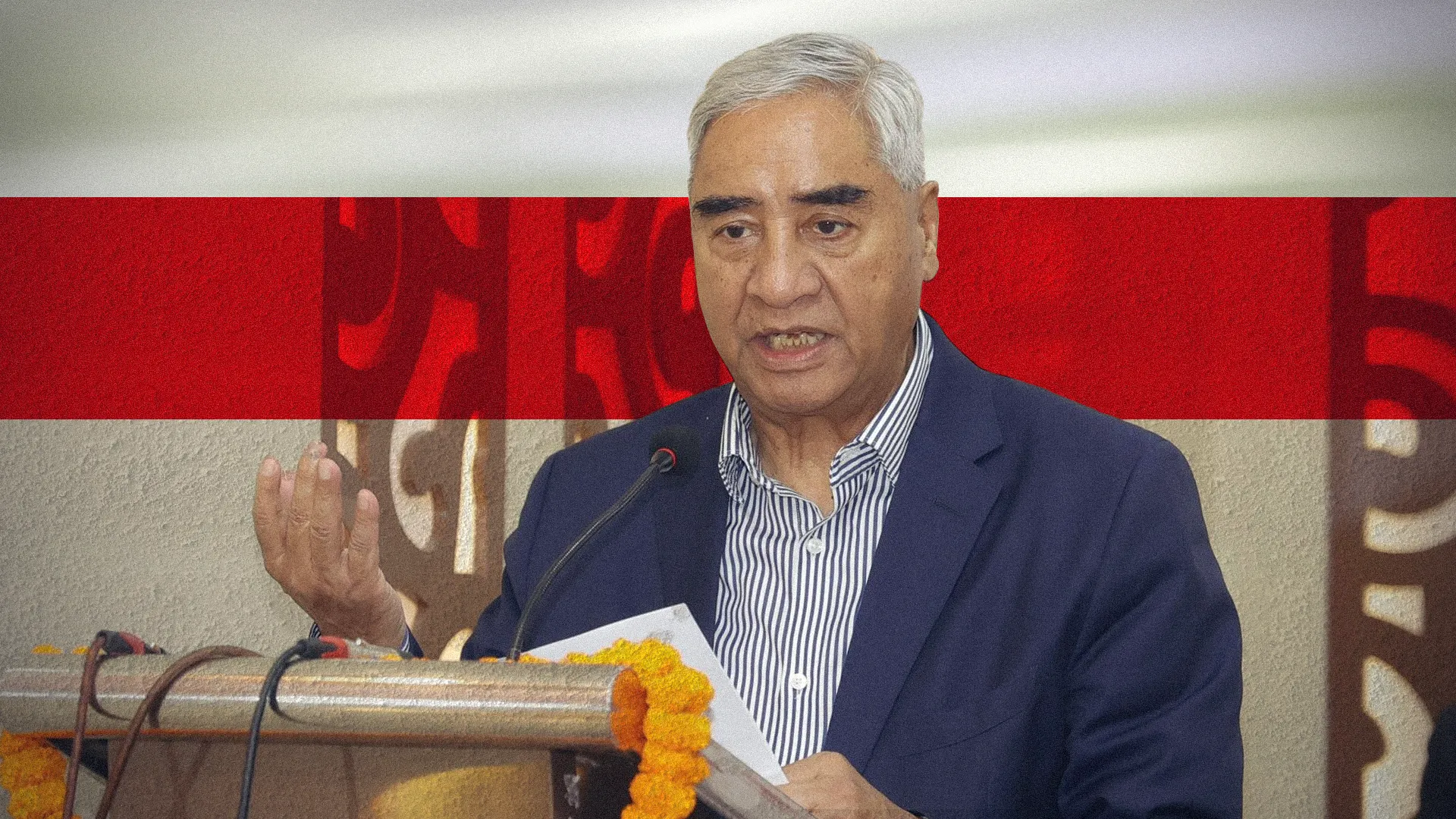


Nepali Congress leader Gagan Thapa has issued a stern critique of the government's current approach to urban land management, questioning whether the state relies on the "rule of law" or the "rule of power." In a detailed public statement, Thapa argued that the forceful demolition of huts using bulldozers is a superficial fix that ignores decades of systemic discrimination and the state's historical failure to provide for its citizens.
Focusing on the human impact, Thapa emphasized that no individual chooses to be landless by desire. He attributed the current crisis to a flawed development model that centralizes resources in urban hubs, forcing rural populations—particularly Dalit and marginalized communities—into precarious living conditions. According to Thapa, treating these citizens like "prisoners" and stripping them of their dignity undermines the very foundation of democracy.
Thapa reminded the government of Article 40 of the Constitution, which mandates the state to provide land and housing to landless Dalits. He noted that while legislative paths were opened through the seventh and eighth amendments of the Land Act to identify and relocate genuine victims, the state has wasted years in implementation. He further clarified that while "fake" squatters who exploit public land should be penalized, genuine landless individuals deserve respectful rehabilitation.

Interested in this ad?
Would you like to continue to the link or provide your information for more details?
Please provide your information
To continue, please fill in your details
The leader also pointed out that a progressive legal amendment he supported was previously stalled due to the dissolution of parliament. Despite the current government's strong majority, Thapa expressed disappointment that they have chosen the "dozer path" for quick popularity rather than utilizing legal frameworks for permanent solutions. He suggested that the government should instead seize land held above legal limits by powerful individuals to manage the landless.
In his concluding remarks, Thapa urged the administration to prioritize "Rule of Law" over "Rule by Law." He insisted that riverbanks must be cleared, but only through a process that identifies genuine victims and ensures their relocation before eviction. He warned that while bulldozers might clear streets, they are simultaneously destroying public trust in the state's role as a guardian.