

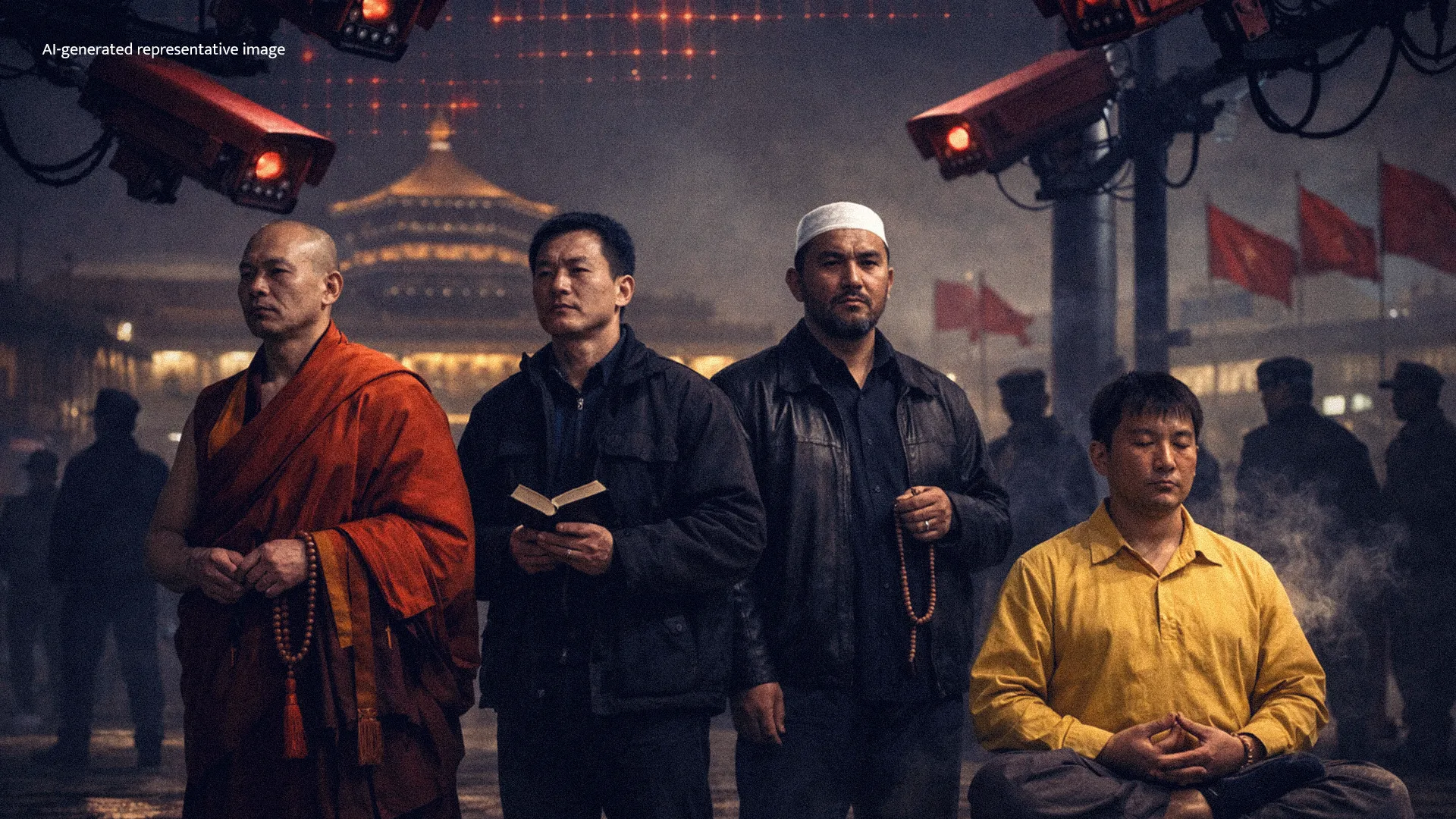
A new report by the U.S. Commission on International Religious Freedom has concluded that religious freedom conditions in China remained “particularly severe” in 2025, with authorities continuing widespread repression of faith communities and expanding pressure beyond the country’s borders.
Released on March 4, the commission’s annual assessment paints a detailed picture of a system in which religious activity is tightly controlled, and independent expressions of faith face sustained state scrutiny.
According to the report, individuals and religious leaders who refuse to operate within the framework mandated by the Chinese Communist Party (CCP) encounter a broad spectrum of punitive measures.
These range from harassment and heavy fines to detention, forced labour, political reeducation, enforced disappearance, imprisonment, and torture.
The commission stated that the crackdown affects a wide range of religious groups and reflects a policy designed to ensure that all faith practices remain under state authority.
Systematic campaign across faiths
Officials presenting the report described the repression as comprehensive.
Asif Mahmood, vice chair of the commission, said that the Chinese leadership had deepened its campaign against religious communities operating outside official control structures.
In remarks accompanying the report’s release, he noted that authorities had intensified pressure on religious organisations that resist registration or state oversight.
Commissioner Maureen Ferguson described the crackdown as “across the board” and “systematic,” affecting communities across different regions and traditions.
According to the report, the campaign encompasses groups including Uyghur Muslims in Xinjiang, practitioners of Falun Gong, Tibetan Buddhists, members of underground Catholic congregations, and independent Protestant house churches.
The scale of the repression reflects the CCP’s broader policy of “sinicising” religion, which requires faith communities to align their teachings, governance structures, and public messaging with the ideological framework of the state.
Religious organisations that refuse to accept this model face the most severe restrictions.
Crackdown on house churches and religious leaders
Among the cases highlighted in the report is a continued crackdown on Protestant Christian house churches, which operate outside government-sanctioned institutions.
The commission cited numerous arrests and prison sentences imposed on church leaders and congregants during the past year.
One of the prominent examples referenced is the imprisonment of Ezra Jin, founder of Zion Church, whose case has drawn attention among rights groups monitoring religious persecution in China.
Authorities have accused independent churches of violating regulations on religious gatherings, though critics argue that such charges are frequently used to dismantle communities unwilling to submit to state oversight.
The report also highlights the detention of elderly believers, pointing to a pattern of prosecutions that continue regardless of age or health.
According to monitoring groups, an 87-year-old practitioner began serving a three-and-a-half-year sentence in 2025, while others in their seventies and nineties have also faced imprisonment.
Falun Gong and long-running persecution
The report devotes particular attention to the ongoing persecution of Falun Gong, a meditation-based spiritual discipline rooted in principles of truthfulness, compassion, and tolerance.
The practice was banned in China in 1999 after the CCP labelled its popularity a threat to political authority.
Since then, rights organisations have documented widespread arrests and detention campaigns targeting practitioners.
According to data compiled by the Falun Dafa Information Centre, millions of practitioners have been detained over the years, with thousands reportedly dying as a result of abuse in custody.
The USCIRF report cites individual cases illustrating the severity of the campaign. An elderly practitioner identified as Zhao Yungu, a retired factory worker from Harbin, began serving a lengthy prison sentence in 2025 at the age of 87.
Zhao’s wife, also a Falun Gong practitioner, died in 2019 following years of persecution, according to documentation collected by monitoring groups.
Other cases include a 72-year-old practitioner sentenced to eight years in prison in 2025 after previously serving nine years for practising the same faith.

Interested in this ad?
Would you like to continue to the link or provide your information for more details?
Please provide your information
To continue, please fill in your details
Reports also describe a 90-year-old detainee subjected to extended forced sitting on a small stool while facing restricted access to food and restroom facilities.
Hong Kong and high-profile prisoners
The report also highlights cases in Hong Kong, where the prosecution of pro-democracy figures and activists has drawn international scrutiny.
Among them is media entrepreneur and Catholic activist Jimmy Lai, who received a 20-year prison sentence in February.
Commissioner Ferguson said that lengthy sentences imposed on elderly prisoners effectively amount to life terms. In such cases, the incarceration of senior figures underscores the determination of authorities to suppress dissenting voices, particularly when they intersect with religious identity.
Expanding repression beyond China’s borders
The USCIRF report also emphasises the global dimension of the Chinese government’s efforts to monitor and silence religious minorities.
According to the commission, the CCP has expanded what it describes as “transnational repression,” using surveillance technologies, diplomatic pressure, and covert operations to track and intimidate communities abroad.
Authorities in multiple countries have reported cases linked to these activities. In August 2025, an individual in Australia was arrested on suspicion of spying on a Buddhist community in Canberra on behalf of a Chinese public security bureau.
Investigations in Switzerland, Turkey, and Australia have also uncovered alleged monitoring of Uyghur, Tibetan, and Buddhist groups.
In another widely reported case in the United States, former New York City police sergeant Michael McMahon was sentenced in April 2025 to 18 months in prison after being convicted of acting as an unregistered agent of the Chinese government.
The case was linked to the CCP’s “Operation Fox Hunt” programme, which authorities say targets individuals overseas.
Cultural and political pressure campaigns
The report further documents incidents connected to efforts to disrupt performances by Shen Yun Performing Arts, a New York-based performing arts group founded by practitioners of Falun Gong.
Since January, several international leaders have reportedly received bomb and death threats tied to attempts to prevent the group’s shows from taking place.
Shen Yun’s productions feature classical Chinese dance and themes highlighting traditional culture prior to communist rule, as well as references to ongoing human rights issues in China.
The commission stated that intimidation campaigns linked to the performances illustrate how political pressure can extend into cultural and artistic spaces abroad.
International debate and diplomatic context
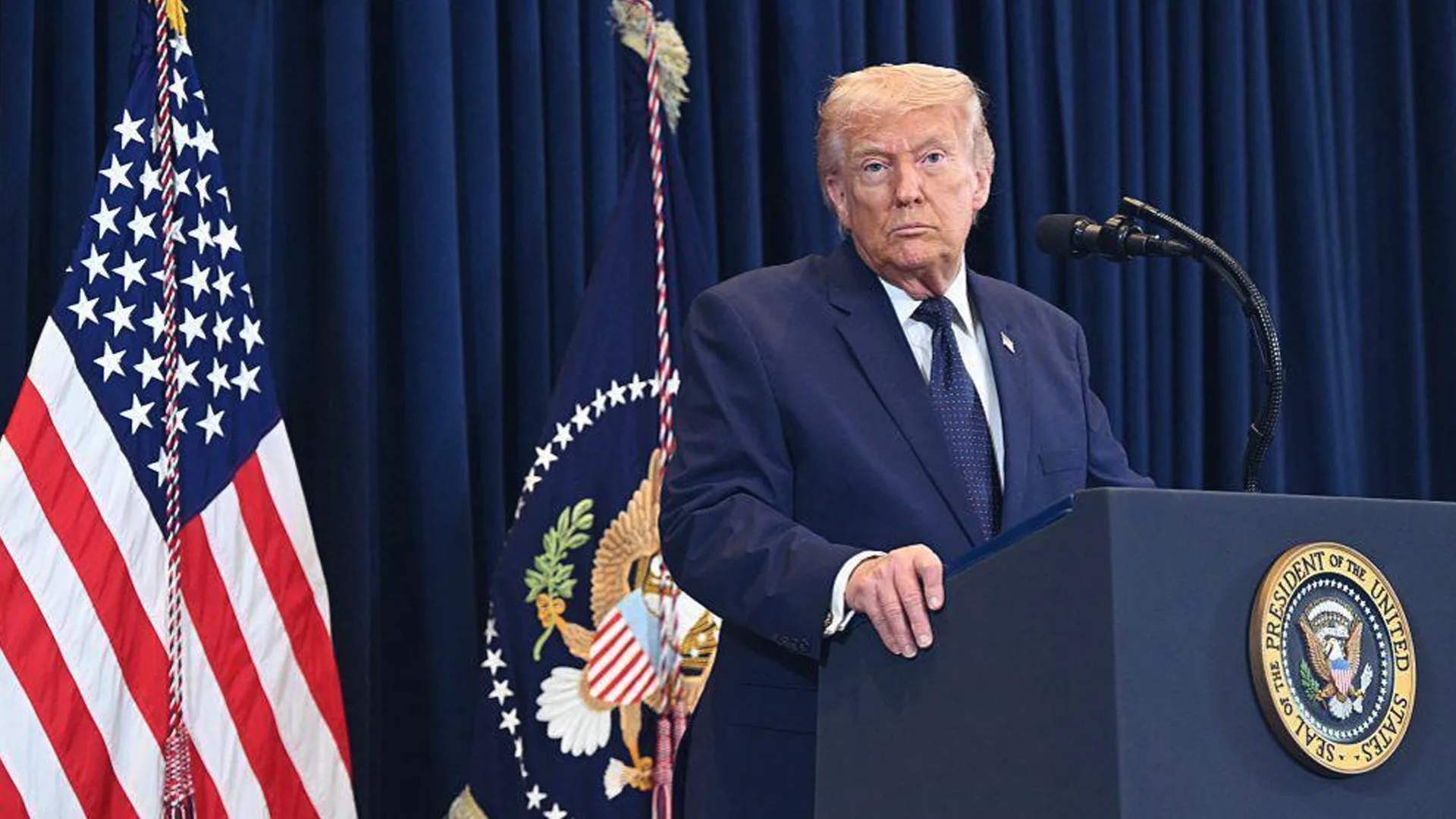
The release of the report comes weeks before a scheduled visit by Donald Trump to China from March 31 to April 2, where he is expected to meet with Chinese leader Xi Jinping.
Lawmakers in Washington have argued that issues such as religious freedom remain central to the broader conversation on international human rights.
U.S. Representative Brad Sherman, a member of the House Foreign Affairs Committee, said that freedom of religion forms a core part of American values and should remain a focus of diplomatic engagement.
The USCIRF report urges U.S. authorities to prioritise investigations into transnational repression targeting religious communities and activists, and to work with international partners to address the issue.
Persistent human rights concern
The findings underscore the continued prominence of religious freedom as a major point of tension in China’s relationship with the international community.
With repression documented across multiple faiths and extending beyond national borders, the commission’s assessment portrays a system in which control over religious expression remains a central component of state governance.
As global attention intensifies ahead of high-level diplomatic engagements, the report highlights the scale and persistence of the issue.