Counterfeit Antiquities Collapse China’s Cultural Trade
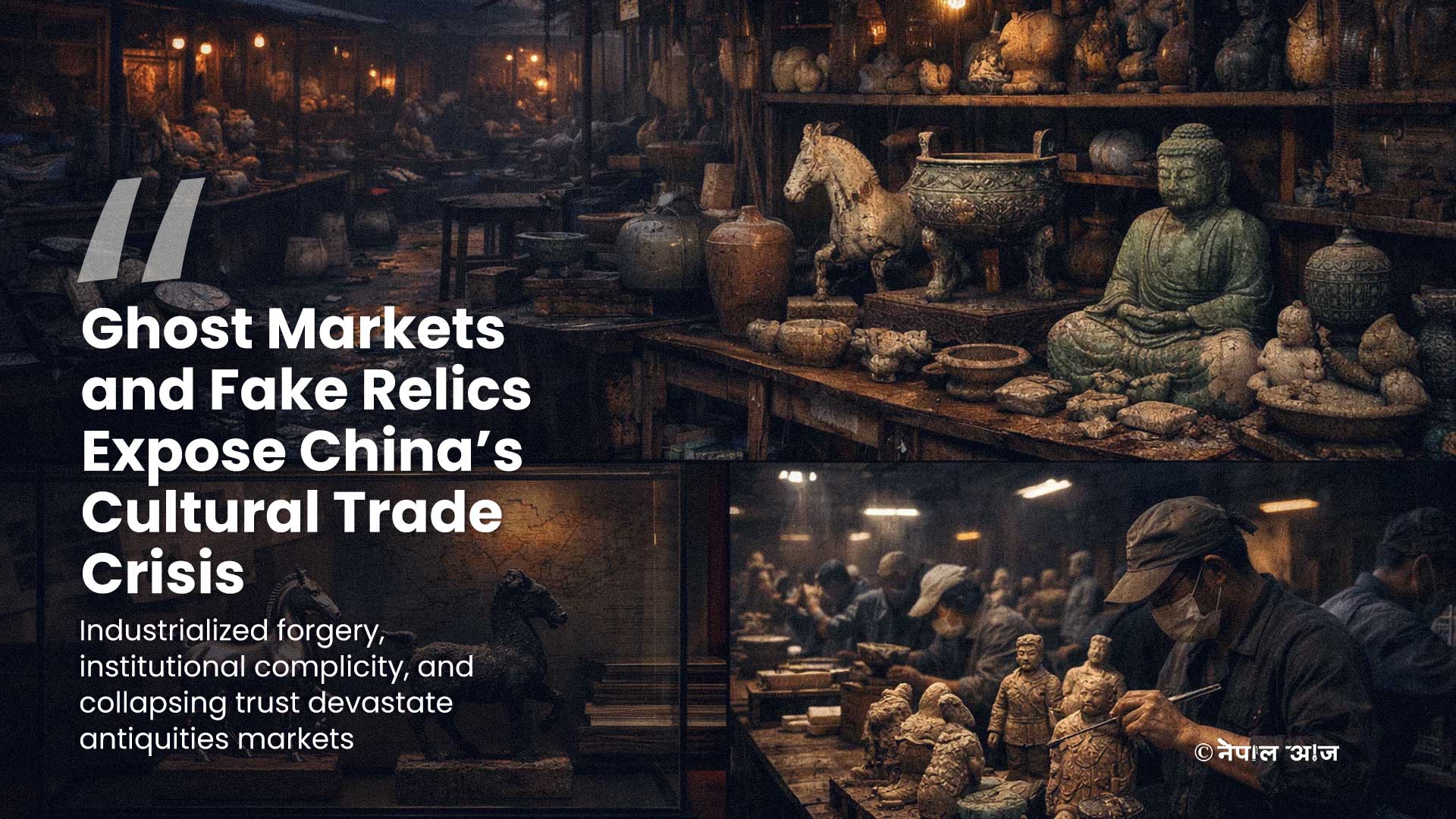
China’s antiquities forgery industry has reached industrial scale, with Beijing emerging as the epicenter of counterfeit relic distribution. Evidence suggests that such a vast operation could not thrive without tacit approval and institutional backing from the Chinese government and the CCP.
The phenomenon of cultural relic counterfeiting in China has evolved far beyond small-scale deception. What was once the work of individual artisans has transformed into a fully industrialized system, complete with technical standards, labour divisions, distribution networks, and even institutional endorsement. Beijing, in particular, has become the largest hub for fake antiquities, where relics are manufactured, aged artificially, and distributed through both domestic and international channels.
In rural areas such as Henan’s Lu Yang, entire villages have shifted from agriculture to antiquities forgery as their primary livelihood. Reports indicate that some villages generate annual revenues exceeding 1.6 billion yuan from counterfeit relics. The process is highly organized: one household casts blanks, another shapes the form, others cultivate patina, and specialized teams fabricate provenance stories. This assembly-line approach mirrors legitimate industrial production, but its output is deception. Bronze tripods, jade carvings, and ceramic vessels are replicated with such precision that even seasoned experts have been fooled.
The sophistication of forgery techniques is striking. Metal vessels are artificially aged in chemical baths, producing corrosion patterns indistinguishable from genuine relics. Jade is cut using hemp rope and sand to mimic tool marks from pre-metal eras, with each cut taking days to complete. Factories reportedly produce tens of thousands of fake jade pieces daily, and insiders admit that 80–90% of jade on the market is counterfeit. Provenance is fabricated through false circulation histories, overseas return labels, and cooperation with dealers who legitimize the items.
Perhaps most troubling is the role of museums and official institutions. There are documented cases where authentic artifacts registered in museum records were replaced with forgeries, while the originals surfaced at overseas auction houses. This “crown prince substitution” has occurred even in state-endorsed exhibitions, where forgeries were displayed under official certification. Those who question authenticity at major institutions such as the Forbidden City face backlash rather than transparency. Such incidents suggest that counterfeit relics are not merely tolerated but legitimized within official cultural spaces.
The consequences have been devastating. Since last year, more than 1,000 antiquities markets across China have shut down, with closure rates exceeding 60%. Once-thriving hubs like Beijing’s Panjiayuan and the Junga Antiquities Market now resemble ghost towns. Auction data reveal that transaction success rates and average prices for cultural relics have declined for four consecutive years. A bubble valued in the tens of trillions has deflated almost overnight, leaving shop owners idle in deserted storefronts.
The scale of this industry raises critical questions: could such a vast operation exist without government knowledge or tacit support? Evidence points to systemic complicity. The CCP benefits from the revenue generated by these counterfeit industries, which also serve as vehicles for money laundering and capital flows across borders. The Financial Action Task Force (FATF) has highlighted the antiquities market as a high-risk sector for laundering and illicit financing, underscoring how counterfeit relics are intertwined with broader economic and political interests.
China’s counterfeit antiquities industry undermines global heritage preservation. Fake relics infiltrate international markets, deceiving collectors, scholars, and museums worldwide. The credibility of Chinese cultural exports has collapsed, and the country’s reputation as a steward of ancient heritage is in tatters. More importantly, the industrialization of forgery erodes trust in cultural institutions, both domestic and international, while fuelling illicit financial networks.
The antiquities forgery industry in China is not a peripheral phenomenon it is a full-blown industrial system sustained by tacit government endorsement. Beijing’s role as the largest distribution hub underscores the scale of complicity. Without backdoor support from the CCP, such an industry could not flourish. The collapse of China’s antiquities market is not merely an economic downturn but a direct consequence of systemic corruption and institutionalized deception. What is being exposed is not just counterfeit relics, but a counterfeit cultural policy that prioritizes revenue over authenticity.
Counterfeit Antiquities China China’s antiquities forgery


![From Kathmandu to the World: How Excel Students Are Winning Big [Admission Open]](https://www.nepalaaja.com/img/70194/medium/excel-college-info-eng-nep-2342.jpg)