Indo-Nepal Military Cooperation Deepens Strategic Trust and Bilateral Relations
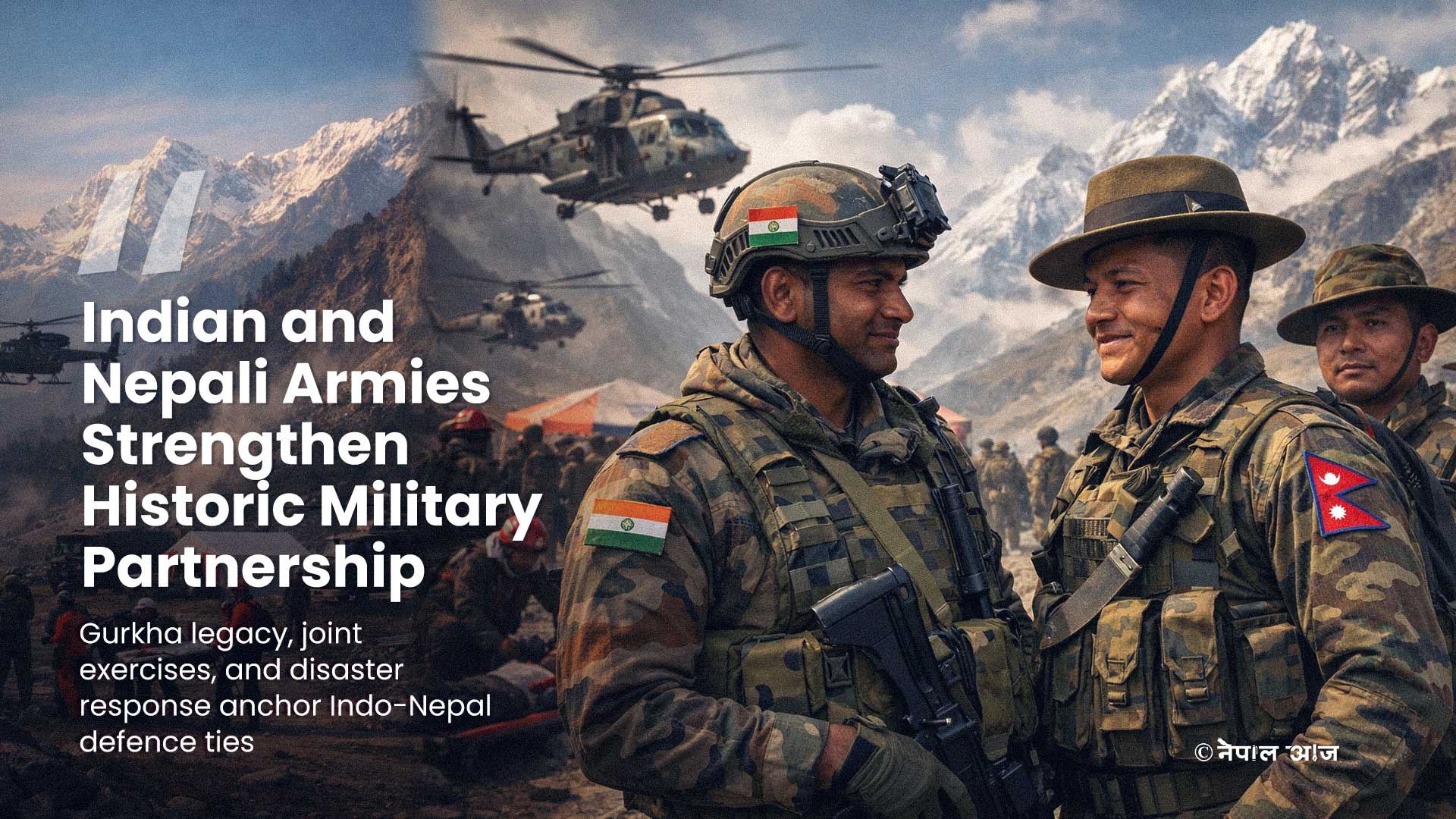
The historic cultural ties and open international border are often cited as major planks in the Indo-Tibetan relationship, but the most deeply felt layer of the strong friendship is military cooperation. Thousands of Gurkhas from Nepal fought and died while protecting India from external aggression, making themselves one of the valuable assets of the Indian military. On the other hand, India has assured guaranteed military protection and support since 1950 under the Indo–Nepal Treaty of Peace and Friendship.
India did not just offer training to Nepalese Army officials but provedto be a vital partner and key supplier of defence materials, said Suresh Sharma, a retired Brigadier General and former spokesperson of the Nepali Army. “As India rises as a global military power, Nepal can benefit from its experiences. India places immense trust in Nepali youth in the military, particularly the Gurkha soldiers, who have been integral to the Indian Army since colonial times,” he said.“Many officers and soldiers from the Nepali Army have benefited from high-quality training at Indian military institutions, forming lifelong bonds.
The Indian Army has seven Gurkha regiments comprising between 32,000 and 35,000 personnel, while over 100,000 retired Gurkha soldiers, who fought in crucial conflicts that India has faced, including the 1947–48 war in Jammu & Kashmir, the 1962 war with China, the 1965 and 1971 wars with Pakistan, and the 1999 Kargil conflict. India is buildingthe Gorkha War Memorial Museumto honour Gorkha sacrifices and aims to strengthen India–Nepal cultural and historical ties.
The Indian Army has been the ‘first responder’ whenever Nepal has been struck by crises, from earthquakes to floods. Its role has never gone beyond assistance and training, thereby winning the trust and hearts of the Nepalese people.“Among the quickest to respond was India, which launched Operation Maitri by deploying the Indian Army, the Air Force, and other specialised teams,” reads a report by the Brookings Institution. In 2025, Nepal's former Foreign Minister ArzuRanaDeuba had expressed gratitude for “swift assistance” in evacuating Nepali students by the Indian Air Force. “India's support in Nepal's evacuation efforts is a reflection of the strength of Nepal-India ties," he said.
Indian and Nepalese armies held the eighteenth edition of joint military exercise ‘Surya Kiran’ in January 2025, focusing on issues such as disaster management, counter-insurgency, counter-terrorism, jungle warfare and humanitarian assistance. Nepali Army stated the joint exercise strengthened the friendly relations with India, besides developing professional skills at the gross level.
In 2024, India conferred Nepal’s Army Chief, General Ashok Raj Sigdel, with the Honorary Rank of General of the Indian Army. “This special honour reflects the longstanding and exceptional bond between the Nepali and Indian Armies, a tradition that dates back over 70 years and symbolises the close military cooperation between the two nations,” the Indian Ministry of Defence said. A month before, Nepal had awarded the equivalent honour to the Indian Army Chief.
While the practice was seen symbolic gesture, officials and experts found it important for the strategic interests and regional security, besides the continuation of cultural, religious, historic and cordial military relations.“The friendship between Nepal and India is underpinned by deep-rooted people-to-people connections. Since 1950, both countries have conferred the rank of Honorary General upon each other’s army chiefs, which shows the mutual respect and trust shared by the two armies. The military-to-military relationship between India and Nepal transcends political and geographic boundaries,” Sharma said.
Highlighting the role ofthe Indian army in assisting Nepal time and again, Nepali Major DB Khadka said the Nepali Army perceivedthe practice as an "emblem of the close ties" between the armed forces of both countries.“The assistance rendered by friendly military forces during disasters that Nepal has faced at different times is unforgettable. India has not only been the largest defence exporter for Nepal but also remains a stable and reliable security partner in the region,” Major Khadka said.
END.
Indo-Nepal military cooperation

![From Kathmandu to the World: How Excel Students Are Winning Big [Admission Open]](https://www.nepalaaja.com/img/70194/medium/excel-college-info-eng-nep-2342.jpg)