China’s Development Model Without Rights
The New Imperial Strategy of Exporting Authoritarian Prosperity
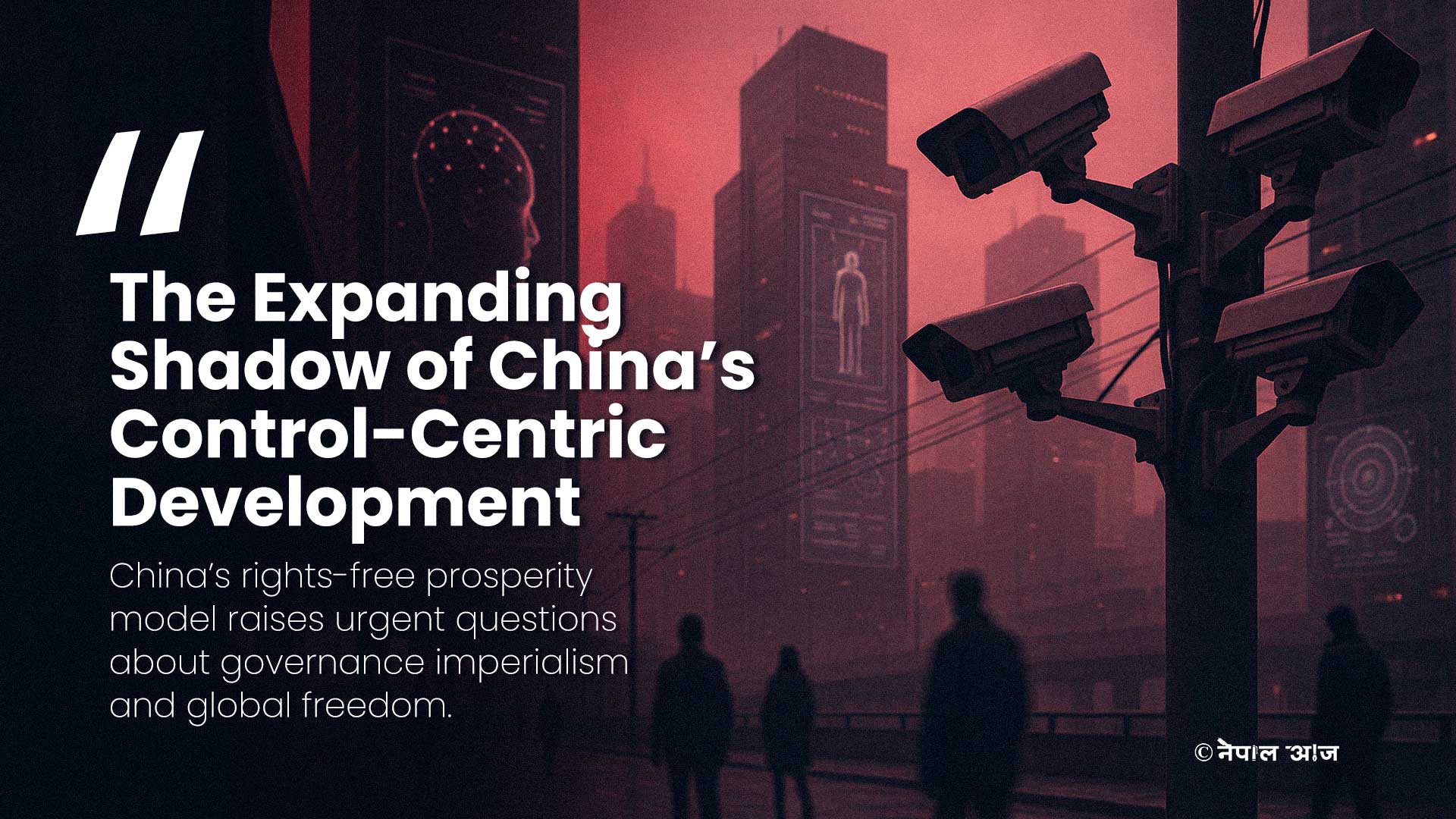
China presents itself as a global model of development and progress. But at its core, this model rests on the fusion of disenfranchisement, surveillance, repression, and fear. Beneath the glow of economic expansion and infrastructure boom lies a darker truth: how individual freedom, privacy, and political rights are systematically crushed. More troubling is the fact that China is now marketing this very model to other nations as if it were an attractive commodity.
From artificial intelligence to surveillance cameras, from online censorship to political indoctrination, China has begun exporting the full suite of tools that safeguard authoritarian rule. These tools empower ruling elites while weakening ordinary citizens. In doing so, China sells the illusion that countries can achieve development without democracy. But any form of development built on the erosion of freedom and human dignity is not progress; it is a sophisticated web of control.
Even within China, the foundation is weakening. The economy is slowing, major industries are collapsing, and young people face rising unemployment and despair. One construction failure after another reveals the uncomfortable truth: if development stands only on statistics, it is not real progress. As economic pressures intensify, China increasingly relies on nationalism and military assertiveness to mask its failures. Aggression in the South China Sea and escalating tensions with Japan and other neighbors are part of that strategy.
China’s record on human rights remains alarming. The internment of Uyghur Muslims in camps to erase cultural identity, the denial of religious freedom to Tibetans, and the systematic suppression of other ethnic groups expose the true face of China’s so-called “inclusive development.” The world is being warned: the rise of China often comes at the cost of fundamental rights.
China’s expansionist ambition is no longer only geopolitical; it has turned into a form of governance imperialism. Countries adopting this model risk not only falling into debt traps but also sliding into a deep abyss where democracy slowly dies. Today’s global choice is stark: embrace prosperity built on fear, surveillance, and silence—or defend human rights, dignity, and freedom. Development should liberate people, not turn them into subjects of control. But China is not on that path.
In the end, the question is simple yet profound:
Is China’s rise an opportunity for the world—or a danger?
The answer will determine not only the future, but also the true value of freedom.

![From Kathmandu to the World: How Excel Students Are Winning Big [Admission Open]](https://www.nepalaaja.com/img/70194/medium/excel-college-info-eng-nep-2342.jpg)