Bangladesh’s Extremist Threat Rises Again
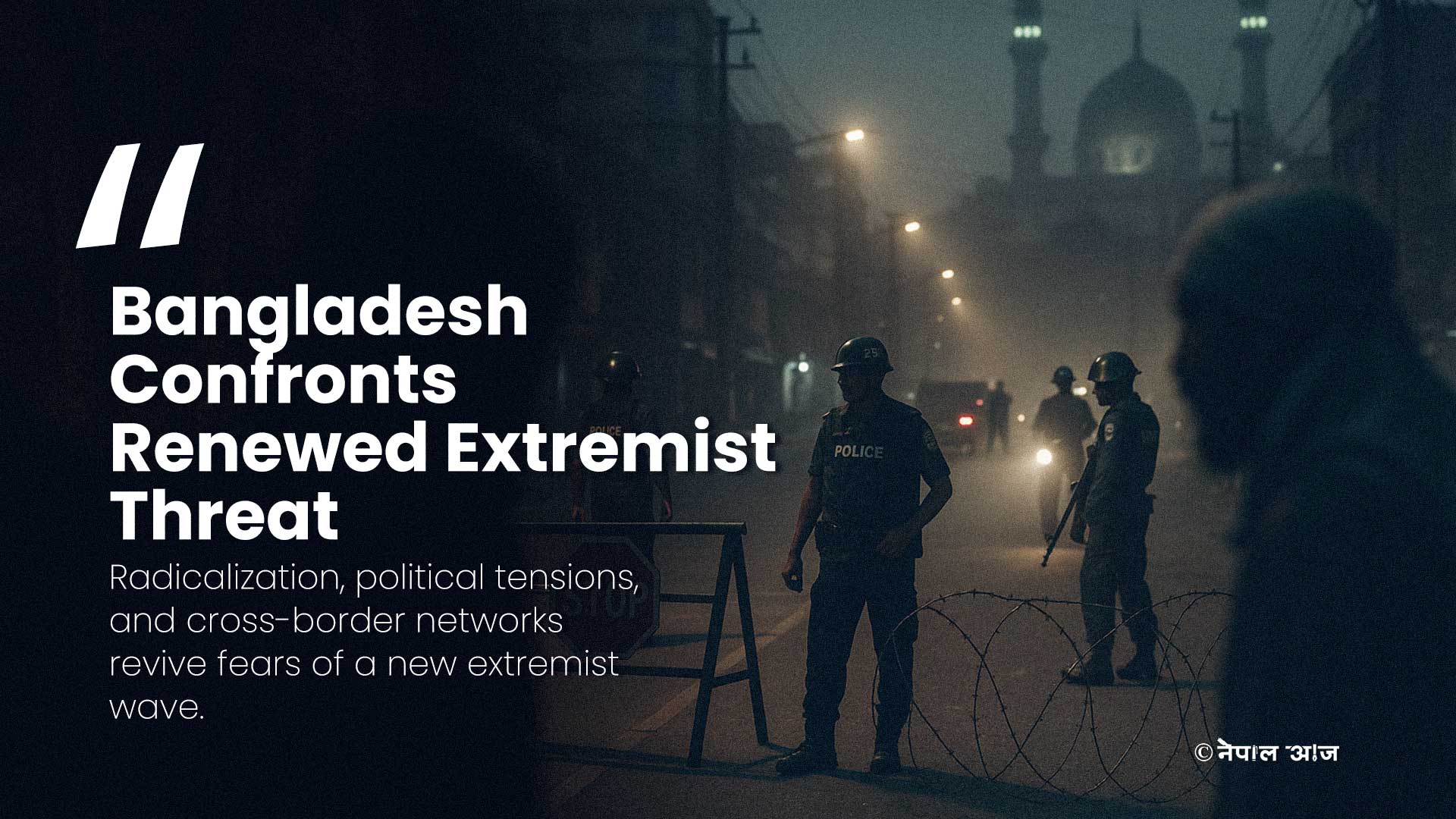
Bangladesh had, in recent years, made remarkable progress in curbing extremist terrorism. But now, the same dark shadows seem to be spreading across the country once more. Religious radicalism, political fragmentation, and organizational restructuring have reactivated jihadist groups. This is not merely a security challenge — it is a profound question hanging over Bangladesh’s democracy, social harmony, and economic progress.
The madrasa network and the psychological influence of banned Islamist groups are drawing young people back toward radical paths. Unemployment, poverty, and a sense of social humiliation make them easy targets for extremist recruiters. Although terrorist activities may appear diminished, the ideological seeds have taken firm root. If state structures respond slowly, these seeds could grow into a poisonous tree at any moment, plunging the country into crisis.
Political power struggles have further complicated the situation. Party rivalries and retaliatory governance have frustrated citizens. Exploiters of religious extremism are capitalizing on this disillusionment. The ruling party’s weaknesses have given opposition-aligned extremist elements an opportunity to re-emerge under the guise of morality and patriotism. In such a landscape, extremism is no longer just a security issue — it has become a tool in the contest for state power.
Moreover, Bangladesh’s geopolitical position remains sensitive. Cross-border networks, international jihadist linkages, and economic pressures can render the country vulnerable at any moment. Without immediate strategic policy shifts, Bangladesh may once again be forced to recall the unrest of 2016 — a period that shook not only its security institutions but also its aspirations for national development.
In the end, the pressing question remains: Has Bangladesh truly secured peace, or merely survived one chapter of a longer war? The answer lies in the state’s preparedness. If Bangladesh does not take decisive action today, the specter of extremism will reappear inside its own borders tomorrow. Peace is not a permanent gift; it is the outcome of continuous struggle — and Bangladesh now finds itself compelled to enter that struggle once again.



![From Kathmandu to the World: How Excel Students Are Winning Big [Admission Open]](https://www.nepalaaja.com/img/70194/medium/excel-college-info-eng-nep-2342.jpg)