China’s Gender Imbalance Fuels Bride Trafficking From Nepal and Pakistan
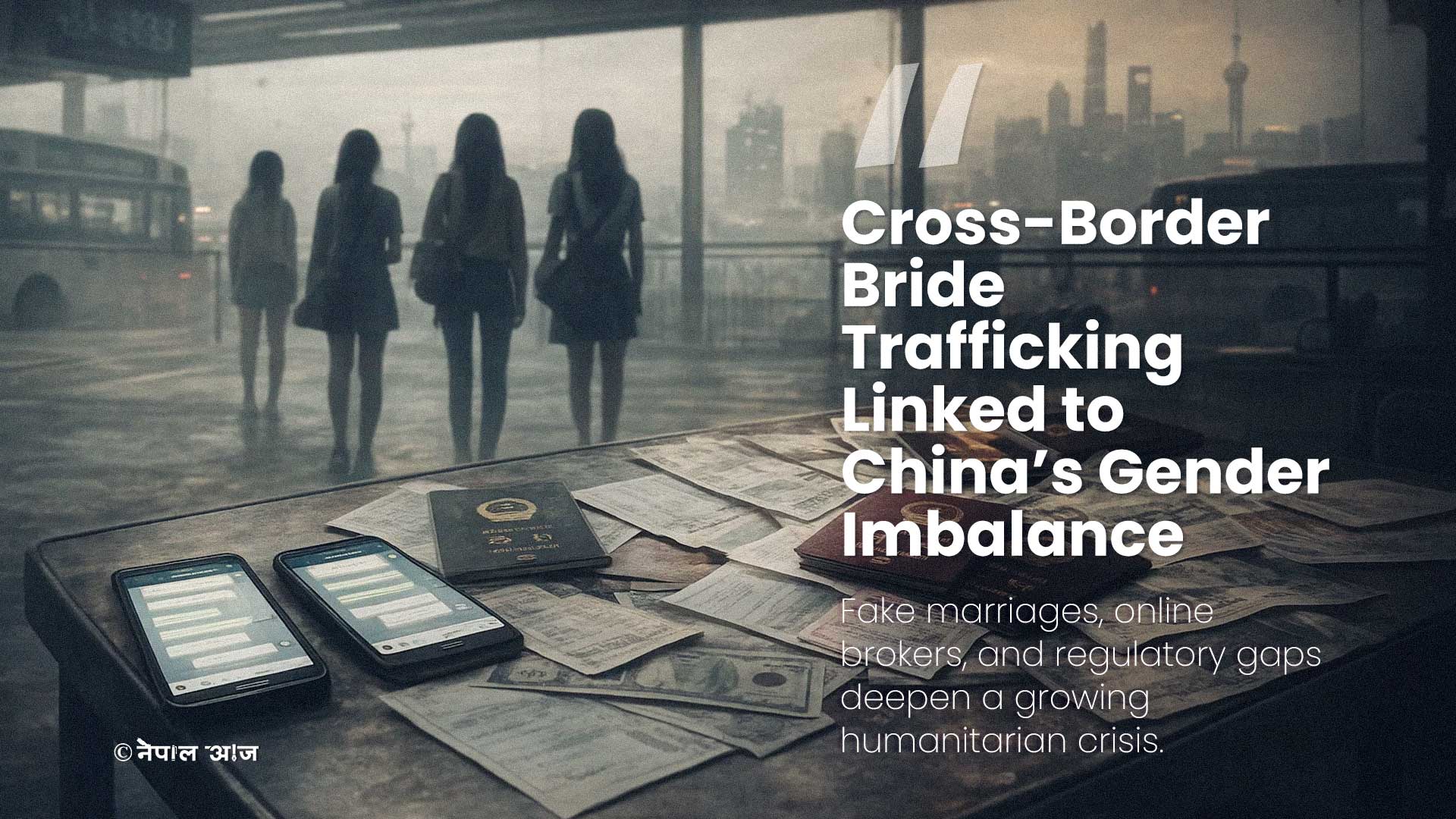
A recent foiled attempt to marry an underage Nepalese girl by a Chinese man, as well as desperate attempts to sell minority Pakistani Christian girls under fake marriages, sheds light on the growing gender imbalance in China. The growing demand for brides in China is exacerbating the trafficking of young women from Nepal and Pakistan into cross-border marriages despite tall claims by Beijing about measures to control the menace. Loopholes such as using arranged marriages to conceal trafficking, social stigma and violence, visa and regulatory gaps are deepening the humanitarian fallout.
A large proportion of eligible Chinese bachelors are unable to find brides, as decades of son preference and the One-Child Policy have resulted in a surplus male population in the country. Moreover, the growing reluctance among Chinese women to marry, the high bride price associated with the ‘caili’ practice, and reduced dependence on marriage due to better employment opportunities have intensified the demand for brides from other countries. Young women from Nepal and Pakistan are particularly vulnerable to deception and coercion into marriages with Chinese men due to poverty, lack of education, and social marginalization in these South Asian countries.
A month ago, Nepalese police stopped a marriage between an 18-year-old girl with a Chinese man as the minimum age for marriage in Nepal is 20. Such marriages are arranged through an extensive network of middlemen and brokers, operating via social media platforms in China, who lure poor Nepalese girls with promises of money and better life prospects. Chinese advertisements offer Nepalese girls on social media apps such as WeChat, Weibo and RedNote, where bids are made.
Chinese bachelors are offered to get Nepalese brides by paying NPR 1.5 million, while the victims are lured with cash offers and prospects of luxurious life in China, said Anti-Trafficking Bureau official Ishwar Babu Karki. “In the past, the majority of women used to be trafficked into China from Cambodia and Vietnam, but they have now tightened regulations. So now traffickers are targeting countries like Nepal, Pakistan. Agents are able to convince families that their daughters will have a luxurious life in China,” Karki said. Expressing concerns over online advertisements, Beijing-based co-founder of The Araniko Project, Aneka Rajbhandari, said “I have seen men openly inquire about finding partners in Nepal as if it were a market. “Watching Nepali girls being treated as commodities is deeply distressing.”
Bride trafficking is worse and disturbing in Pakistan, as local officials were found to be indulging in the malpractice. The country was shaken when 629 poor girls and women were found to be sold in China under the guise of marriage. These trafficked women often end up becoming subjected to domestic violence, forced pregnancies and prostitution. However, the victims cannot protest or escape China due to societal norms, domestic violence and lack of support. Minority Christian women are often targetted by Chinese workers involved in the construction of the Belt Road Initiative (BRI) projects in Pakistan.
Islamabad turned a blind eye to severe human rights violations, fearing deterioration in relations with Beijing. “It is horrifying that women are being treated this way without any concern being shown by the authorities in either country. And it’s shocking that it’s happening on this scale,” said Omar Warriach, the then campaigns director of Amnesty International. Human Rights Watch (HRW) said illegal profits were made from brokering cross-national marriages. "Both Pakistan and China should take seriously increasing evidence that Pakistani women and girls are at risk of sexual slavery in China and take effective measures to end bride trafficking," it said. However, China chose to reject the reports.
Interestingly, the women who are trafficked in China on tourist visas vanish from official records. Yet, Nepalese authorities managed to intercept 41 cases of Nepalese women being trafficked to China after getting married to Chinese men in Nepal, even as they fear the number of overall victims is much higher than estimated. The situation is the same in Pakistan, too.
The Pakistan government not only failed to meet the minimum standards for the elimination of trafficking but also encouraged it, as per the US Department of State. Traffickers target impoverished Christian communities to send women and girls to the People’s Republic of China (PRC) for arranged marriages. Upon arrival in the PRC, hundreds of Pakistani women reported their “husbands” forced them into commercial sex,” it said in its annual report. “For a fifth year, the government did not take adequate action against credible reports of official complicity in trafficking crimes, which also continued to create a culture of impunity and inhibited anti-trafficking efforts.”
bride trafficking from Pakistan and Nepal to China


![From Kathmandu to the World: How Excel Students Are Winning Big [Admission Open]](https://www.nepalaaja.com/img/70194/medium/excel-college-info-eng-nep-2342.jpg)