Pokhara Airport Scandal Fuels Allegations of a Political Power Play
Pokhara Airport Loot Exposed: The Secret Pact Between Oli and Deuba to Revive a Dead Parliament and Bury the Billion-Rupee Heist
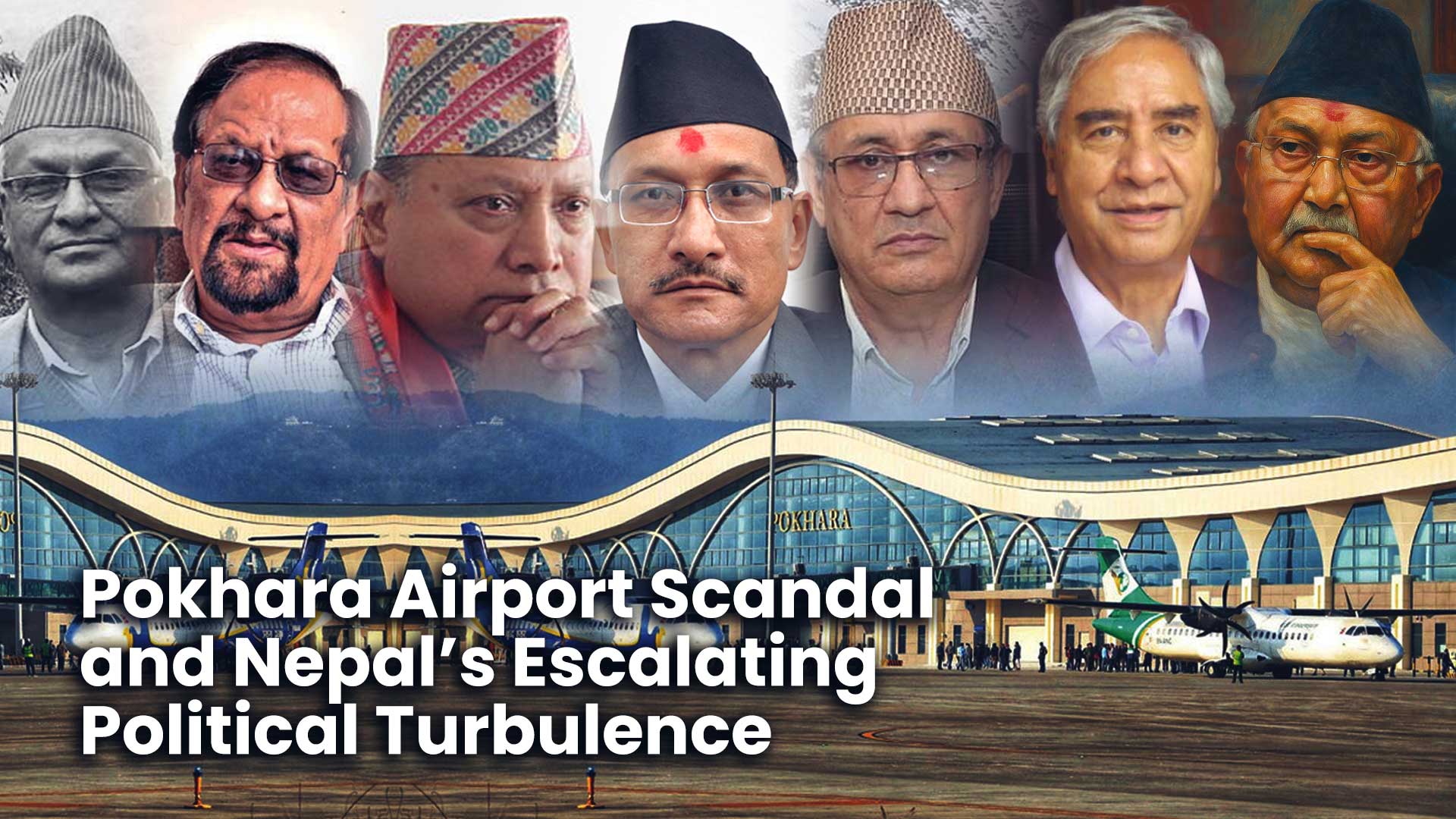
The political atmosphere in Kathmandu has shifted from routine maneuvering to a palpable state of panic, marking one of the most cynical chapters in Nepal’s modern history. It began innocuously enough with a closed-door meeting just three days ago, on December 5, 2025, between the two titans of the establishment: CPN-UML Chairman K.P. Sharma Oli and Nepali Congress President Sher Bahadur Deuba. While their spokespersons offered the usual platitudes about discussing "contemporary political developments," the reality was far more sinister. This was a war room session, a desperate huddle between historical rivals who suddenly found themselves facing a mutual existential threat. The agenda was singular and self-preserving: to orchestrate a joint action plan that would forcefully revive the dissolved House of Representatives, scuttle the scheduled Falgun elections, and effectively hijack the nation’s democracy to save their own skins. The fruits of this secret pact are already visible, with the UML having filed a writ petition at the Supreme Court on November 25, challenging the dissolution of the House, and the Nepali Congress now poised to file a parallel writ to reinforce the move. This sudden legal convergence is not a defense of the constitution; it is a calculated conspiracy to reconstruct a legislative shield around a political class that has just been caught red-handed in one of the most egregious acts of financial treason the country has ever seen.
The true, explosive motivation behind this frantic rush to resurrect a dead Parliament was laid bare for the entire nation to see yesterday, December 7, when the Commission for the Investigation of Abuse of Authority (CIAA) filed a history-making corruption case regarding the construction of the Pokhara Regional International Airport. The chargesheet is a devastating indictment of the entire post-2006 political order, implicating 55 individuals and exposing a deep-seated rot that transcends party lines. This is not a case of minor administrative negligence or a few overlooked receipts; it is a detailed chronicle of organized looting. The investigation reveals that leaders from the Nepali Congress, the UML, and the Maoist Centre formed a "league of corruption," colluding directly with the Chinese contractor, CAMC Engineering Co. Ltd., to artificially inflate the project costs by a staggering $74 million—over 8.36 billion Nepali Rupees. The chargesheet names heavyweights like former Finance Minister Dr. Ram Sharan Mahat of the Congress, former Tourism Minister Bhim Acharya of the UML, and the late Maoist leader Post Bahadur Bogati, painting a picture of a grand coalition of graft where political ideology was set aside in favor of dividing the spoils of a national project.
It is this looming specter of accountability that has driven Oli and Deuba into each other's arms. The timing of the move to revive Parliament is inextricably linked to the exposure of the Pokhara Airport scandal. The established parties know that the interim government led by Prime Minister Sushila Karki and the aggressive posture of the CIAA represent a direct threat to their impunity. By petitioning the Supreme Court to annul the dissolution and declare the period since September 8 a "void," they are attempting to turn back the clock to a time when they held absolute sway over the levers of power. A revived Parliament is their ultimate safety valve; it restores the very Members of Parliament who are now under scrutiny, granting them the legislative authority to intimidate the judiciary, stall legal proceedings, and potentially impeach the CIAA commissioners who dared to bring these charges. The strategy is transparent: create a constitutional crisis to distract from the criminal crisis, shifting the national conversation from the theft of 8 billion rupees to abstract legal debates about parliamentary procedure.
Furthermore, the desperation to revive the House is fueled by a profound fear of the upcoming Falgun elections. The old guard is acutely aware that the ground beneath them has shifted. The rise of new political forces—the Rastriya Swatantra Party (RSP), independent candidates, and the galvanized "Gen Z" youth movement—has terrified the traditional vote banks. If the elections proceed as scheduled in February-March 2026, the established parties will be forced to campaign while defending themselves against charges of robbing the nation to build an airport that has become a debt trap. They know that the electorate, armed with the fresh knowledge of the Pokhara looting, will likely decimate them at the ballot box. Therefore, the revival of Parliament serves a dual purpose: it not only protects their corrupt leaders from immediate arrest but also provides a "constitutional" pretext to postpone the elections indefinitely. They intend to argue that a functioning House negates the need for immediate polls, thereby buying themselves time to manipulate the system, exhaust the opposition, and wait for the public anger to subside.
This is a critical "do or die" moment for the new political forces and the citizenry at large. The narrative being spun by the NC and UML—that reviving Parliament ensures stability—is a dangerous lie designed to mask a conspiracy of impunity. The "stability" they seek is the stability of the syndicate that has plundered Nepal for decades without consequence. The coordinated legal assault by Oli and Deuba is a preemptive strike against the democratic process, an attempt to disenfranchise the voters just as they were preparing to deliver a verdict on years of mismanagement and corruption. The new forces must understand that the battle has moved beyond the streets and into the corridors of the Supreme Court and the court of public opinion. They must expose this unholy alliance for what it is: a cartel of corrupt elites trying to change the rules of the game because they know they are about to lose. The public must remain vigilant and vociferous in their demand that the Falgun elections happen on schedule, for the ballot box is now the only weapon left to punish the architects of the Pokhara betrayal and to rescue the nation’s future from a political class that views the state treasury as its private bank account.
Pokhara Airport Loot
![From Kathmandu to the World: How Excel Students Are Winning Big [Admission Open]](https://www.nepalaaja.com/img/70194/medium/excel-college-info-eng-nep-2342.jpg)